

Daughters without moms find support in each other’s grief
Advertisement
Read this article for free:
or
Already have an account? Log in here »
To continue reading, please subscribe:

Digital Subscription
One year of digital access for only $205*
- Enjoy unlimited reading on winnipegfreepress.com
- Read the E-Edition, our digital replica newspaper
- Access News Break, our award-winning app
- Play interactive puzzles
*First annual payment billed as $205.00 + GST for one year. This annual subscription will automatically renew at $233.00 + GST every 52 weeks (10% off the regular annual price of $259.35). Offer available to new and qualified returning subscribers only. Cancel any time.
To continue reading, please subscribe:
Add Free Press access to your Brandon Sun subscription for only an additional
$1 for the first 4 weeks*
- Enjoy unlimited reading on winnipegfreepress.com
- Read the E-Edition, our digital replica newspaper
- Access News Break, our award-winning app
- Play interactive puzzles
*Your next Brandon Sun subscription payment will increase by $1.00 and you will be charged $17.95 plus GST for four weeks. After four weeks, your payment will increase to $24.95 plus GST every four weeks.
Read unlimited articles for free today:
or
Already have an account? Log in here »
Hey there, time traveller!
This article was published 10/05/2023 (1255 days ago), so information in it may no longer be current.
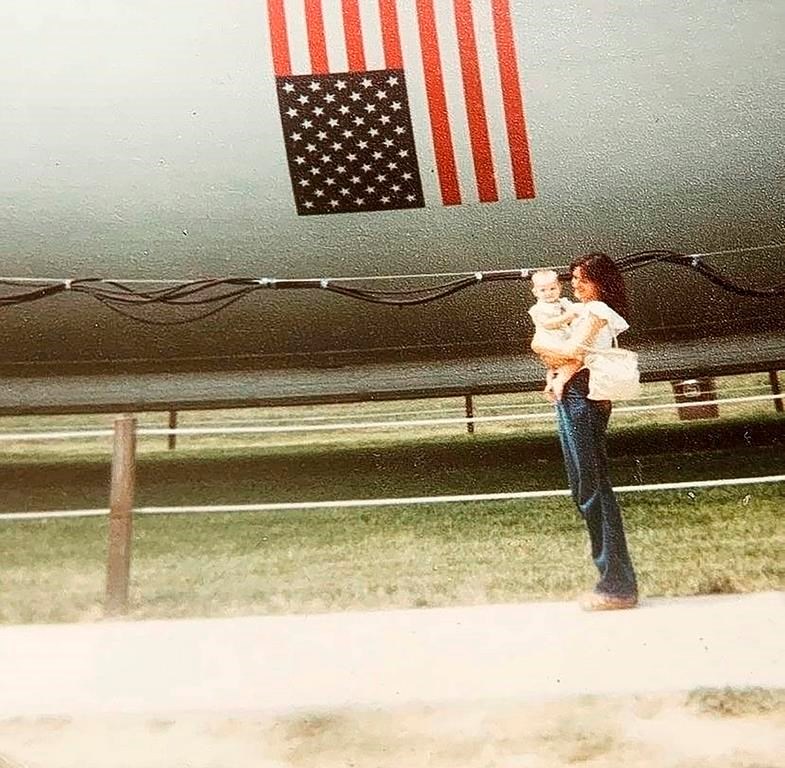
When my mother died suddenly 30 years ago, I was 13. I’d spend the next 20 years attempting to understand what it means not to have a mother.
And I did this basically alone.
Mostly, this was because my mother’s parents, who raised me, were old-fashioned folks who lived through the Dust Bowl. They didn’t discuss feelings, good or bad. I never once saw my grandfather shed a tear after his daughter died. Plus, our town was in the rural plains of Colorado, hours away from any city with services like a grief therapist, even if my grandparents had been open to that.
But the silence around grief also was a product of the times. I am encouraged to see that now a mom’s death is generally not handled the same way it was in 1993.
There are many kinds of support today, from the organized to the grassroots. Grief can be talked about and shared more publicly, experts say, and is acknowledged to last a long time.
Motherless children can attend special summer camps, for instance, or Mother’s Day retreats like those hosted by the Massachusetts-based non-profit EmpowerHer, which works with girls whose mothers have died. They also link girls with mentors so they can see an older version of themselves. The group recently started working with boys and nonbinary children, too, who have lost either parent.
“There isn’t a perfect ending,” said Cara Belvin, who founded EmpowerHer. “You can cry and scream but you can’t give up, and we hold space for a kid who is grieving.”
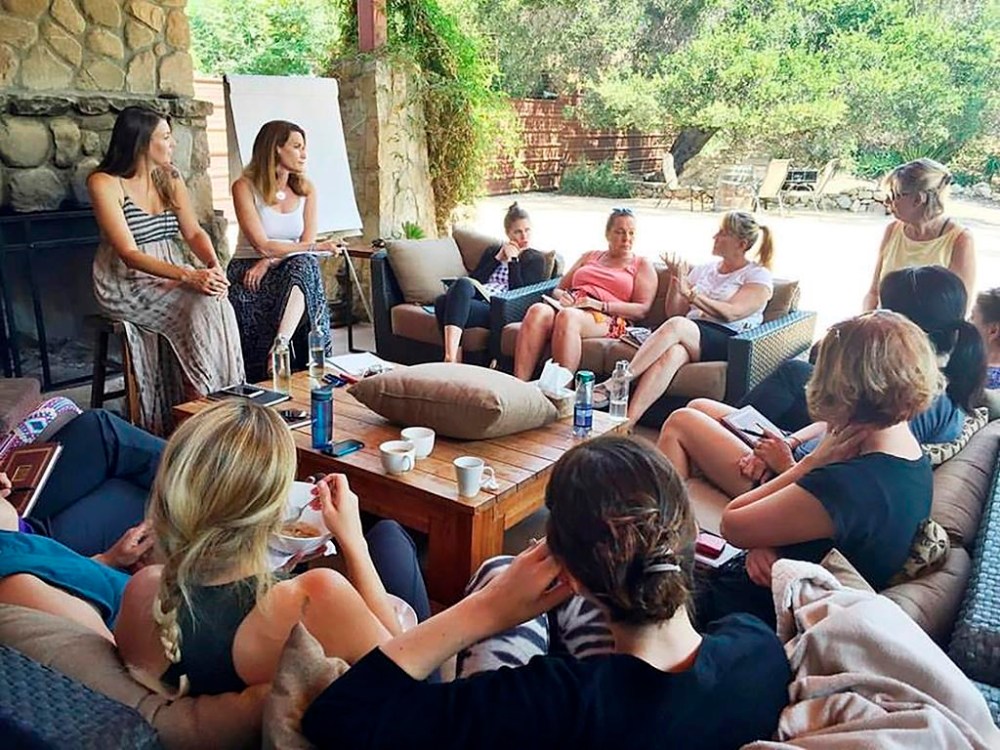
Podcasts on the topic of parent loss, and support groups both virtual and in-person, have proliferated.
“It really grew exponentially over COVID,” said Hope Edelman, author of several grief books, including the bestseller “Motherless Daughters: The Legacy of Loss,” published in 1994.
Edelman has led motherless daughters’ groups, and her books have helped usher in a new way to live with loss. “The death of a mother affects a daughter profoundly, but what comes after can affect her as much or more,” she said.
Edelman was 17 when her mother died in 1981, a time she has called the “dark ages” of grief, when mourning often wasn’t discussed much outside the stale office of a therapist.
The prevailing wisdom today tends to be the “continuing bonds” theory, which says grief is to be carried, and relationships continue and change with a loved one, even after their death.
This more engaged approach to grief has been furthered by the internet and social media.
Ontario native Janet Gwilliam-Wright, 46, started “The Motherlove Project,” a blog and corresponding Instagram account, in 2020 to honor the 25th anniversary of her mother’s death. It has since become a place where women from around the world share stories about their late mothers; nearly 300 people have shared so far.
“I didn’t have anywhere to grieve her — she didn’t have a grave — so I decided to make a place on the internet,” Gwilliam-Wright explained.
“I have enormous gratitude for every woman who reaches out to me. It helps me in my grieving and has brought me a community of people I feel so connected to.”
Mother’s Day can feel particularly isolating, said Julia Morin, 36, of Nashua, New Hampshire, who created her Instagram account “Girl_meets_grief” on Mother’s Day 2021 to connect with others who felt the same way.
Before the internet, even though the prevailing attitude toward grief might have been less supportive, still there was often more community and family around than there is now, when many Americans lack built-in support networks.
“And so the widespread online support gives people a broader space to share in that grief and meet people with similar experiences,” said Megan Kelleher, a historian who has studied grief and bereavement practices.
Writing is another way motherless daughters are connecting.
Sasha Brown-Worsham of Acton, Massachusetts, has written about losing her mom as a teenager. She penned a viral essay and followed it up with a memoir, “Namaste the Hard Way.” When Brown-Worsham turned 45, the same age her mother was when she died of breast cancer, she sought out a virtual support group of mothers without moms.
“My daughter turned 16 at the same time, and that’s how old I was when my mom died,” she said.
The group is a collaboration between Edelman’s Motherless Daughters and the Twin Cities-based non-profit She Climbs Mountains.
“There’s this sense of being seen for possibly the first time in my whole life,” Brown-Worsham said.
Life’s milestones — such as getting married or having a baby — can trigger grief. By the time I was 30, I had tricked myself into believing I was adept at ignoring my mother’s loss. That was, of course, far from true.
It was when I had my first baby that I felt grief rise to the surface. Jealousy cropped up in unexpected ways, particularly when I saw my new mom friends with their mothers.
It turns out, this is normal.

“Having kids ripped me open” emotionally, said Katie Paradis, 42, of Rockport, Massachusetts, who has two girls and no mother.
Susanna Gilbertson’s mom died a year before her daughter was born.
“I looked around and didn’t see any support I could access,” said Gilbertson, 47, of Philadelphia.
Along with another motherless mom, she posted fliers for a book group, reading Edelman’s “Motherless Daughters.” After the initial meeting, the women in the group wanted to keep going. They ended up meeting for seven years.
“You get to experience, rather than be told, that you’re not alone,” said Gilbertson, now a full-time grief coach.





