

Reversing Manitoba’s moose decline
Advertisement
Read this article for free:
or
Already have an account? Log in here »
To continue reading, please subscribe:

Digital Subscription
One year of digital access for only $205*
- Enjoy unlimited reading on winnipegfreepress.com
- Read the E-Edition, our digital replica newspaper
- Access News Break, our award-winning app
- Play interactive puzzles
*First annual payment billed as $205.00 + GST for one year. This annual subscription will automatically renew at $233.00 + GST every 52 weeks (10% off the regular annual price of $259.35). Offer available to new and qualified returning subscribers only. Cancel any time.
To continue reading, please subscribe:
Add Free Press access to your Brandon Sun subscription for only an additional
$1 for the first 4 weeks*
- Enjoy unlimited reading on winnipegfreepress.com
- Read the E-Edition, our digital replica newspaper
- Access News Break, our award-winning app
- Play interactive puzzles
*Your next Brandon Sun subscription payment will increase by $1.00 and you will be charged $17.95 plus GST for four weeks. After four weeks, your payment will increase to $24.95 plus GST every four weeks.
Read unlimited articles for free today:
or
Already have an account? Log in here »
As Manitoba’s retired provincial moose manager, I have watched our moose population plummet from historic highs to a state of systemic vulnerability. Reversing this decline, which has seen numbers drop from 45,000 during the 1960s to fewer than 20,000 today, will require balancing the conservation needs of moose, Section 35 constitutional treaty rights, licensed hunter expectations and economic development.
To avert further attrition, all stakeholders, including Manitoba Natural Resources, must accept responsibility for their part in this decline, with industrial and recreational development acting as the primary drivers.
This long-overdue discussion must not devolve into a debate over competing hunting rights; instead, it must focus entirely on building long-term population resilience. Wildlife management must evolve alongside the changing landscapes and dynamics that development brings. We can no longer practise the same methods and hope for a better result. Immediate action is required.
The Associated Press files
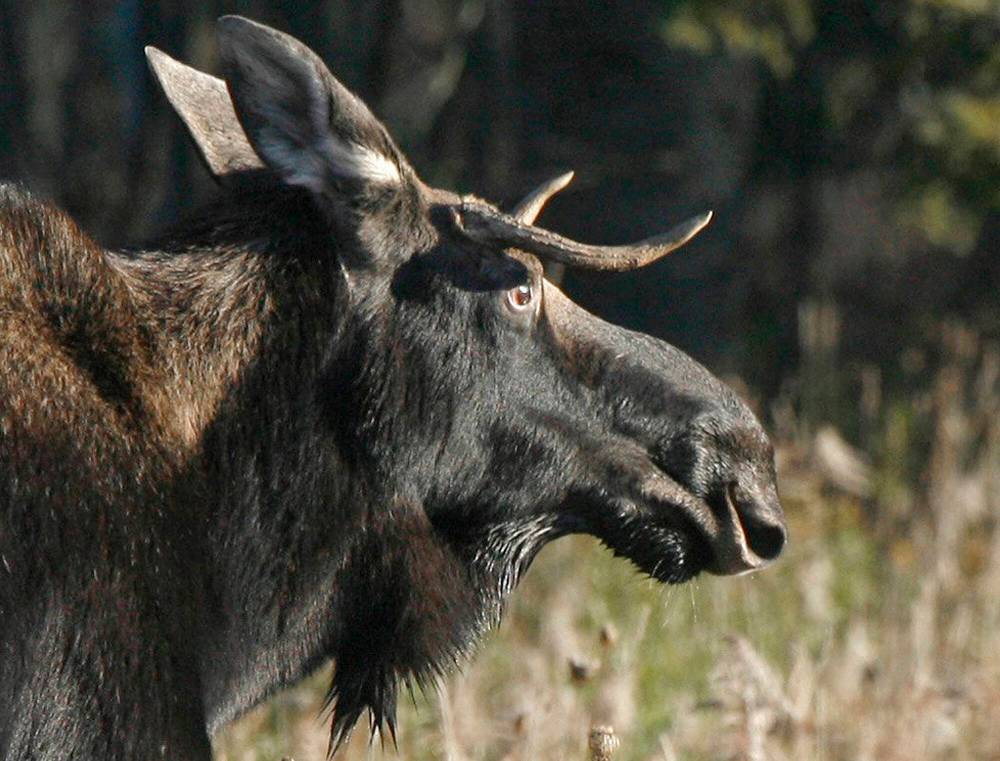
Manitoba’s moose population is vulnerable.
As long as moose are legally managed as a “natural resource,” they will inevitably be viewed through the lens of a commodity rather than a vulnerable species in need of protection. For any population to remain stable or grow, total mortality cannot exceed recruitment — the survival of calves to breeding age. If mortality outpaces recruitment, decline is inevitable.
Theoretically, hunting is to be offered when there is a harvestable surplus. Determining that surplus requires rigorous, comprehensive data collection of all-source harvest and mortality factors, along with dependable aerial censuses to track total abundance, age classification, sex ratios, and late-winter recruitment.
The province is currently managing this vital species in a dangerous information vacuum. In the absence of real-time, ground-truthed data from localized, collared populations, managers are operating blindly. Relying on extrapolations from other jurisdictions and making speculative decisions on a vulnerable species is a dangerous recipe for population collapse.
Only when accurate data is transparently available can provincial managers, Indigenous communities, and licensed hunting organizations sit at the table as equal partners to determine a collaborated harvest quota. Without this shared dialogue, government is failing its constitutional Section 35 obligation to protect the safety and viability of moose by allowing unverified, unsustainable pressures to continue.
Until a collaborative and accommodated agreement to share is achieved, moose populations will continue to decline under compounding, cumulative pressures:
• Biological and health impacts — winter tick infestations, lethal brainworm transmission from expanding deer populations, predation forage disruption, loss of natural mineral licks and aquatic salt sources;
• Climate-driven consequences — destructive forest fires, prolonged heat stress, loss of critical mature thermal cover;
• Industrialized habitat alteration — extensive logging, exploratory drilling, more intense wildfires, expanding tourism (parks, cabins, cottages, lodges, outfitter camps) alongside developing and upgrading trail networks for hiking and off-road vehicle;

• Expanding linear footprints — logging road networks, drill trails, trenching lines, seismic cuts, transmission corridors, railway lines, ATV/snowmobile networks … all of which provide extended access to both hunters and predators.
With industrial and recreational development comes access, triggering habitat fragmentation, hydrological and soil degradation, invasive species introduction, pollution, waste, elevated fauna disturbance and exploitation. Because of this, commercial resource companies should pay a mandatory road levy and a dedicated extraction tax. This money would legally fund mandatory data collection and aerial wildlife surveys within their areas of operation. Since resource development breaks the natural balance, developers, not taxpayers, must foot the bill to measure the impacts on wildlife. Manitoba’s government would remain responsible for monitoring provincial parks.
Our moose deserve better — they demand better!
It is time to initiate this critical discussion today, rather than continually punting the issue down the road until a hunting moratorium becomes our only remaining option.
Hank Hristienko is the retired provincial moose manager for Manitoba Natural Resources. He lives in Winnipeg.