

Doing your part to help birds
Advertisement
Read this article for free:
or
Already have an account? Log in here »
To continue reading, please subscribe:

Digital Subscription
One year of digital access for only $205*
- Enjoy unlimited reading on winnipegfreepress.com
- Read the E-Edition, our digital replica newspaper
- Access News Break, our award-winning app
- Play interactive puzzles
*First annual payment billed as $205.00 + GST for one year. This annual subscription will automatically renew at $233.00 + GST every 52 weeks (10% off the regular annual price of $259.35). Offer available to new and qualified returning subscribers only. Cancel any time.
To continue reading, please subscribe:
Add Free Press access to your Brandon Sun subscription for only an additional
$1 for the first 4 weeks*
- Enjoy unlimited reading on winnipegfreepress.com
- Read the E-Edition, our digital replica newspaper
- Access News Break, our award-winning app
- Play interactive puzzles
*Your next Brandon Sun subscription payment will increase by $1.00 and you will be charged $17.95 plus GST for four weeks. After four weeks, your payment will increase to $24.95 plus GST every four weeks.
Read unlimited articles for free today:
or
Already have an account? Log in here »
Hey there, time traveller!
This article was published 12/05/2023 (1229 days ago), so information in it may no longer be current.
In spring, we welcome the return of migratory birds to Canada to breed. A few billion birds from over 400 species breed in Canada each year.
Before we know it, young birds will be leaving their nests, awkwardly learning to navigate the world around them. Like me, you may enjoy watching them from your window.
One day, a couple of springs ago, I heard a thunk against my window and walked over to find a dazed and disoriented young bird wandering the grass below. This bird was lucky; it probably was trying to fly off from the lawn where its siblings were foraging when it hit my window.
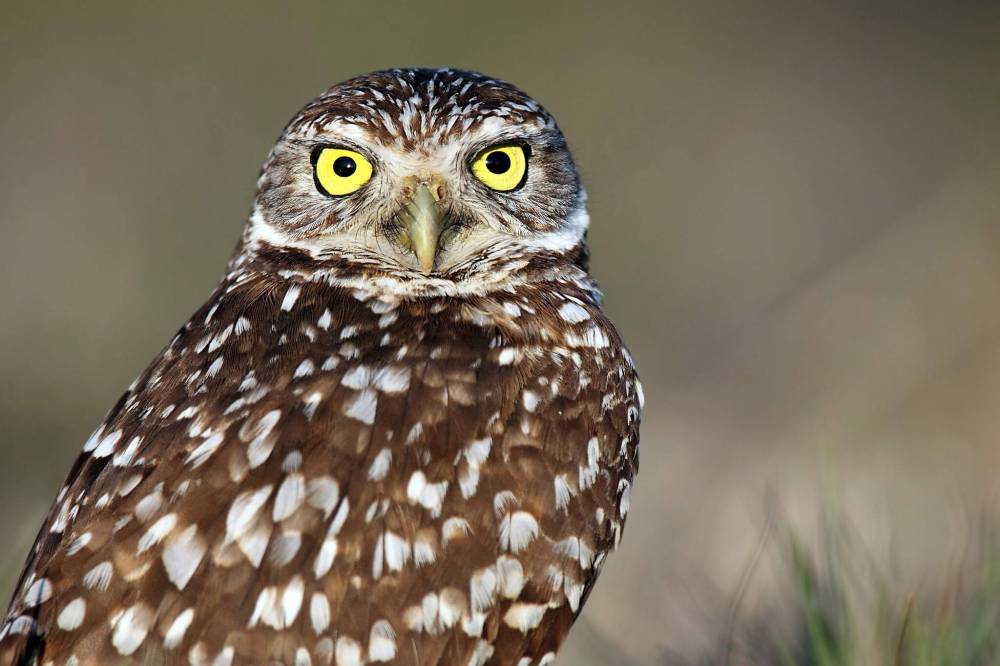
CHRIS LORENZ PHOTO
Burrowing owls are among the bird species which migrate to Canada to breed.
It quickly recovered and flew off.
But not all birds are so lucky.
Millions of birds die each year in collisions with buildings, especially during migration. But it doesn’t have to be this way. These collisions are entirely preventable with a little awareness and action. And the other major threats to birds are also entirely preventable.
There is little doubt that habitat loss is the greatest threat to birds, yet the overall impact of habitat loss on bird populations is difficult to measure. Other threats are easier to quantify.
An estimated 269 million birds are killed, and two million nests are destroyed, in Canada every year from human-related activity, according to one study. Of these, an estimated 196 million birds are killed annually by free-roaming cats (either domestic or feral). Collisions with houses, buildings, power lines and vehicles account for 64 million deaths, and pesticides for three million deaths annually.
How you can help support birds in your own backyard?
There are several recent reports and studies indicating that many bird populations in Canada are declining because of these threats. One study estimates a loss of 29 per cent of birds from Canada and the U.S. since 1970. But we can all do our part to support birds by reducing these threats in our own backyard:
1. Keep your cat tethered while outdoors or build it an outdoor enclosure.

2. Bird-proof your home’s windows by covering them with a pattern of markings. In total, 35 per cent of the collisions that birds have with human structures are from window strikes at homes; only three per cent of collisions happen with commercial buildings, while 40 per cent are with transmission lines and 21 per cent with vehicles. Birds do not understand that the trees and sky reflected in windows are not real. Examine your windows from different angles and at different times of day to determine if the reflection may pose a risk to birds. Learn more about window collisions and how to make your windows bird-safe.
3. Avoid using pesticides in your yard and, if you need to use them, please do so responsibly. Learn more about the effects of pesticides on birds and responsible pesticide use.
4. Plant native plants that birds love in your garden and yard. Rather than cleaning up your garden and yard in the fall, consider leaving plants over the winter for birds to enjoy as food and shelter. For example, waxwings and robins may feed on leftover berries, and chickadees and nuthatches may feed on sunflower seeds. Learn more about gardening for birds in Canada.
You can also get involved in bird conservation through community science initiatives or by supporting conservation groups that support birds or their habitats. For example, the Nature Conservancy of Canada protects many Important Bird Areas across the country. You can also learn more ways to help birds through NCC’s Small Acts of Conservation Challenge at natureconservancy.ca/smallacts. With a little awareness and effort, our actions can go a long way to reducing the top threats to birds.
Samantha Knight is national science manager with Nature Conservancy of Canada
History
Updated on Tuesday, May 16, 2023 10:52 AM CDT: Fixes byline