Northern reflections
Unusual, impressionistic documentary explores colonization through an intimate lens

Advertisement
Read this article for free:
or
Already have an account? Log in here »
To continue reading, please subscribe:

Digital Subscription
One year of digital access for only $205*
- Enjoy unlimited reading on winnipegfreepress.com
- Read the E-Edition, our digital replica newspaper
- Access News Break, our award-winning app
- Play interactive puzzles
*First annual payment billed as $205.00 + GST for one year. This annual subscription will automatically renew at $233.00 + GST every 52 weeks (10% off the regular annual price of $259.35). Offer available to new and qualified returning subscribers only. Cancel any time.
To continue reading, please subscribe:
Add Free Press access to your Brandon Sun subscription for only an additional
$1 for the first 4 weeks*
- Enjoy unlimited reading on winnipegfreepress.com
- Read the E-Edition, our digital replica newspaper
- Access News Break, our award-winning app
- Play interactive puzzles
*Your next Brandon Sun subscription payment will increase by $1.00 and you will be charged $17.95 plus GST for four weeks. After four weeks, your payment will increase to $24.95 plus GST every four weeks.
Read unlimited articles for free today:
or
Already have an account? Log in here »
Hey there, time traveller!
This article was published 03/06/2023 (1204 days ago), so information in it may no longer be current.
A powerful fusion of the personal and political, this documentary looks at Indigenous issues across the circumpolar North, embodied through the life and work of Inuk activist and human rights lawyer Aaju Peter.
Screening at the Dave Barber Cinematheque as part of the Human Rights Through Film program sponsored by the Canadian Museum for Human Rights, the doc (in English, Inuktitut, Danish and Kalaallisut, with English subtitles) is intimate, affecting and illuminating.
Directed by Danish filmmaker Lin Alluna, Twice Colonized is — according to the opening credits — “lived by” Peter. Attempting to break down the conventional (and often colonialist) relationship of observer and observed, this is an unusual documentary. Peter has collaborated closely as a writer and producer on the project, and at one key point, the film crew enters into her personal story.
Some viewers might remember the now 63-year-old Peter from 2016’s Angry Inuk (which Twice Colonized producer Althea Arnaaquq-Baril also worked on). She’s still angry here, with good reason.
Peter was born in Greenland, where her “reward” for good school marks was being sent to Denmark, where she boarded with different families in what she calls an attempt to “whitenize” her.
When she returned to her home community years later, she had lost some of her mother tongue, leaving her feeling stranded between two cultures. In the 1980s she moved to Iqaluit, where, as she says, she has been colonized again by Canada’s south.
Following Peter over a seven-year period and through frequent travels across Canada and Europe, the film does deal with big political ideas.
We follow Peter as she works to establish an Indigenous Forum at the European Union. We listen to her speak about environmental threats, hunting rights and suicide rates in her community. We watch as she challenges expectations that she be “pure Inuk” from 300 years ago, without a Starbucks cup.
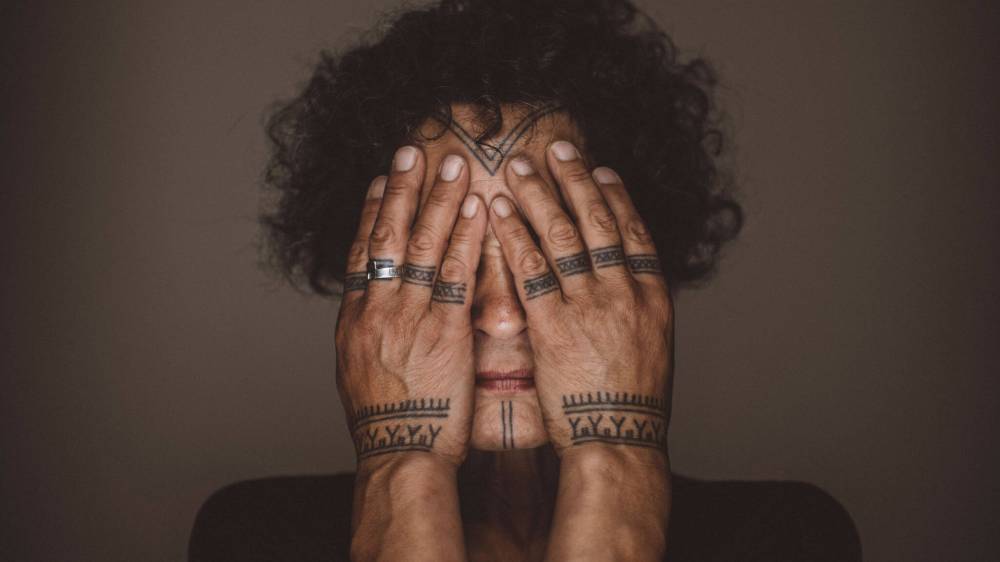
Anorak Film
Twice Colonized explores Indigenous issues in the circumpolar North through the life and work of Inuk activist and human rights lawyer Aaju Peter.
“We want to be part of this industrialized modern world,” Peter explains. “But we want it from our perspective, not the way it is imposed on us.”
But overall, the film is not didactic but impressionistic (sometimes to the point of being disorienting).

Moving in a circular way through space and time, Twice Colonized feels like a poetic collage. We see scenes of activism and advocacy mixed up with ordinary moments of Peter playing with her granddaughters, dancing by herself in a hotel room, walking city streets, waiting in airports, catching up with friends, going to the dentist.
Some wrenching family events underline the intimate, sometimes painful ways Peter’s work and life are intermeshed. When she travels with her brother to the small Greenland community of their childhood, they talk together about the intergenerational trauma of forced assimilation. (“Colony Road,” her brother says wryly, reading a street sign.)
Through phone conversations and messages, we witness an abusive relationship that Peter is working to leave. Her mind is colonized, she tells us, with holdovers from a stolen childhood and ruptured family.
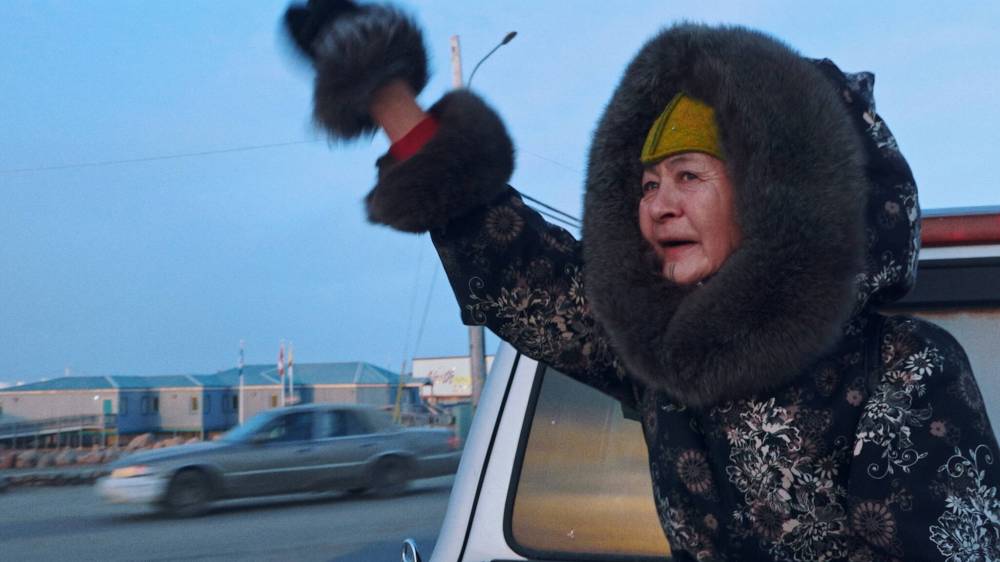
Anorak Film
Aaju Peter
Peter wants “to change the world and mend my own wounds at the same time.” This complex, empathetic film walks with her on that journey.
alison.gillmor@winnipegfreepress.com
Studying at the University of Winnipeg and later Toronto’s York University, Alison Gillmor planned to become an art historian. She ended up catching the journalism bug when she started as visual arts reviewer at the Winnipeg Free Press in 1992.
Our newsroom depends on a growing audience of readers to power our journalism. If you are not a paid reader, please consider becoming a subscriber.
Our newsroom depends on its audience of readers to power our journalism. Thank you for your support.
A film that is empowering, educating and insightful, all at once.
— Barry Hertz, Globe and Mail
Twice Colonized has a curiosity and a complexity that distinguish it from various other admiring activist portraits in the documentary sphere.
— Guy Lodge, Variety
Twice Colonized is the case of a movie in which the power and charisma of its subject hold it together.
— Nick Allen, RogerEbert.com
It’s a brave and generous undertaking from Peter, which is handled with respect and sensitivity by Alluna.
— Wendy Ide, Screen International
Movie review
Twice Colonized
Directed by Lin Alluna
● Dave Barber Cinematheque, until June 8
● 92 minutes
★★★★ out of five
Studying at the University of Winnipeg and later Toronto’s York University, Alison Gillmor planned to become an art historian. She ended up catching the journalism bug when she started as visual arts reviewer at the Winnipeg Free Press in 1992.
Our newsroom depends on a growing audience of readers to power our journalism. If you are not a paid reader, please consider becoming a subscriber.
Our newsroom depends on its audience of readers to power our journalism. Thank you for your support.
Advertisement Advertise With Us
Advertisement Advertise With Us