

EU member Slovenia overwhelmingly defeats Moscow ally Belarus for a seat on the UN Security Council
Advertisement
Read this article for free:
or
Already have an account? Log in here »
To continue reading, please subscribe:

Digital Subscription
One year of digital access for only $205*
- Enjoy unlimited reading on winnipegfreepress.com
- Read the E-Edition, our digital replica newspaper
- Access News Break, our award-winning app
- Play interactive puzzles
*First annual payment billed as $205.00 + GST for one year. This annual subscription will automatically renew at $233.00 + GST every 52 weeks (10% off the regular annual price of $259.35). Offer available to new and qualified returning subscribers only. Cancel any time.
To continue reading, please subscribe:
Add Free Press access to your Brandon Sun subscription for only an additional
$1 for the first 4 weeks*
- Enjoy unlimited reading on winnipegfreepress.com
- Read the E-Edition, our digital replica newspaper
- Access News Break, our award-winning app
- Play interactive puzzles
*Your next Brandon Sun subscription payment will increase by $1.00 and you will be charged $17.95 plus GST for four weeks. After four weeks, your payment will increase to $24.95 plus GST every four weeks.
Read unlimited articles for free today:
or
Already have an account? Log in here »
Hey there, time traveller!
This article was published 06/06/2023 (1181 days ago), so information in it may no longer be current.
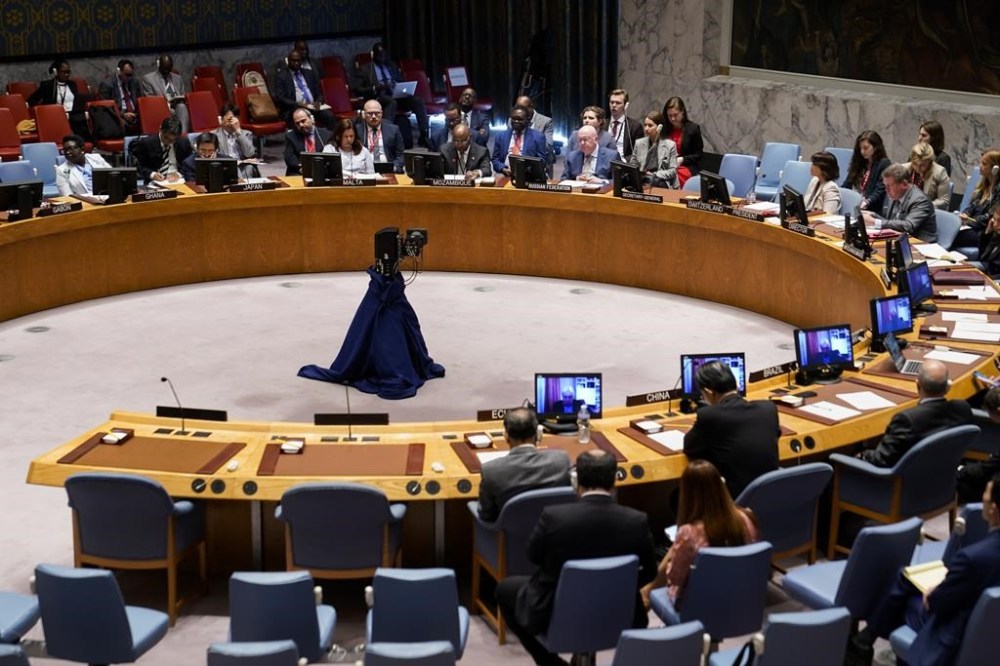
UNITED NATIONS (AP) — In an election that reflected strong global opposition to Russia’s war against Ukraine, NATO and European Union member Slovenia soundly defeated Moscow’s close ally Belarus on Tuesday for a seat on the U.N. Security Council starting in January.
The race between the two members of the U.N.’s East European group was the only contested election for five seats on the U.N.’s most powerful body, and was closely watched because of their opposing views on Russia’s Feb. 24, 2022, invasion of Ukraine.
In the secret ballot election in the 193-member General Assembly, Slovenia received 153 votes while Belarus got 38 votes.
“U.N. member states doubtlessly decided that Belarus’ grave human rights abuses at home and whitewashing of Russian atrocities in Ukraine disqualify it from serving on the Security Council, a crucial body for safeguarding human rights,” said Louis Charbonneau, U.N. director at Human Rights Watch.
The four other countries elected to the Security Council to serve two-year terms, who faced no opposition, were Guyana, which received 191 votes, Sierra Leone with 188 votes, Algeria with 184 votes and South Korea with 180 votes.
The 10 non-permanent seats on the council are allotted to regional groups, who usually select candidates, but sometimes cannot agree on an uncontested slate.
The five new council members will start their terms on Jan. 1, replacing five countries whose two-year terms end on Dec. 31 — Albania, Brazil, Gabon, Ghana and United Arab Emirates.
They will join the five veto-wielding permanent members of the council — the United States, Russia, China, United Kingdom and France — and the five countries elected last year: Ecuador, Japan, Malta, Mozambique and Switzerland.
The Security Council is charged with maintaining international peace and security, but because of Russia’s veto power it has been unable to take action on Ukraine.
Slovenia’s Foreign Minister Tanja Fajon told reporters she was surprised at the support for her country. She said it proves that Slovenia convinced the vast majority of U.N. member nations that it can be “a reliable partner.”
As a small country committed to multilateralism it’s extremely important to speak to everyone and “embrace all parts of the world, and to work together for a better world,” Fajon said. She would not talk about the Ukraine war.
Slovenia, which was part of Yugoslavia before it broke up in the early 1990s, will be joining the council for the second time since 1998-99. This will also be Sierra Leone’s second time on the council.
Sierra Leone’s Foreign Minister David Francis told reporters it was “a great day for this small, progressive, confident country … that has made the transition from war to peace” to return to the council after 53 years.
Francis said his country knows the devastation of civil war and the plight of bitterly divided communities, and will bring its experience to the Security Council because it knows “what the United Nations can do in terms of deploying large peacekeeping and peace support operations.”
South Korea’s U.N. Ambassador Joonkook Hwang said his country’s four priorities when it joins the council will be peacekeeping and peacebuilding, promoting women in these activities, cybersecurity, and the impact of climate on security as well as counterterrorism and North Korea’s nuclear program.
He expressed hope that the council, which has been blocked by Russia and China from responding to the North’s escalating nuclear and ballistic missile programs, will be able to speak with a “unified voice, because this is not just about your politics” but about violations of international law and multiple Security Council resolutions.
This will be the third time on the council for South Korea and Guyana and the fourth time for Algeria.