All hail the rising sun! Stonehenge welcomes 8,000 visitors for the summer solstice
Advertisement
Read this article for free:
or
Already have an account? Log in here »
To continue reading, please subscribe:

Digital Subscription
One year of digital access for only $205*
- Enjoy unlimited reading on winnipegfreepress.com
- Read the E-Edition, our digital replica newspaper
- Access News Break, our award-winning app
- Play interactive puzzles
*First annual payment billed as $205.00 + GST for one year. This annual subscription will automatically renew at $233.00 + GST every 52 weeks (10% off the regular annual price of $259.35). Offer available to new and qualified returning subscribers only. Cancel any time.
To continue reading, please subscribe:
Add Free Press access to your Brandon Sun subscription for only an additional
$1 for the first 4 weeks*
- Enjoy unlimited reading on winnipegfreepress.com
- Read the E-Edition, our digital replica newspaper
- Access News Break, our award-winning app
- Play interactive puzzles
*Your next Brandon Sun subscription payment will increase by $1.00 and you will be charged $17.95 plus GST for four weeks. After four weeks, your payment will increase to $24.95 plus GST every four weeks.
Read unlimited articles for free today:
or
Already have an account? Log in here »
Hey there, time traveller!
This article was published 20/06/2023 (1185 days ago), so information in it may no longer be current.
STONEHENGE, England (AP) — All hail the rising sun.
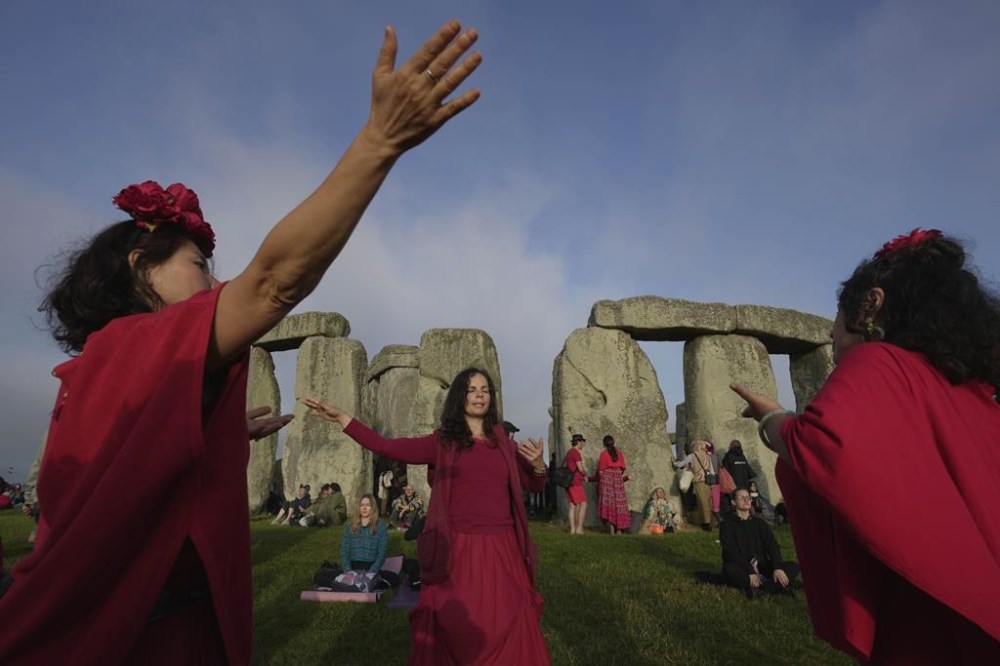
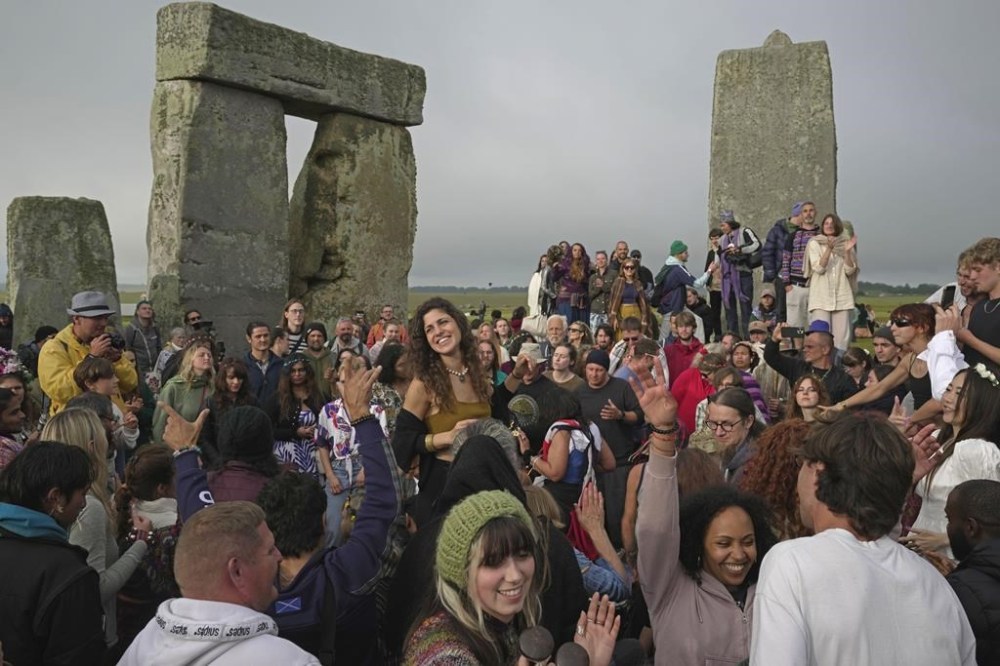
Around 8,000 revelers gathered around a prehistoric stone circle on a plain in southern England to express their devotion to the sun, or to have some communal fun.
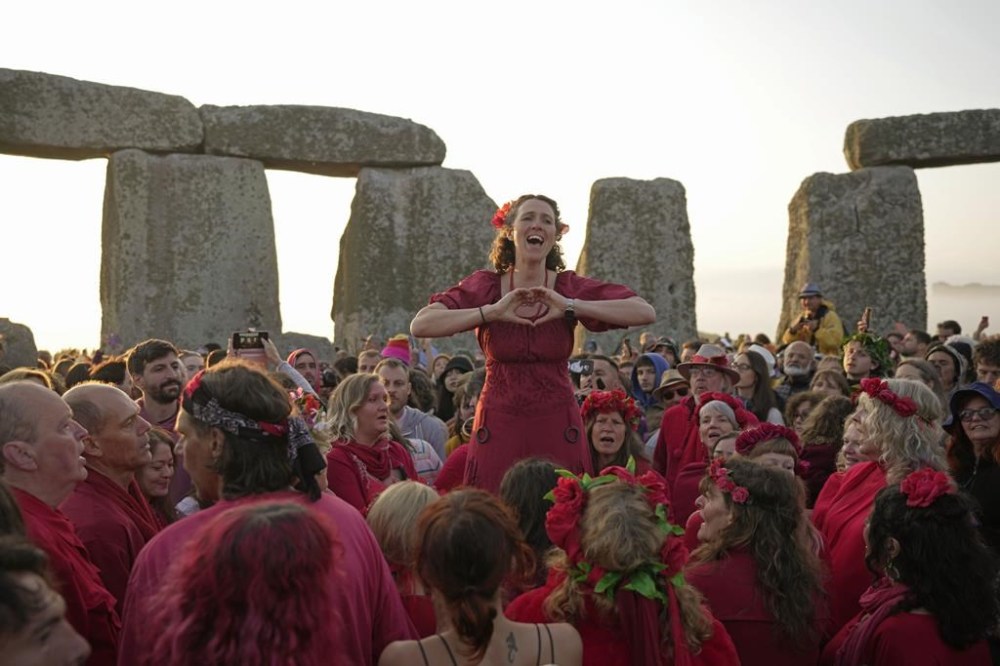
Druids, pagans, hippies, local residents and tourists, many clad in an array of colorful costumes and even antlers, stayed and celebrated at Stonehenge for the night and greeted sunrise on Wednesday, which is the longest day in the Northern Hemisphere.
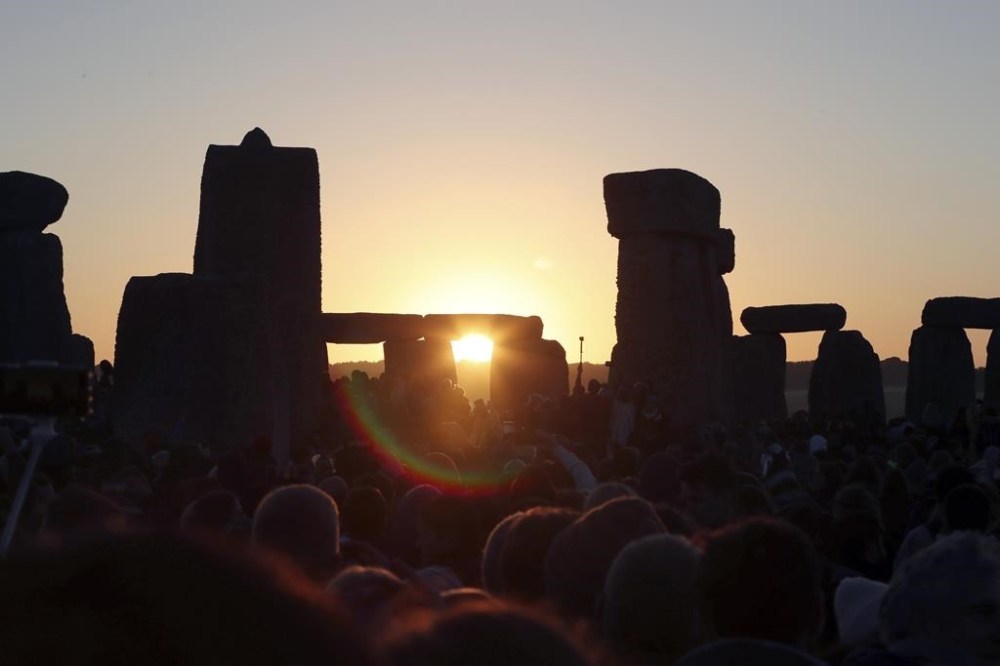
At dawn, the sun rose behind what is known as the Heel Stone in the northeast part of the horizon and the first rays shone into the heart of Stonehenge, one of the world’s most famous prehistoric monuments and a World Heritage Site.
A sun-filled dawn followed a slightly misty sunrise, which was greeted with drumming, chanting and cheering.
“Stonehenge continues to captivate and to bring people together to celebrate the seasons, just as it has done for thousands of years,” said Nichola Tasker, director of Stonehenge at English Heritage, a charity that manages hundreds of historic sites.
“There was a wonderful atmosphere from sunset to sunrise, and everybody enjoyed a very atmospheric morning,” she added.
Local police said two people were arrested on suspicion of a public order offense after they were refused entry due to intoxication.
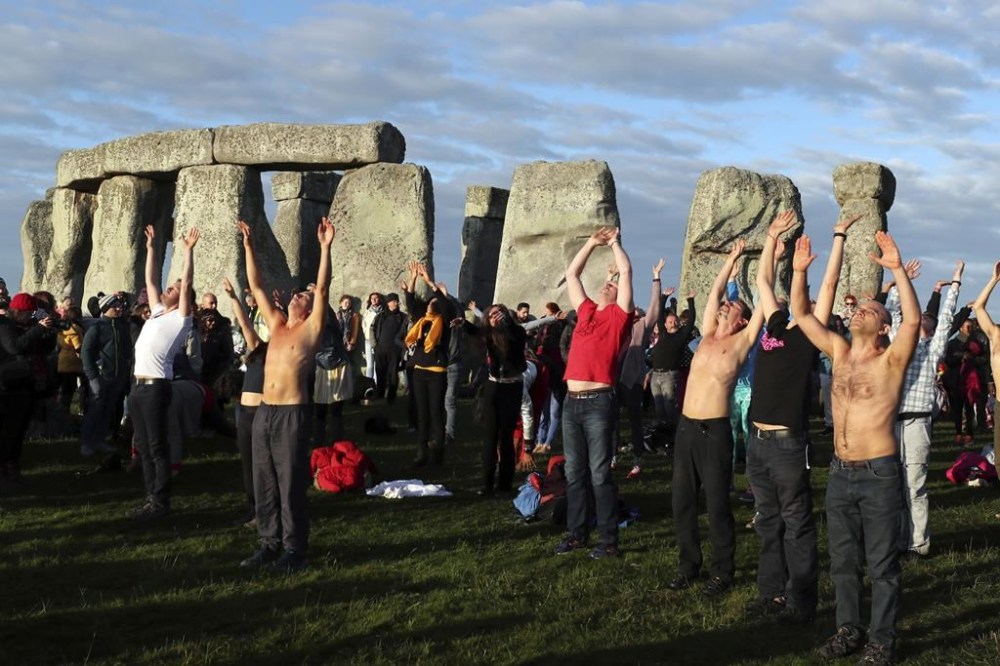
“Everyone has been joyous, enjoying the event and having a glorious time and it has been peaceful and safe,” said Wiltshire Police Chief Constable Catherine Roper, who attended the solstice for the first time.
In addition to the 8,000 people present, English Heritage said that approximately 154,000 people tuned in from around the world to watch the sunset and sunrise on the charity’s livestream.
All over the U.K., optimism will reign supreme as summer officially starts. It’s no coincidence that the nearby Glastonbury Festival, one of the world’s biggest music events, opens its doors on Wednesday, too. Both Stonehenge and Glastonbury supposedly lie on ley lines — mystical energy connections across the U.K.
For the thousands making the pilgrimage to Stonehenge, approximately 80 miles (128 kilometers) southwest of London, it is more than looking forward to Elton John at Glastonbury or a few ciders in the sun. Many of those present at Stonehenge will be making the short 50-mile (80-kilometer) journey further west to Glastonbury over the coming days.
For druids, modern-day spiritualists linked to the ancient Celtic religious order, Stonehenge has a centuries-long importance, and they performed their rituals around the solstice in their traditional white robes. It’s effectively all about the cycle of life, of death and rebirth.

This year, the summer solstice at Stonehenge started at 7 p.m. Tuesday and ran through 8 a.m. Wednesday. For this one night, worshippers are allowed to spend time inside the stone circle. Some chanted or played their acoustic guitars or banged their drums. Alcohol was prohibited, as were sound systems. Blankets were allowed, but no sleeping bags, please. And definitely, no climbing on the stones.
The rules have been tightened over the decades, certainly during the coronavirus pandemic. Back in the less-restrained past, tens of thousands would travel by foot, car, bus or motorcycle to worship at the solar temple, or just have a bit of fun.
Stonehenge is a symbol of British culture and history and remains one of the country’s biggest tourist draws, despite the seemingly permanent traffic jams on the nearby A303 highway, a popular route for motorists traveling to and from the southwest of England.
Stonehenge was built on the flat lands of Salisbury Plain in stages starting 5,000 years ago, with the unique stone circle erected in the late Neolithic period about 2,500 B.C. Some of the stones, the so-called bluestones, are known to have come from the Preseli Hills in southwest Wales, nearly 150 miles (240 kilometers) away, but the origins of others remain a mystery.
The site’s meaning has been the subject of vigorous debate, with some theories seemingly more outlandish, if not alien, than others.

English Heritage notes several explanations — from Stonehenge being a coronation place for Danish kings, a druid temple, a cult center for healing, or an astronomical computer for predicting eclipses and solar events.
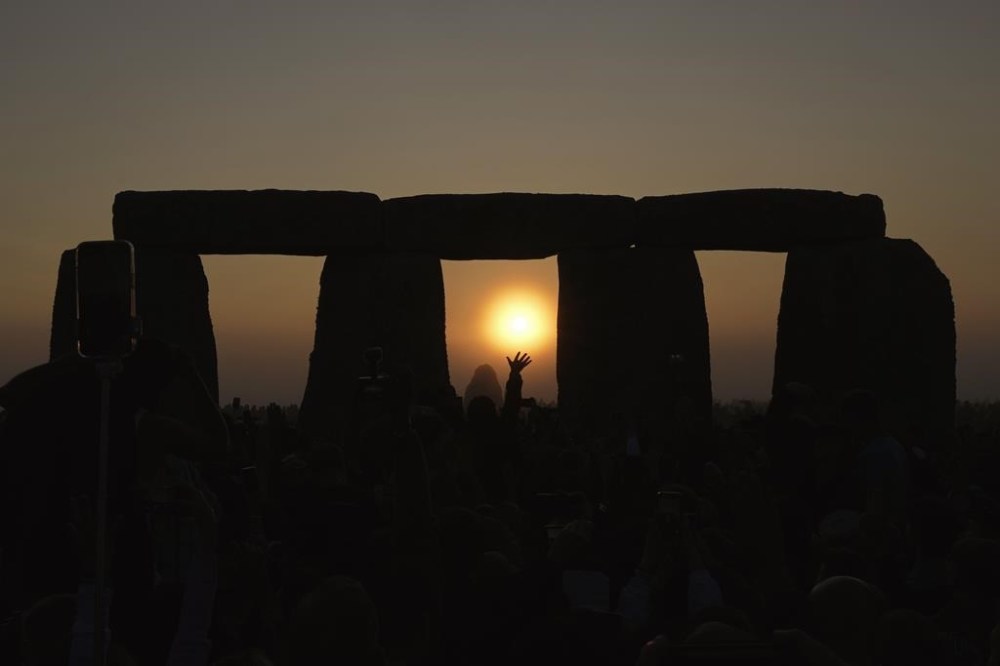
The charity said the most generally accepted interpretation “is that of a prehistoric temple aligned with the movements of the sun.”
After all, the stones match perfectly with the sun at both the summer and winter solstices.
___
Pylas reported from London.
The Free Press acknowledges the financial support it receives from members of the city’s faith community, which makes our coverage of religion possible.