Ambitious Saudi plans to ramp up Hajj could face challenges from climate change
Advertisement
Read this article for free:
or
Already have an account? Log in here »
To continue reading, please subscribe:

Digital Subscription
One year of digital access for only $205*
- Enjoy unlimited reading on winnipegfreepress.com
- Read the E-Edition, our digital replica newspaper
- Access News Break, our award-winning app
- Play interactive puzzles
*First annual payment billed as $205.00 + GST for one year. This annual subscription will automatically renew at $233.00 + GST every 52 weeks (10% off the regular annual price of $259.35). Offer available to new and qualified returning subscribers only. Cancel any time.
To continue reading, please subscribe:
Add Free Press access to your Brandon Sun subscription for only an additional
$1 for the first 4 weeks*
- Enjoy unlimited reading on winnipegfreepress.com
- Read the E-Edition, our digital replica newspaper
- Access News Break, our award-winning app
- Play interactive puzzles
*Your next Brandon Sun subscription payment will increase by $1.00 and you will be charged $17.95 plus GST for four weeks. After four weeks, your payment will increase to $24.95 plus GST every four weeks.
Read unlimited articles for free today:
or
Already have an account? Log in here »
Hey there, time traveller!
This article was published 22/06/2023 (1193 days ago), so information in it may no longer be current.
MECCA, Saudi Arabia (AP) — Saudi Arabia has ambitious plans to welcome millions more pilgrims to Islam’s holiest sites. But as climate change heats up an already scorching region, the annual Hajj pilgrimage — much of which takes place outdoors in the desert — could prove even more daunting.
The increased number of pilgrims, with the associated surge in international air travel and infrastructure expansion, also raises sustainability concerns, even as the oil giant pursues the goal of getting half its energy from renewable resources by 2030.
Next week, Saudi Arabia hosts the first Hajj pilgrimage without the restrictions imposed during the coronavirus pandemic. Some 2.5 million people took part in the pilgrimage in 2019, and around 2 million are expected this year.
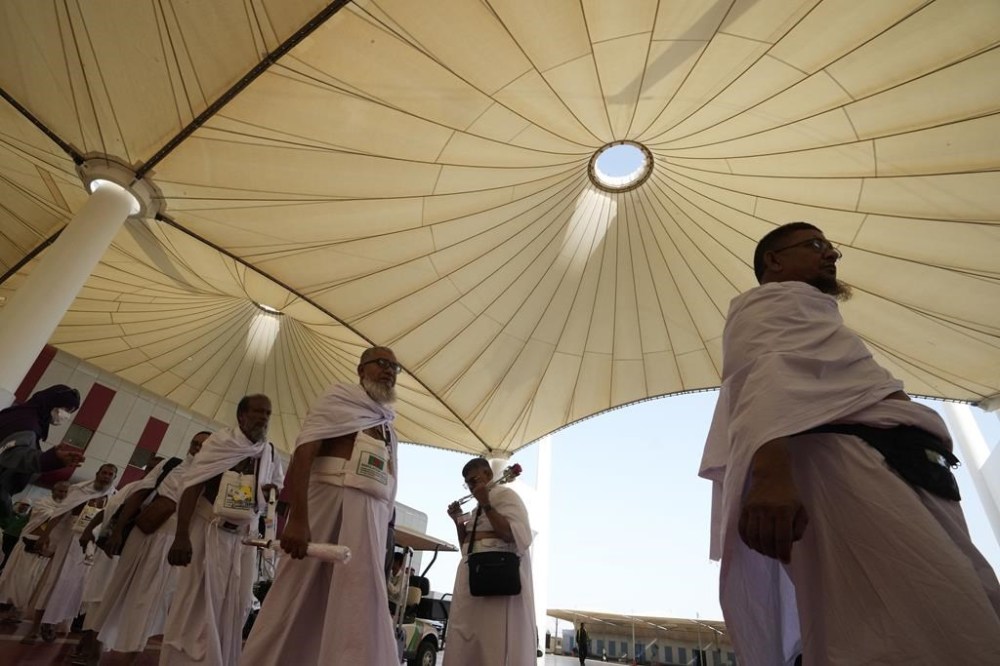
Under Crown Prince Mohammed bin Salman’s wide-ranging plan to overhaul the kingdom’s economy, known as Vision 2030, 30 million pilgrims would take part in the Hajj and Umrah — a smaller, year-round pilgrimage. That would be an increase of more than 10 million from pre-pandemic levels.
It will require a vast expansion of hotels and other infrastructure in Mecca and Medina, ancient cities already largely obliterated by high-rises and shopping malls. The additional pilgrims will require more long-distance flights, more buses and cars, more water and electricity.
The Associated Press reached out to several Saudi officials with detailed questions but received no response. It’s unclear what, if any, studies the government has done on the environmental impact of the pilgrimage or whether that figures into its plans. And well-intentioned measures, like a high-speed railway network, aren’t enough to remove polluting traffic in and around the holy city.
The trains whip through the arid landscape at top speeds of 300 km/h (186 mph), carrying pilgrims in air-conditioned comfort from Jeddah to Mecca. But they stop several kilometers away from the Grand Mosque, meaning pilgrims must either walk at least an hour or take a bus or car to the holy site. The $19 one-way price from Jeddah’s airport to Mecca may also be out of reach for pilgrims on lower incomes.
The Hajj is one of the five pillars of Islam, and all Muslims who are able to are required to undertake it at least once in their lives. For pilgrims, retracing the footsteps of the Prophet Muhammad is a profound religious experience that wipes away sins, deepens one’s faith and unifies Muslims the world over.
The Saudi royal family’s legitimacy is largely rooted in its custodianship of Islam’s holiest sites and its ability to host one of the largest annual religious gatherings on the planet.
Experts have found that the Hajj both contributes to climate change and will be affected by it in the coming decades as one of the hottest places on Earth gets even warmer.
A study of the 2018 Hajj by experts from Victoria University in Melbourne estimated that the five-day pilgrimage produced over 1.8 million tons of greenhouse gases, roughly the amount New York City emits every two weeks. The biggest contributor was aviation, accounting for 87% of emissions.
Abdullah Abonomi, a Saudi researcher and one of the authors of the study, said Saudi authorities have embraced sustainability as part of Vision 2030, which calls for preserving natural resources in order to attract pilgrims, tourists and businesses.
“Everything has changed,” he said, pointing to the establishment of national centers to coordinate sustainable policies, the creation of an environmental police force to crack down on violations and the integration of sustainability into university courses on tourism.
“If you ask four years ago about sustainability … no one understands what sustainability is,” he said. “But today, everything is going to be better. And I know we are late, but better late than never.”
In the past, he says, cars and buses packed with pilgrims filled the streets around Mecca, belching exhaust into the air, but expansion of the Grand Mosque has led to bigger courtyards and increased pedestrianisation in most of the routes leading to the holy site.
Still, human bottlenecks have replaced traffic, and garbage swirls in clouds of heat. For travel around Mina and Arafat, two crucial Hajj locations, cars and buses remain the two most widespread forms of transport. The journey by foot, in sweltering temperatures, is arduous but can prove faster than four wheels.
In its Hajj ambitions, Saudi Arabia faces managing huge numbers of pilgrims in a rapidly warming world.
During the rituals, pilgrims often walk for hours outside, scale a desert hill known as the Mountain of Mercy, where the prophet is said to have delivered his last sermon, and cast stones at pillars representing the devil in a desert plain. They pack into the Grand Mosque in Mecca to circumambulate the Kaaba. On top of the exertions, the Hajj population skews to the elderly, who are more vulnerable to heat.
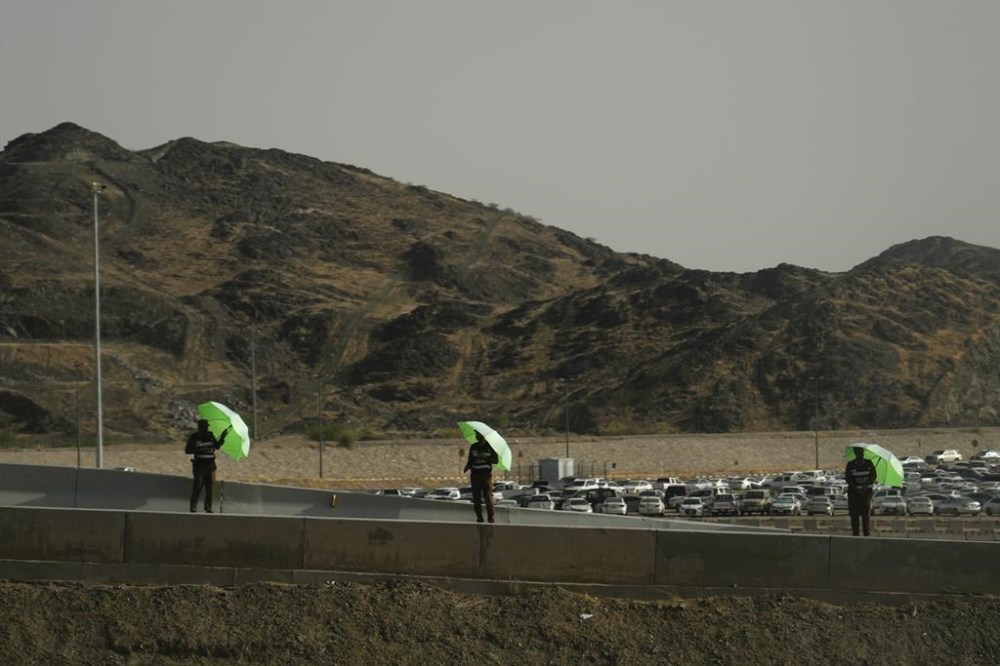
On an evening this week around sunset in Mecca, temperatures hovered around 37 degrees Celsius (98 degrees Fahrenheit). The crowds made it feel hotter, stifling any airflow. In a bustling basement supermarket near the Grand Mosque, pilgrims bought handheld fans that spray water on the face and every kind of umbrella.
A 2019 study by experts at the Massachusetts Institute of Technology found that even if the world succeeds in mitigating the worst effects of climate change, the Hajj would be held in temperatures exceeding an “extreme danger threshold” from 2047 to 2052 and from 2079 to 2086.
Islam follows a lunar calendar, so the Hajj falls around 11 days earlier each year. In 2030, the Hajj will occur in April, and over the next several years it will fall in the winter, when temperatures are milder.
In recent years, Saudi authorities have installed large awnings and misters around holy sites to cool pilgrims. As temperatures climb, authorities will likely need to step up such measures or introduce new strategies like limiting pilgrim numbers in higher-heat years, the heat stress study concluded.
“People who want to do Hajj should get the opportunity to do it,” said Elfatih Eltahir, one of the study’s authors. “Global warming is going to make it a little bit more difficult — for some years, for some individuals.”
Muslim activists have launched grassroots initiatives aimed at a “green Hajj,” encouraging pilgrims to only make the journey once, to avoid single-use plastics and to offset carbon emissions by planting trees.
The Hajj “can be green and sustainable if there are smart policies and technology to lower the ecological footprint,” said Odeh Jayyousi, a professor at the Arabian Gulf University in Bahrain who researches sustainability and innovation.
The use of biodegradable plastics, reusable tents, and renewable energy would cut down on greenhouse gases, he said. Artificial intelligence could be brought to bear on logistics, streamlining travel and ensuring that planes and busses are full and do not spend too much time idling.
“The young generation are mindful of the trade-offs and the need to change consumption patterns,” Jayyousi said. “Hajj can offer a platform for displaying the best green practices to global audiences.”
___
Associated Press religion coverage receives support through the AP’s collaboration with The Conversation US, with funding from Lilly Endowment Inc. The AP is solely responsible for this content.
The Free Press acknowledges the financial support it receives from members of the city’s faith community, which makes our coverage of religion possible.