Deep sea mining permits may be coming soon. What are they and what might happen?
Advertisement
Read this article for free:
or
Already have an account? Log in here »
To continue reading, please subscribe:

Digital Subscription
One year of digital access for only $205*
- Enjoy unlimited reading on winnipegfreepress.com
- Read the E-Edition, our digital replica newspaper
- Access News Break, our award-winning app
- Play interactive puzzles
*First annual payment billed as $205.00 + GST for one year. This annual subscription will automatically renew at $233.00 + GST every 52 weeks (10% off the regular annual price of $259.35). Offer available to new and qualified returning subscribers only. Cancel any time.
To continue reading, please subscribe:
Add Free Press access to your Brandon Sun subscription for only an additional
$1 for the first 4 weeks*
- Enjoy unlimited reading on winnipegfreepress.com
- Read the E-Edition, our digital replica newspaper
- Access News Break, our award-winning app
- Play interactive puzzles
*Your next Brandon Sun subscription payment will increase by $1.00 and you will be charged $17.95 plus GST for four weeks. After four weeks, your payment will increase to $24.95 plus GST every four weeks.
Read unlimited articles for free today:
or
Already have an account? Log in here »
Hey there, time traveller!
This article was published 02/07/2023 (1174 days ago), so information in it may no longer be current.
JAKARTA, Indonesia (AP) — The International Seabed Authority — the United Nations body that regulates the world’s ocean floor — is preparing to resume negotiations that could open the international seabed for mining, including for materials critical for the green energy transition.
Years long negotiations are reaching a critical point where the authority will soon need to begin accepting mining permit applications, adding to worries over the potential impacts on sparsely researched marine ecosystems and habitats of the deep sea.
Here’s a look at what deep sea mining is, why some companies and countries are applying for permits to carry it out and why environmental activists are raising concerns.
WHAT IS DEEP SEA MINING?
Deep sea mining involves removing mineral deposits and metals from the ocean’s seabed. There are three types of such mining: taking deposit-rich polymetallic nodules off the ocean floor, mining massive seafloor sulphide deposits and stripping cobalt crusts from rock.
These nodules, deposits and crusts contain materials, such as nickel, rare earths, cobalt and more, that are needed for batteries and other materials used in tapping renewable energy and also for everyday technology like cellphones and computers.
Engineering and technology used for deep sea mining are still evolving. Some companies are looking to vacuum materials from seafloor using massive pumps. Others are developing artificial intelligence-based technology that would teach deep sea robots how to pluck nodules from the floor. Some are looking to use advanced machines that could mine materials off side of huge underwater mountains and volcanoes.
Companies and governments view these as strategically important resources that will be needed as onshore reserves are depleted and demand continues to rise.
HOW IS DEEP SEA MINING REGULATED NOW?
Countries manage their own maritime territory and exclusive economic zones, while the high seas and the international ocean floor are governed by the United Nations Convention on the Law of the Seas. It is considered to apply to states regardless of whether or not they have signed or ratified it. Under the treaty, the seabed and its mineral resources are considered the “common heritage of mankind” that must be managed in a way that protects the interests of humanity through the sharing of economic benefits, support for marine scientific research, and protecting marine environments.
Mining companies interested in deep sea exploitation are partnering with countries to help them get exploration licenses.
More than 30 exploration licenses have been issued so far, with activity mostly focused in an area called the Clarion-Clipperton Fracture Zone, which spans 1.7 million square miles (4.5 million square kilometers) between Hawaii and Mexico.
WHY IS THERE PRESSURE ON THE ISA TO ESTABLISH REGULATIONS NOW?
A clause of the U.N. treaty requires the ISA to complete regulations governing deep sea exploitation by July 2023.
Countries and private companies can start applying for provisional licenses if the U.N. body fails to approve a set of rules and regulations by July 9. Experts say its unlike it will since the process will likely take several years.
WHAT ARE THE ENVIRONMENTAL CONCERNS?
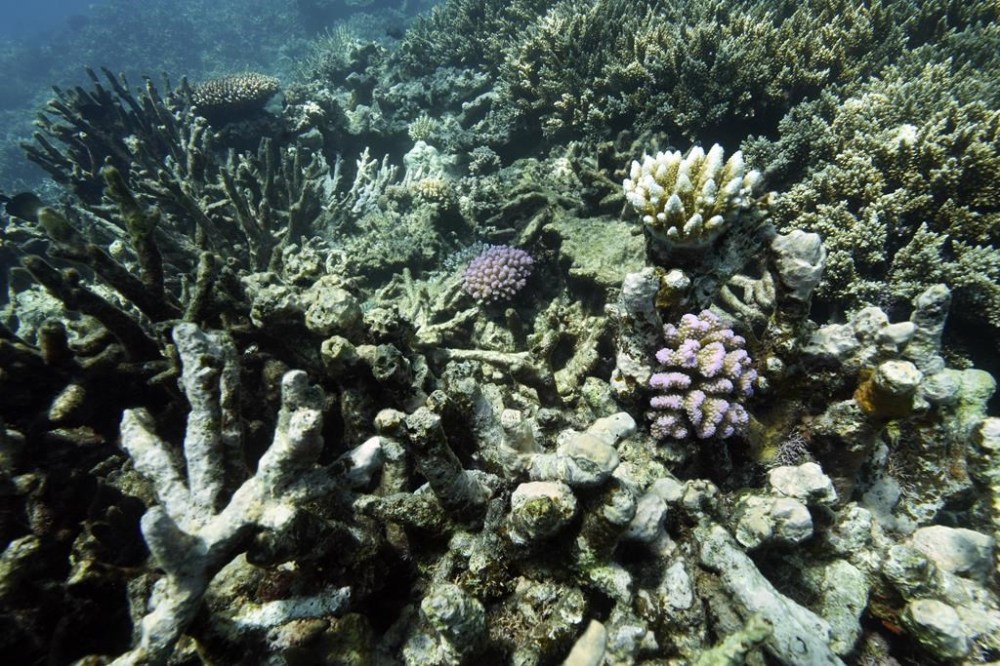
Only a small part of the deep seabed has been explored and conservationists worry that ecosystems will be damaged by mining, especially without any environmental protocols.
Damage from mining can include noise, vibration and light pollution, as well as possible leaks and spills of fuels and other chemicals used in the mining process.
Sediment plumes from the some mining processes are a major concern. Once valuable materials are taken extracted, slurry sediment plumes are sometimes pumped back into the sea. That can harm filter feeding species like corals and sponges, and could smother or otherwise interfere with some creatures.
The full extent of implications for deep sea ecosystems is unclear, but scientists have warned that biodiversity loss is inevitable and potentially irreversible.
“We’re constantly finding new stuff and it’s a little bit premature to start mining the deep sea when we don’t really understand the biology, the environments, the ecosystems or anything else,” said Christopher Kelley, a biologist with research expertise in deep sea ecology.
WHAT’S NEXT?

The ISA’s Legal and Technical Commission, which oversees the development of deep sea mining regulations, will meet in early July to discuss the yet-to-be mining code draft.
The earliest that mining under ISA regulations could begin is in late 2024 or 2025. Applications for mining must be considered and environmental impact assessments need to be carried out.
In the meantime, some companies — such as Google, Samsung, BMW and others — have backed the World Wildlife Fund’s call to pledge to avoid using minerals that have been mined from the planet’s oceans. More than a dozen countries—including France, Germany and several Pacific Island nations— have officially called for a ban, pause or moratorium on deep sea mining at least until environmental safeguards are in place, although it’s unclear how many other countries support such mining. Other countries, such as Norway, are proposing opening their waters to mining.
___
Associated Press climate and environmental coverage receives support from several private foundations. See more about AP’s climate initiative here. The AP is solely responsible for all content.