

Affordable food — there’s no bigger issue
Advertisement
Read this article for free:
or
Already have an account? Log in here »
To continue reading, please subscribe:

Digital Subscription
One year of digital access for only $205*
- Enjoy unlimited reading on winnipegfreepress.com
- Read the E-Edition, our digital replica newspaper
- Access News Break, our award-winning app
- Play interactive puzzles
*First annual payment billed as $205.00 + GST for one year. This annual subscription will automatically renew at $233.00 + GST every 52 weeks (10% off the regular annual price of $259.35). Offer available to new and qualified returning subscribers only. Cancel any time.
To continue reading, please subscribe:
Add Free Press access to your Brandon Sun subscription for only an additional
$1 for the first 4 weeks*
- Enjoy unlimited reading on winnipegfreepress.com
- Read the E-Edition, our digital replica newspaper
- Access News Break, our award-winning app
- Play interactive puzzles
*Your next Brandon Sun subscription payment will increase by $1.00 and you will be charged $17.95 plus GST for four weeks. After four weeks, your payment will increase to $24.95 plus GST every four weeks.
Read unlimited articles for free today:
or
Already have an account? Log in here »
Hey there, time traveller!
This article was published 06/07/2023 (1170 days ago), so information in it may no longer be current.
Grocery rebates: it’s an idea whose time has come in Canada.
This week, the federal government is depositing grocery rebates in the accounts of 11 million low- and modest-income Canadian households. Eligible families of four are receiving up to $468. Single people with no children in the household are getting up to $234, and seniors are receiving up to $225. Some will say those receiving the rebates are the lucky ones.
With all due respect to those who say that, we might have run into obstacles on the road to a civil conversation. My memories of the anguished face of a person I have loved for my entire life, makes it difficult for me to listen to people who envy and or resent those who get government support.
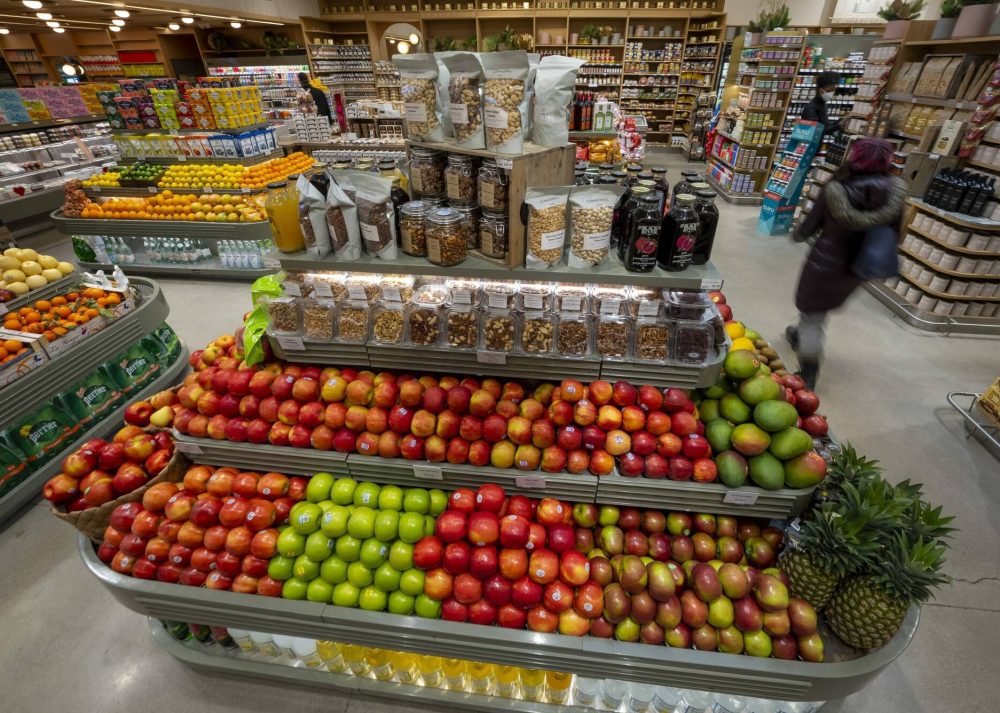
Frank Gunn / Canadian Press Files
Not being able to afford the basics can change you — permanently.
The story has been told to me countless times by that person — a person with a face that lost its smile in the winter of 1957. It’s become a ritual to listen to that difficult story at least once a year on Mother’s Day. And so two months ago, I heard it again from the mouth of an 89-year-old widow living alone in a home she has lived in for more than half a century.
We had arrived in Canada in February of 1957. My then-23-year-old mum was taking me, her two-and-a-half year old toddler, for a walk. I saw another child eating a roll. It was a Kaiser roll, sometimes called a Vienna roll. I asked my mum to buy me one.
In the days when life was far more affordable in Canada, the price of those rolls was a penny. I get that they now sell for a loonie. But I am being as serious as a heart attack. In 1957, that roll sold for just one penny.
So who couldn’t afford a penny? My mum.
I don’t have to describe in the column of a renowned Canadian newspaper what the anguish is like for a mother who cannot afford to buy her child a roll, whether it’s at the 1957 price or the ridiculously expensive 2023 price. But I can tell you this. The pain is deep and it can last for a lifetime. I am an eyewitness to the affordability story — despite the reality that over a 50-year-long career as a public communicator, Canadian and American listeners, viewers and readers have been very generous with this bi-weekly visitor.
I am a witness to affordability — not just because of the work I have done, staying in touch with real people and their real needs. I have stayed in touch with that 23-year-old immigrant, who, on paper, may be middle class.
But you would never know it, based on what she buys, and what her austerity-conditioned mind chooses not to buy.
Despite the enormous heat that is gripping the country this summer, she will not get an air conditioner for her bedroom or the kitchen. And before you lose your temper and shout, “Why doesn’t her son get her one?”, she will not accept it, just as she won’t accept a new TV or microwave, or vacuum cleaner or a host of things that would make her life somewhat easier.
Affordability is not a one season, or one year, or one decade issue. It only leaves the affected mind when the person leaves this Earth.
Nobody joining me for this bi-weekly visit honestly wonders what the No. 1 issue is, and what it will continue to be.
When cans of soup cost more than $3 and three-pound baskets of peaches are $10, and red peppers are $4, you don’t need a pollster to inform you about the No. 1 issue in the land.

You see it every time you’re at the supermarket.
You can see it in the faces of people young and old, staring at the prices before they put the groceries in the cart.
You see it in the furrowed brows of people who stare at what they have just put into the cart and then proceeding to take the apples or carrots or spaghetti back out, placing them reluctantly back on the shelf.
If you want to see happy faces and gregarious people, you used to be able to find them in the grocery stores, if you were shopping in the 1950s and ’60s — and you were not a recently arrived refugee.
Charles Adler is a longtime political commenter and podcaster. charles@charlesadler.com