
Rice crops are being threatened by El Nino after grain supplies were disrupted by the war in Ukraine

Advertisement

Advertise with us

NEW DELHI (AP) — Warmer, drier weather because of an earlier than usual El Nino is expected to hamper rice production across Asia, hitting global food security in a world still reeling from the impacts of the war in Ukraine.

Read this article for free:


or

Already have an account? Log in here »

To continue reading, please subscribe:

Subscribe and receive a limited-edition Free Press branded hat or tote.

Digital Subscription

One year of digital access for only $205*

  • Enjoy unlimited reading on winnipegfreepress.com
  • Read the E-Edition, our digital replica newspaper
  • Access News Break, our award-winning app
  • Play interactive puzzles

*First annual payment billed as $205.00 + GST for one year. This annual subscription will automatically renew at $233.00 + GST every 52 weeks (10% off the regular annual price of $259.35). Offer available to new and qualified returning subscribers only. Cancel any time.

To continue reading, please subscribe:

Add Free Press access to your Brandon Sun subscription for only an additional

$1 for the first 4 weeks*

  • Enjoy unlimited reading on winnipegfreepress.com
  • Read the E-Edition, our digital replica newspaper
  • Access News Break, our award-winning app
  • Play interactive puzzles
Start now

*Your next Brandon Sun subscription payment will increase by $1.00 and you will be charged $17.95 plus GST for four weeks. After four weeks, your payment will increase to $24.95 plus GST every four weeks.

Hey there, time traveller!
This article was published 12/07/2023 (1190 days ago), so information in it may no longer be current.

NEW DELHI (AP) — Warmer, drier weather because of an earlier than usual El Nino is expected to hamper rice production across Asia, hitting global food security in a world still reeling from the impacts of the war in Ukraine.

An El Nino is a natural, temporary and occasional warming of part of the Pacific that shifts global weather patterns, and climate change is making them stronger. The National Oceanic and Atmospheric Administration announced this one in June, a month or two earlier than it usually does. This gives it time to grow. Scientists say there’s a one in four chance it will expand to supersized levels.

That’s bad news for rice farmers, particularly in Asia where 90% of the world’s rice is grown and eaten, since a strong El Nino typically means less rainfall for the thirsty crop.
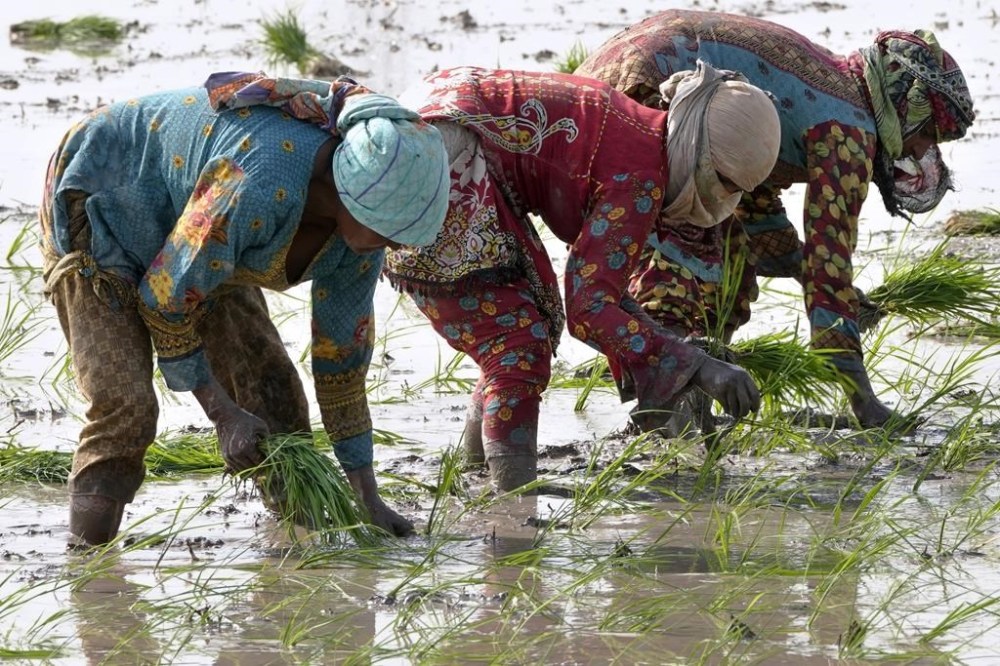
Villagers plant rice in a paddy field on the outskirts of Lahore, Pakistan, Thursday, June 8, 2023. Experts are warning that rice production across South and Southeast Asia is likely to suffer with the world heading into an El Nino. (AP Photo/K.M. Chaudary)

Past El Ninos have resulted in extreme weather, ranging from drought to floods.

There are already “alarm bells,” said Abdullah Mamun, a research analyst at the International Food Policy Research Institute or IFPRI, pointing to rising rice prices due to shortfalls in production. The average price of 5% broken white rice in June in Thailand was about 16% higher than last year’s average.

Global stocks have run low since last year, in part due to devastating floods in Pakistan, a major rice exporter. This year’s El Nino may amplify other woes for rice-producing countries, such as reduced availability of fertilizer due to the war and some countries’ export restrictions on rice. Myanmar, Cambodia and Nepal are particularly vulnerable, warned a recent report by research firm BMI.

“There is uncertainty over the horizon,” Mamun said.

Recently, global average temperatures have hit record highs. Monsoon rains over India were lighter than usual by the end of June. Indonesian President Joko Widodo on Monday asked his ministers to anticipate a long dry season. And in the Philippines, authorities are carefully managing water to protect vulnerable areas.

Some countries are bracing for food shortages. Indonesia was among the worst hit by India’s decision to restrict rice exports last year after less rain fell than expected and a historic heat wave scorched wheat, raising worries that domestic food prices would surge.

Last month, India said it would send over 1 million metric tons (1.1 million U.S. tons) to Indonesia, Senegal and Gambia to help them meet “their food security needs.”

Fertilizer is another crucial variable. Last year China, a major producer, restricted exports to keep domestic prices in check after fertilizers were among exports affected by sanctions on Russian ally Belarus for human rights violations. Sanctions on Russia for its invasion of Ukraine don’t specifically target fertilizers but the war has disrupted shipments of the three main chemical fertilizers: potash, phosphorus, and nitrogen.

Bangladesh found suppliers in Canada to make up for lost potash shipments from Belarus, but many countries are still scrambling to find new sources.
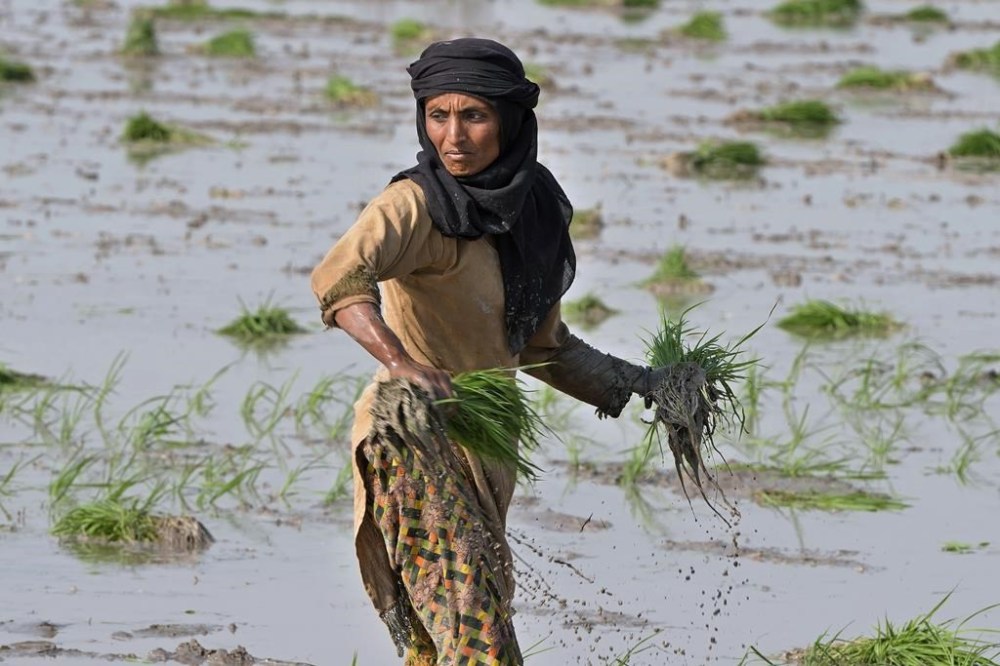
A villager woman plants rice in a paddy field on the outskirts of Lahore, Pakistan, Thursday, June 8, 2023. Experts are warning that rice production across South and Southeast Asia is likely to suffer with the world heading into an El Nino. (AP Photo/K.M. Chaudary)

Farmers like Abu Bakar Siddique, who cultivates 1.2 hectares (3 acres) in northern Bangladesh, had enough fertilizer to keep his yields steady last year. But less rainfall meant he had to rely more on electric pumps for his winter harvest at a time of power shortages due to war-related shortfalls of diesel and coal.

“This increased my costs,” he said.

Each El Nino is different, but historical trends suggest scarce rainfall in South and Southeast Asia will parch the soil, causing cascading effects in coming years, said Beau Damen, a natural resources officer with the Food and Agriculture Organization based in Bangkok, Thailand. Some countries, like Indonesia, may be more vulnerable in the early stages of the phenomenon, he said.

Kusnan, a farmer in Indonesia’s East Java, said rice farmers there have tried to anticipate that by planting earlier so that when the El Nino hits, the rice might be ready for harvest and not needing so much water. Kusnan, who like many Indonesians uses only one name, said he hoped high yields last year would help offset any losses this year.

Indonesian President Joko Widodo has stressed the need to manage water well in the coming weeks, warning that various factors including export restrictions and fertilizer shortages could combine with the El Nino to “make this a particularly damaging event.”

Baldev Singh, a 52-year-old farmer in northern India’s Punjab state, is already worried. He typically sows rice from late June until mid-July, but then needs the monsoon rains to flood the paddies. Less than a tenth of the usual rainfall had come by early this month, and then floods ravaged northern India, battering young crops that had just been planted.

The government has encouraged Punjab farmers to grow rice along with their traditional wheat crops since the 1960s to improve India’s food security, even though farmers like Singh don’t typically eat rice and irrigation of rice fields has drained the area’s aquifers. But he keeps growing it, counting on the certainty of government purchases at fixed prices.

With rain scarce, Singh may need to dig wells. Last year, he dug down 200 feet (60 meters) to find water.
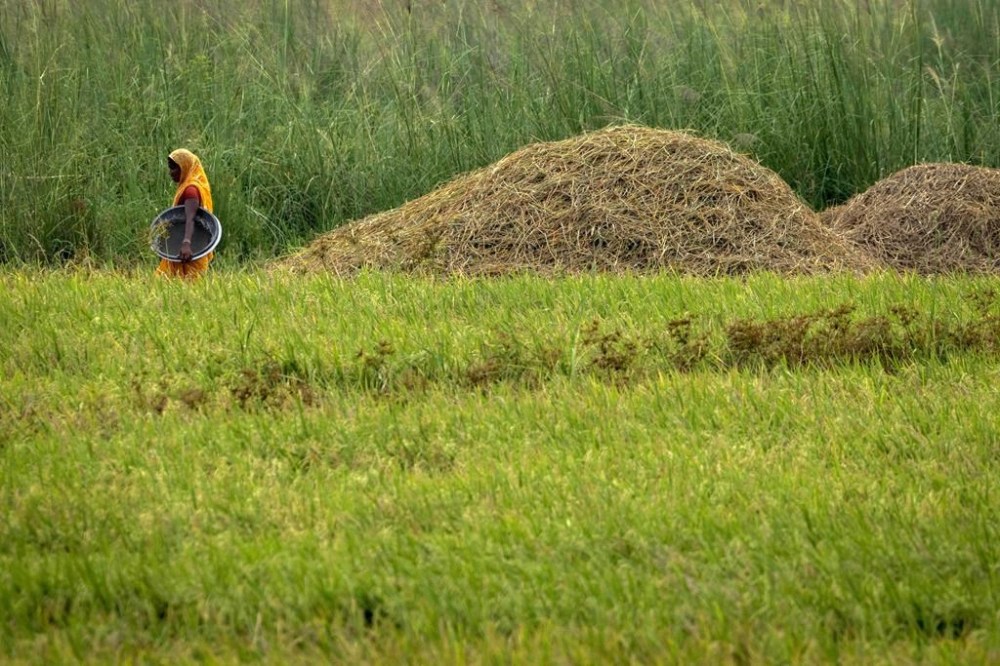
A farmer walks in a paddy field on the outskirts of Guwahati, India, Tuesday, June 6, 2023. Experts are warning that rice production across South and Southeast Asia is likely to suffer with the world heading into an El Nino. (AP Photo/Anupam Nath)

“Rice has been our ruin … I don’t know what will happen in the future,” he said.

___

Associated Press journalist Julhas Alam in Dhaka, Bangladesh, and Edna Tarigan in Jakarta, Indonesia, contributed.

___

Associated Press climate and environmental coverage receives support from several private foundations. See more about AP’s climate initiative here. The AP is solely responsible for all content.


Report Error Submit a Tip

More Stories

Ontario to move northwest regions to permanent daylight time

Liam Casey, The Canadian Press 3 minute read Preview

Ontario to move northwest regions to permanent daylight time

Liam Casey, The Canadian Press 3 minute read Updated: Yesterday at 11:29 AM CDT

TORONTO - Ontario is set to move parts of the province's northwest region to permanent daylight time in order to align with Manitoba, Indigenous Affairs Minister Greg Rickford told The Canadian Press.

Rickford said there is overwhelming consensus among municipalities, First Nations and businesses to make the time change permanent.

The province intends to make a regulatory change in the Time Act on Nov. 1 to allow regions west of the 90th meridian to align with Manitoba, he said.

Manitoba Premier Wab Kinew announced last month the province would stop twice-annual clock changes and stay on daylight time year-round in the central time zone, leaving it one hour ahead of the other Prairie provinces rather than aligned with them.

Read
Updated: Yesterday at 11:29 AM CDT

Every few years, a sword over the baby

Hersh Seth 5 minute read Preview

Every few years, a sword over the baby

Hersh Seth 5 minute read 2:00 AM CDT

On Oct. 19, people in Alberta will answer 10 referendum questions. Nine are about things such as immigration, voter ID, judges and the Senate. The other asks if Alberta should remain in Canada or begin the legal steps toward a binding vote on leaving.

I want to share a perspective, as a patriotic Canadian, which I feel is lacking from the discourse.

Many of us who read those nine complaints can understand where Alberta is coming from. Ottawa kept control of the Prairies’ Crown lands and resources until 1930, allowing the East to grow at the West’s expense. The national energy program of the 1970s is still a sore spot west of Kenora, nearly 50 years later. Ontario and Quebec have almost 60 per cent of the seats in the House of Commons, so you can win everywhere from the Lakehead to the Pacific and still not change anything. Decisions are made about us, not with us. That frustration is real and being a Manitoban shouldn’t mean having to be Ottawa’s lawyer in this case. We are the original West, born in 1870 from Métis resistance to the same kind of treatment Alberta is protesting now.

So yes, we can understand how truly frustrated they are with the state of things in this country. But what bothers us even more is seeing someone threaten our children’s future every few years and call it leadership in their province.

Read
2:00 AM CDT

Time to intervene on hubby and therapy ‘buddy’

Maureen Scurfield 4 minute read 2:00 AM CDT

DEAR MISS LONELYHEARTS: My husband has been going to a therapy group to work through some trauma in his past. He seems almost high when he comes home — always in too good a mood and plays his guitar for hours. He won’t come to bed with me either and doesn’t want to make love those nights.

I just found out from a female friend who also goes to this therapy group that one of my man’s exes turns out to be in this same group. She’s seen them at the café where some group members go after meetings for coffee. They usually sit as a group, she says, but my husband and this woman have started breaking off from the main crew for private talks at another table.

When I asked my man about her, he was indignant. He said, “I come home to you, don’t I? Isn’t that enough?” Now he claims he’s helping his ex talk through her trauma. That may be so, but he seems way too happy and smug when he finally comes home.

This ex was the first girl he ever had sex with. I know exactly what she meant to him — until she dropped him on his head. So what can I do? I can’t just ignore it and let it go. He’s my husband till death do us part, right?

‘We know we’re not going to beat Mother Nature’: Ice prep begins at Princess Auto Stadium for Heritage Classic

Mike McIntyre 6 minute read Preview

‘We know we’re not going to beat Mother Nature’: Ice prep begins at Princess Auto Stadium for Heritage Classic

Mike McIntyre 6 minute read Yesterday at 5:56 PM CDT

Derek King typically has ice in his veins.

But the Manitoban admits there may be a few more butterflies than usual as he prepares for the ultimate home game — the 2026 Heritage Classic between the Winnipeg Jets and Montreal Canadiens.

“This is so exciting to be back,” King, the NHL’s vice-president of hockey operations and facilities operations, said Tuesday afternoon.

“It’s definitely going to be a fun event to be part of.”

Read
Yesterday at 5:56 PM CDT

Puzzles Palace

1 minute read Monday, Jul. 27, 2026

To solve our puzzles, please subscribe with this special offer: |

Letters, Oct. 13

7 minute read Preview

Letters, Oct. 13

7 minute read Updated: Yesterday at 8:14 AM CDT

The major assumption Manitoba Hydro undertakes is the weather. Hydro projected a $214 million profit for the 2025-26 fiscal year. On Sept. 29, it reported a $446 million loss. It took on additional debt due to $751 million in operating losses. In addition, Hydro stated the fiscal results for 2025-26 were “significantly influenced by circumstances largely beyond Hydro’s control.”

Read
Updated: Yesterday at 8:14 AM CDT
