Stay within aspartame limits, Canadian Cancer Society says in wake of WHO findings

Advertisement

Advertise with us

TORONTO - The Canadian Cancer Society is recommending that people stay within existing daily limits of aspartame consumption and encouraging more studies on the artificial sweetener after the World Health Organization deemed it "possibly carcinogenic."

Read this article for free:


or

Already have an account? Log in here »

To continue reading, please subscribe:

Subscribe and receive a limited-edition Free Press branded hat or tote.

Digital Subscription

One year of digital access for only $205*

  • Enjoy unlimited reading on winnipegfreepress.com
  • Read the E-Edition, our digital replica newspaper
  • Access News Break, our award-winning app
  • Play interactive puzzles

*First annual payment billed as $205.00 + GST for one year. This annual subscription will automatically renew at $233.00 + GST every 52 weeks (10% off the regular annual price of $259.35). Offer available to new and qualified returning subscribers only. Cancel any time.

To continue reading, please subscribe:

Add Free Press access to your Brandon Sun subscription for only an additional

$1 for the first 4 weeks*

  • Enjoy unlimited reading on winnipegfreepress.com
  • Read the E-Edition, our digital replica newspaper
  • Access News Break, our award-winning app
  • Play interactive puzzles
Start now

*Your next Brandon Sun subscription payment will increase by $1.00 and you will be charged $17.95 plus GST for four weeks. After four weeks, your payment will increase to $24.95 plus GST every four weeks.

Hey there, time traveller!
This article was published 14/07/2023 (1139 days ago), so information in it may no longer be current.

TORONTO – The Canadian Cancer Society is recommending that people stay within existing daily limits of aspartame consumption and encouraging more studies on the artificial sweetener after the World Health Organization deemed it “possibly carcinogenic.”

The classification “means that there’s limited evidence suggesting that it may cause cancer in humans and that additional research is needed,” said Elizabeth Holmes, director of health policy at the Canadian Cancer Society, in an interview on Friday.

Holmes said the society welcomes research proposals on aspartame and will consider funding them.
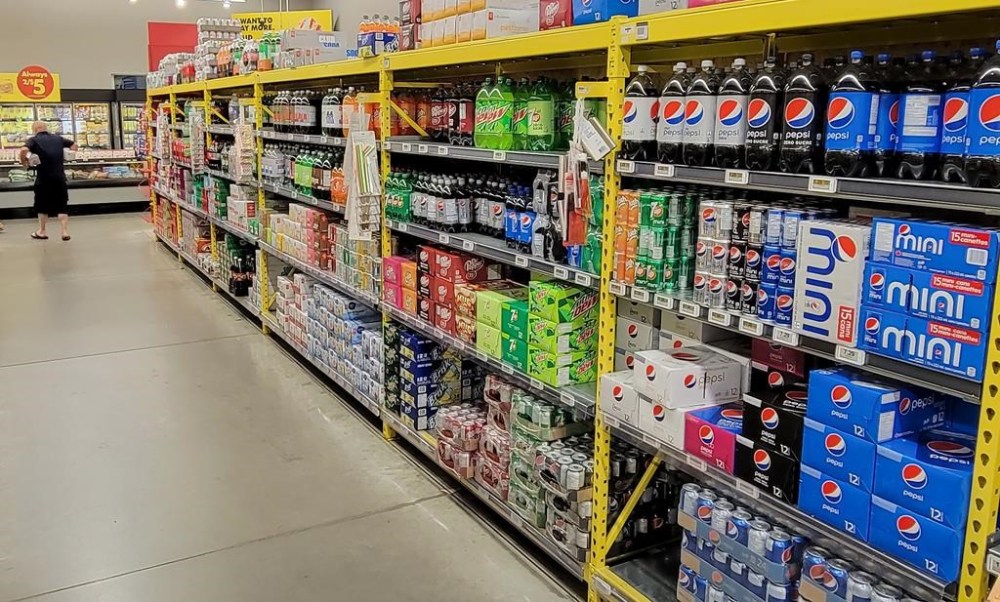
A customer walks down a grocery store's drinks aisle in Newcastle, Ont. on Thursday July 13, 2023. The Canadian Cancer Society and Health Canada are reviewing the World Health Organization's classification of aspartame as
A customer walks down a grocery store's drinks aisle in Newcastle, Ont. on Thursday July 13, 2023. The Canadian Cancer Society and Health Canada are reviewing the World Health Organization's classification of aspartame as "possibly carcinogenic." THE CANADIAN PRESS/Doug Ives

Two WHO-affiliated agencies conducted two independent reviews to assess health risks associated with consumption of aspartame, which is commonly found in diet beverages, gum and sugar-free sweet treats such as syrup or gelatin dessert.

In reviewing available studies in both humans and animals, the International Agency for Research on Cancer (IARC) and the Food and Agriculture Organization Joint Expert Committee on Food Additives (JECFA) found limited evidence that aspartame could be associated with a type of liver cancer.But the findings could not rule out the possibility that other variables might account for the link.

Better studies, including randomized controlled trials, are needed to determine more definitively whether or not aspartame causes cancer, the study summary said.

There was “no convincing evidence” to suggest current recommendations on safely eating or drinking aspartame should be changed, it said.

Health Canada and the WHO both recommend a daily limit of 40 mg of aspartame per kilogram of body weight.

A WHO news release breaks it down: since a can of diet soda contains about 200 – 300 mg of aspartame, an adult who weighs 70 kg would need to consume more than nine to 14 cans per day to exceed that limit.

David Ma, a professor of nutritional sciences at the University of Guelph, said the daily aspartame consumption of most Canadians likely falls within that limit.

“Unfortunately, there are probably a few individuals drinking (above) that level. So those would be the ones that should be most concerned about their intake,” Ma said.

In an emailed statement, Health Canada said it will review the research and “determine whether action is needed for aspartame in Canada based on the scientific data in the full reports.”

The WHO has four classification levels for items assessed for their potential to cause cancer: carcinogenic to humans, probably carcinogenic to humans, possibly carcinogenic to humans, and not classifiable as to its carcinogenicity to humans.

Those levels are based on how strong the evidence is that something, including food, drink, chemicals and environmental hazards, is linked with cancer. The classification levels aren’t a statement about the “degree of risk” of developing cancer. The risk often varies with the amount consumed or levels of exposure. The type of cancer the food or drink is linked to also varies.

Tobacco, alcohol and processed meat are among more than 120 items currently classified as carcinogenic on the WHO’s website. There are more than 90 items listed as “probable” carcinogens, including red meat.

When it comes to “possible” carcinogens such as aspartame, more than 320 items are listed. They include many chemicals, such as chloroform and lead.

It’s important to think of substances listed as carcinogenic, probably carcinogenic or possibly carcinogenic as “hazards” rather than “risks,” Ma said.

For example, driving a car is inherently a hazard, he said. But the risk of injury is lowered by actions that we take.

“We accept that because overall, on a daily basis, millions and millions of people drive and the risk is relatively low because we put on our seat belt, we follow the rules of the road, we do not drive dangerously at high speeds,” Ma said.

Similarly, aspartame is a “hazard” but “the level of risk is low” if we don’t consume too much, he said.

This report by The Canadian Press was first published July 14, 2023.

Canadian Press health coverage receives support through a partnership with the Canadian Medical Association. CP is solely responsible for this content.

Report Error Submit a Tip

More Stories

Man sues WRHA, doctors after wrong leg amputated at Grace Hospital in 2024

Erik Pindera 4 minute read Preview

Man sues WRHA, doctors after wrong leg amputated at Grace Hospital in 2024

Erik Pindera 4 minute read Monday, Aug. 24, 2026

A man whose left leg was mistakenly amputated — rather than his infected lower right leg — at the Grace Hospital in 2024 has filed a lawsuit against the Winnipeg Regional Health Authority and two doctors involved in his care.

Jason Kennedy, who lives in Winnipeg and is a member of Bloodvein First Nation, filed his statement of claim in Court of King’s Bench last week, naming the WRHA and orthopedic surgeons Dr. David John Dillon and Dr. Yiyang Zhang as defendants.

He accuses the health authority and doctors of negligence and breach of duty, among other allegations.

Kennedy was 48 when he went to Seven Oaks General Hospital on Oct. 22, 2024, with pain and an infection in his right foot.

Read
Monday, Aug. 24, 2026

13-year-old girl riding scooter hit by car

1 minute read Updated: Yesterday at 8:12 PM CDT

A 13-year-old girl was taken to hospital on Tuesday evening after she was hit by a car crossing Jefferson Avenue on a scooter.

Family members on scene told the Free Press the child was travelling north on a multi-use trail and was hit by a car travelling westbound on Jefferson Avenue at a crosswalk. They said while one car stopped at the crossing, a second car in the next lane did not, striking the child as a result.

The family member, who did not want their name published to protect the identity of the child, said they were waiting for an update on the girl’s condition, saying she was tossed roughly 10-feet when she was hit.

On scene police were keeping an eye on a badly-damaged scooter and a car with a smashed windshield.

The rural/urban immigration difference

Patrick MacKenzie and Enver Naidoo 5 minute read 2:00 AM CDT

Conversations about immigration often pretend that managing the numbers and where they go is as simple as turning a dial up or down. Like most things, the truth is more nuanced.

The Immigrant Employment Councils of Canada network’s 18-month engagement with over 1,100 employers, community and settlement service stakeholders made this apparent in many ways but, perhaps an underappreciated facet is the contrast between urban and rural immigration, and what challenges both immigrants and employers face in each context.

Rural and urban labour markets differ in structure, services and constraints, and a one-size solution will underdeliver everywhere.

This is why we have government programs such as the Rural Community Immigration Pilot, currently active in 14 areas across the country, as well as the provincial nominee program and provincial rural immigration pilots such as Manitoba’s West-Central Immigration Initiative.

Ottawa to hit U.S. back with tariffs on steel, aluminum, smartphones and golf clubs

Nick Murray, The Canadian Press 5 minute read Preview

Ottawa to hit U.S. back with tariffs on steel, aluminum, smartphones and golf clubs

Nick Murray, The Canadian Press 5 minute read Updated: Yesterday at 6:04 PM CDT

The federal government hit back at the latest escalation in the trade war with the United States on Tuesday, announcing plans to hike American steel and aluminum tariffs from 25 to 50 per cent.

Read
Updated: Yesterday at 6:04 PM CDT

Aren’t there other power options?

Jules Legal 4 minute read 2:00 AM CDT

It seems like only yesterday that Manitoba Hydro was basking in the glory of what to do with all the surplus energy being generated by the newly constructed hydro generating stations along the Nelson River. And so it built a multibillion-dollar, high-voltage hydro line to export this surplus energy to the U.S. Bipole III, they called it.

Now, managers at Manitoba Hydro are telling us Manitobans could be facing a power shortage as early as 2029 and that a natural gas turbine generating station is urgently required.

Part of this looming shortfall can be attributed to our growing population and we must not ignore the fact our consumptive lifestyle keeps demanding ever more megawatts.

So what happened to cause such a dramatic turnaround?

AI literacy course mandatory at U of W Collegiate

Maggie Macintosh 5 minute read Preview

AI literacy course mandatory at U of W Collegiate

Maggie Macintosh 5 minute read Updated: Yesterday at 9:25 AM CDT

The University of Winnipeg Collegiate is requiring new students to complete artificial intelligence 101 lessons and offering a first-of-its-kind elective for those who want to perfect their chatbot prompts.

The private high school is piloting two projects this year in a bid to improve digital literacy on the downtown campus.

Every Grade 9 and 10 student will have to pass an approximately two-hour long online course about “AI essentials.”

Dean Osaed Khan likened the mandatory e-learning sessions to requiring students to complete a safety course before they can participate in a science lab.

Read
Updated: Yesterday at 9:25 AM CDT