

A look at some Americans who crossed into North Korea over the past years
Advertisement
Read this article for free:
or
Already have an account? Log in here »
To continue reading, please subscribe:

Digital Subscription
One year of digital access for only $205*
- Enjoy unlimited reading on winnipegfreepress.com
- Read the E-Edition, our digital replica newspaper
- Access News Break, our award-winning app
- Play interactive puzzles
*First annual payment billed as $205.00 + GST for one year. This annual subscription will automatically renew at $233.00 + GST every 52 weeks (10% off the regular annual price of $259.35). Offer available to new and qualified returning subscribers only. Cancel any time.
To continue reading, please subscribe:
Add Free Press access to your Brandon Sun subscription for only an additional
$1 for the first 4 weeks*
- Enjoy unlimited reading on winnipegfreepress.com
- Read the E-Edition, our digital replica newspaper
- Access News Break, our award-winning app
- Play interactive puzzles
*Your next Brandon Sun subscription payment will increase by $1.00 and you will be charged $17.95 plus GST for four weeks. After four weeks, your payment will increase to $24.95 plus GST every four weeks.
Read unlimited articles for free today:
or
Already have an account? Log in here »
Hey there, time traveller!
This article was published 18/07/2023 (1157 days ago), so information in it may no longer be current.
SEOUL, South Korea (AP) — The U.S.-led United Nations Command is trying to secure the release of an American soldier who fled to North Korea from the South Korean side of a border village.
Private 2nd Class Travis King, in his early 20s, had just been released from a South Korean prison where he was held on assault charges. Instead of getting on a plane to be taken back to Fort Bliss, Texas, he left and joined a tour of the Korean border village of Panmunjom, where he ran across the border.
The incident comes at a time of high tensions as the pace of both the North’s weapons demonstrations and U.S.-South Korean joint military training have intensified in a cycle of tit-for-tat.
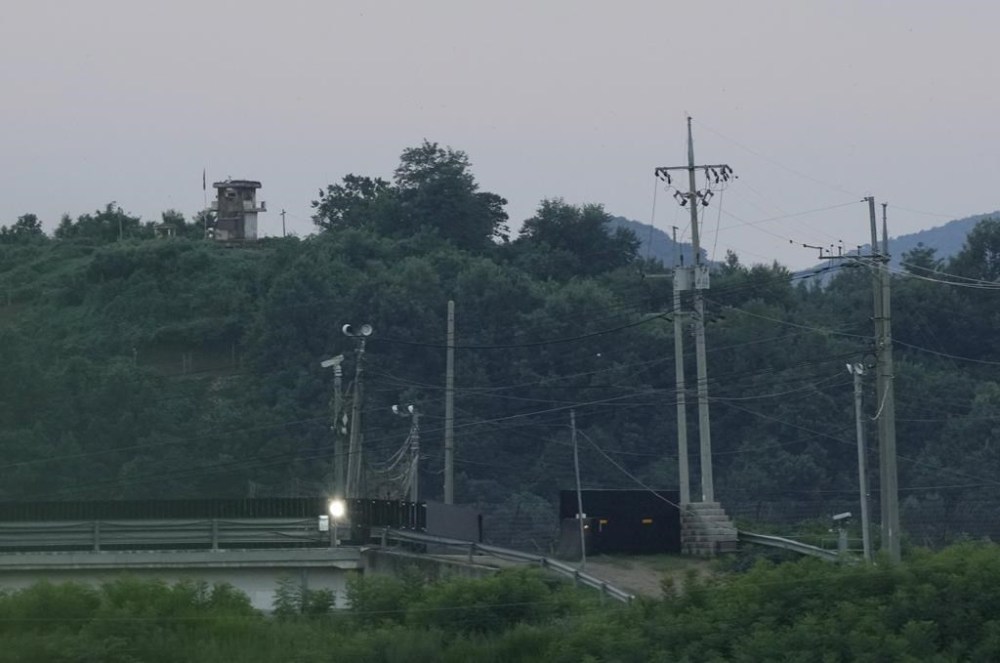
There have been cases of Americans crossing into North Korea over the past years, including a small number of U.S. soldiers. Some of the Americans who crossed were driven by evangelical zeal or simply attracted by the mystery of a severely cloistered police state fueled by anti-U.S. hatred.
Other Americans were detained after entering North Korea as tourists. In one tragic case, it ended in death.
Here’s a look at other Americans who entered North Korea in the past years:
___
CHARLES JENKINS
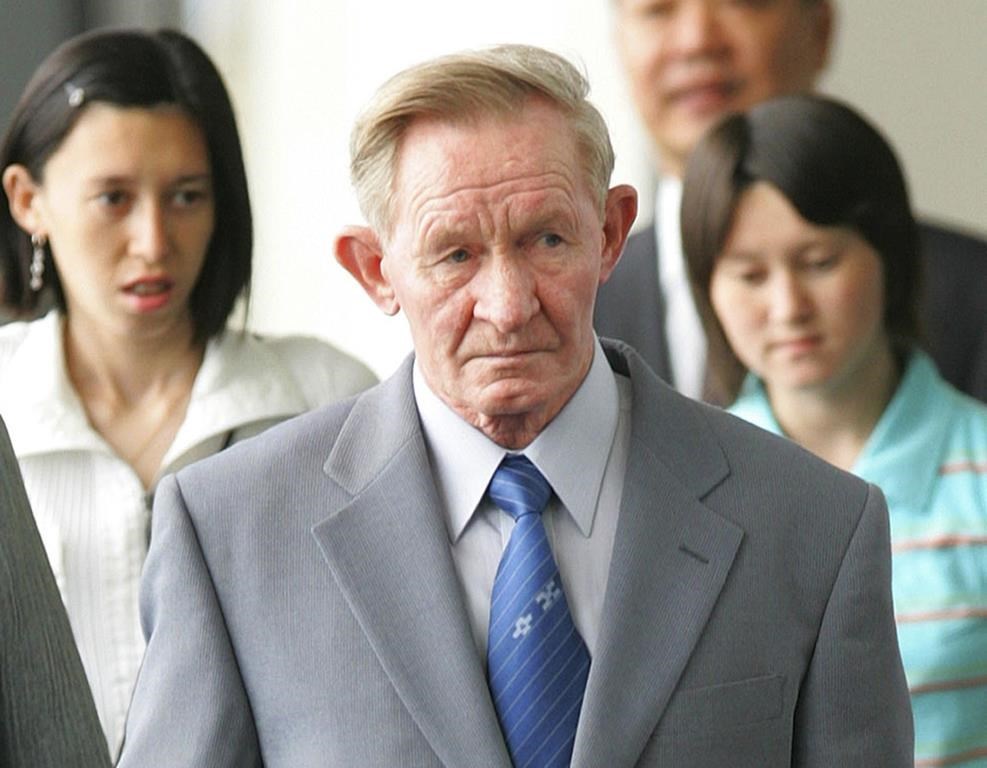
Born in Rich Square, N.C., Charles Jenkins was one of the few Cold War-era U.S. soldiers who fled to North Korea while serving in the South.
Jenkins, then an Army sergeant, deserted his post in 1965 and fled across the Demilitarized Zone separating the two Koreas. North Korea treated Jenkins as a propaganda asset, showcasing him in leaflets and films.
In 1980, Jenkins married 21-year-old Hitomi Soga, a Japanese nursing student who had been abducted by North Korean agents in 1978.
Soga was allowed to return to Japan in 2002. In 2004, Jenkins was allowed to leave North Korea and rejoin his wife in Japan, where he surrendered to U.S. military authorities and faced charges that he abandoned his unit and defected to North Korea. He was dishonorably discharged and sentenced to 25 days in a U.S. military jail in Japan. He died in Japan in 2017.
___
MATTHEW MILLER
In September 2014, then a 24-year-old from Bakersfield, California, Matthew Miller was sentenced to six years of hard labor by North Korea’s Supreme Court on charges that he illegally entered the country for spying purposes.
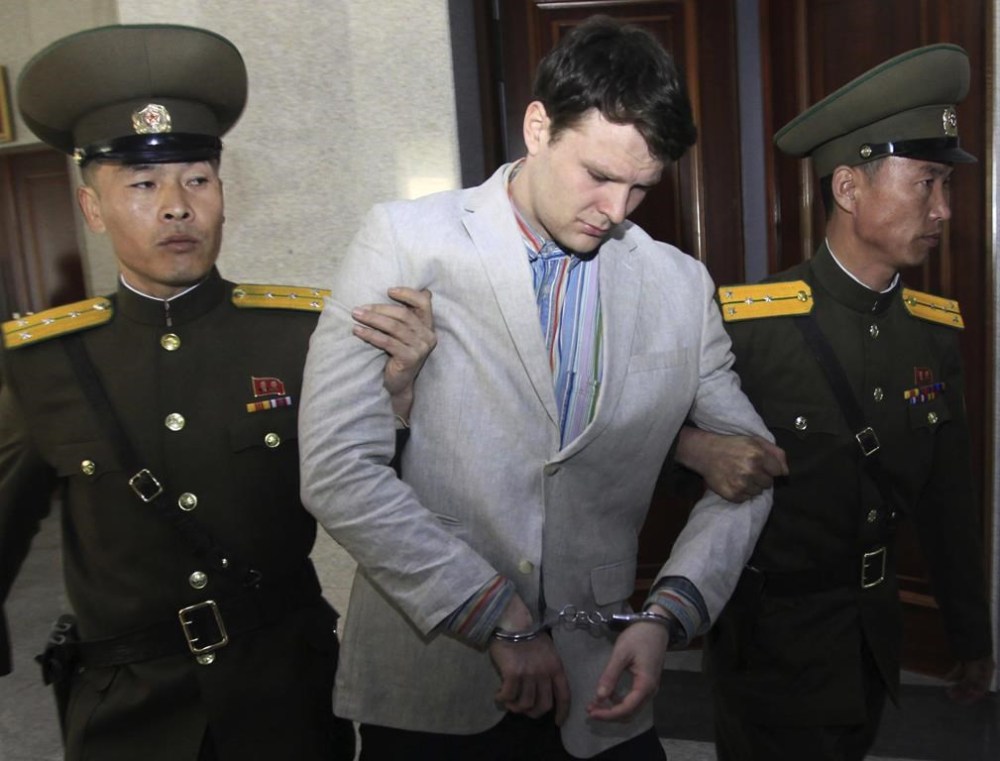
The court claimed that Miller tore up his tourist visa upon arriving at Pyongyang’s airport in April that year and admitted to a “wild ambition” of experiencing North Korean prison life so that he could secretly investigate the country’s human rights conditions.
North Korea’s initial announcement about Miller’s detainment that month came as then-President Barack Obama was traveling in South Korea on a state visit.
Miller was freed in November that same year along with another American, Kenneth Bae, a missionary and tour leader.
Weeks before his release, Miller talked with The Associated Press at a Pyongyang hotel where North Korean officials allowed him to call his family. Miller said he was digging in fields eight hours a day and being kept in isolation.
___
KENNETH BAE
Bae, a Korean-American missionary from Lynnwood, Washington, was arrested in November 2012 while leading a tour group in a special North Korean economic zone.
North Korea sentenced Bae to 15 years in prison for “hostile acts,” including smuggling in inflammatory literature and attempting to establish a base for anti-government activities at a hotel in a border town. Bae’s family said he suffered from chronic health issues, including back pain, diabetes, and heart and liver problems.
Bae returned to the United States in November 2014 following a secret mission by James Clapper, then-U.S. director of national intelligence who also secured Miller’s release.
___
JEFFREY FOWLE
A month before Bae and Miller’s release, North Korea also freed Jeffrey Fowle, an Ohio municipal worker who was detained for six months for leaving a Bible in a nightclub in the city of Chongjin. Fowle’s release followed negotiations that involved retired diplomat and former Ohio Congressman Tony Hall.
While North Korea officially guarantees freedom of religion, analysts and defectors describe the country as strictly anti-religious. The distribution of Bibles and secret prayer services can mean imprisonment or execution, defectors say.
In 2009, American missionary Robert Park walked into North Korea with a Bible in his hand to draw attention to North Korea’s human rights abuses. Park, who was deported from the North in February 2010, has said he was tortured by authorities.
__
OTTO WARMBIER
Otto Warmbier, a 22-year-old University of Virginia student, died in June 2017, shortly after he was flown home in a vegetative state after 17 months in North Korean captivity.
Warmbier was seized by North Korean authorities from a tour group in January 2016 and convicted on charges of trying to steal a propaganda poster and sentenced to 15 years of hard labor.
While not providing a clear reason for Warmbier’s brain damage, North Korea denied accusations by Warmbier’s family that he was tortured and insisted that it had provided him medical care with “all sincerity.” The North accused the United States of a smear campaign and claimed itself as the “biggest victim” in his death.
In 2022, a U.S. federal judge in New York ruled that Warmbier’s parents — Fred and Cindy Warmbier — should receive $240,300 seized from a North Korean bank account, which would be a partial payment toward the more than $501 million they were awarded in 2018 by a federal judge in Washington.