

Redacting documents ‘nonsense’: ex-Forces member

Advertisement
Read this article for free:
or
Already have an account? Log in here »
To continue reading, please subscribe:

Digital Subscription
One year of digital access for only $205*
- Enjoy unlimited reading on winnipegfreepress.com
- Read the E-Edition, our digital replica newspaper
- Access News Break, our award-winning app
- Play interactive puzzles
*First annual payment billed as $205.00 + GST for one year. This annual subscription will automatically renew at $233.00 + GST every 52 weeks (10% off the regular annual price of $259.35). Offer available to new and qualified returning subscribers only. Cancel any time.
To continue reading, please subscribe:
Add Free Press access to your Brandon Sun subscription for only an additional
$1 for the first 4 weeks*
- Enjoy unlimited reading on winnipegfreepress.com
- Read the E-Edition, our digital replica newspaper
- Access News Break, our award-winning app
- Play interactive puzzles
*Your next Brandon Sun subscription payment will increase by $1.00 and you will be charged $17.95 plus GST for four weeks. After four weeks, your payment will increase to $24.95 plus GST every four weeks.
Read unlimited articles for free today:
or
Already have an account? Log in here »
Hey there, time traveller!
This article was published 24/07/2023 (1178 days ago), so information in it may no longer be current.
Going AWOL from a ball hockey tournament in Edmonton.
Getting into a fight in Latvia.
Starting a fire at CFB Shilo.
These are a few of the more than 80 matters Canadian Armed Forces soldiers stationed at CFB Winnipeg and CFB Shilo were disciplined for between April 2017 and April 2022, according to documents obtained by the Free Press through an access to information request.
But the bulk of what happened in each case remains secret.
Names, ranks, specific disciplinary outcomes and details of offences are all hidden by redactions.
COLIN CORNEAU / THE BRANDON SUN FILES Going AWOL from a ball hockey tournament in Edmonton. Getting into a fight in Latvia. Starting a fire at CFB Shilo. These are a few of the more than 80 matters Canadian Armed Forces soldiers stationed at CFB Winnipeg and CFB Shilo were disciplined for.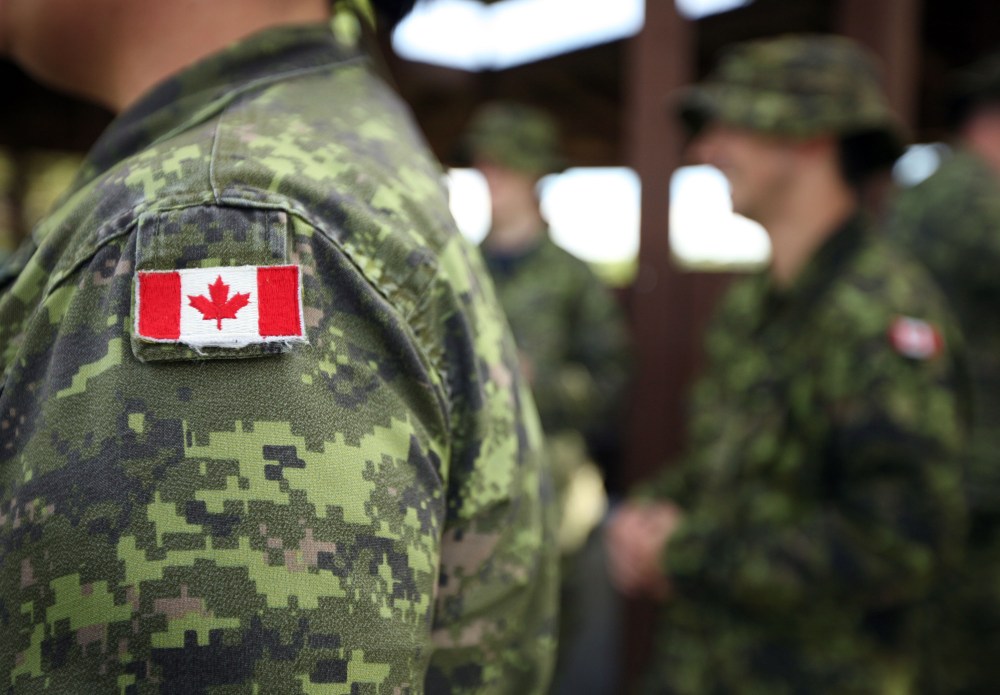
What the records do show: about half of the disciplinary charges were for going absent without leave — formally referred to as “without authority was absent” — while more than a dozen were for drunkenness and a similar number for “conduct to the prejudice of good order and discipline.”
Other charges listed in the nearly 200 pages of documents included stealing, fighting and setting fire in a “defence establishment.” In almost all cases, the person was found guilty in a summary trial, rather than court martial. Penalties range from demotion to a fine to being confined to barracks. Today, there are approximately 1,575 personnel stationed at CFB Shilo and 2,645 at CFB Winnipeg.
According to the Department of National Defence, redactions to the disciplinary files were applied because they include “personal information” or discuss “investigations, examinations and audits.”
Complicating analysis of the files is the fact that the redactions themselves are hidden. DND used white space — instead of the usual black — to redact sections it deems exempt from disclosure, making it impossible to tell how much of the documents have been redacted. Furthermore, DND also didn’t make clear which exemption — personal information or investigative reasons — was applied in each case where information was removed.
Asked about the approach, DND said in some cases, even noting that a redaction exists “could reveal sensitive information.”
“For example, whether or not an individual is under investigation,” said Jessica Lamirande, a DND spokesperson.
Lamirande said the department’s system can only do redactions in all-white or all-grey, so if any of the information is deemed sensitive, all of the files in the document must be in white. She added that the exemption applied is noted at the top of each page in the file (though it does not accompany each specific redaction, something typical with information requests from other public bodies).
Rory Fowler, a Kingston-based lawyer and retired lieutenant-colonel who served in the Canadian Forces for nearly 28 years, questions why the documents were redacted at all.
“Summary trials are expected to be open and public,” Fowler said. “The records — the charges, the findings, the punishments — are not personal information.”
DND disagrees. Lamirande said records of disciplinary proceedings “are not subject to open court principles,” but rather are “part of a member’s personnel file.” She added that redacting information, including the amount soldiers were fined, is necessary “due to the privacy mosaic effect, in which elements of information may be non-identifiable on their own but when combined could become personally identifiable.”
Fowler calls that “nonsense.”
“In some cases, it may be necessary to protect the identity of victims — as in sexual offences,” he said. “That is not what this is…. The offence is not an offence against a person but an offence to military discipline. And the identity of the offender should not be redacted.”
Halifax-based privacy lawyer David Fraser said this approach is “at least inconsistent with” and “likely in violation of” both the Access to Information Act and the government’s own policies.
“The government policy says they have to clearly identify what is being redacted and the specific reason for the redaction ‘unless doing so would reveal the exempted information or cause the injury upon which the exemption is based to materialize,’” Fraser said. “Blaming it on how they’ve chosen to use the software, which can be used in a compliant manner, seems to me to be very problematic.”
Fraser noted that the Information Commissioner of Canada recently ruled on a similar case, recommending the end of “negative (white) redactions.”
In a decision released in February, the Information Commissioner took aim at the Canadian Security Intelligence Service’s use of whited-out redactions and practice of not noting what exemptions were applied throughout the records.
CSIS’s defence mirrored DND’s: “that marking where information was redacted and on what basis specific information has been withheld could itself result in harm.”
The commissioner did not buy the explanation.
“The Information Commissioner concluded that CSIS failed to provide any cogent explanation of how the use of clearly marked redactions and exemptions on the records at issue could possibly reveal or enable anyone to decipher information that would warrant protection under the Access to Information Act,” read the decision.
The commissioner recommended CSIS halt the practice of whited-out redactions and clearly label exemptions. CSIS agreed to implement the recommendations.
Fowler thinks DND needs to revisit their practices overall, allowing files such as disciplinary proceedings to be released in full.
“Justice is supposed to be transparent and a public process,” he said. “And public information is supposed to be public.”
katrina.clarke@freepress.mb.ca
Katrina Clarke
Investigative reporter
Katrina Clarke is an investigative reporter at the Winnipeg Free Press. Katrina holds a bachelor’s degree in politics from Queen’s University and a master’s degree in journalism from Western University. She has worked at newspapers across Canada, including the National Post and the Toronto Star. She joined the Free Press in 2022. Read more about Katrina.
Every piece of reporting Katrina produces is reviewed by an editing team before it is posted online or published in print — part of the Free Press‘s tradition, since 1872, of producing reliable independent journalism. Read more about Free Press’s history and mandate, and learn how our newsroom operates.
Our newsroom depends on a growing audience of readers to power our journalism. If you are not a paid reader, please consider becoming a subscriber.
Our newsroom depends on its audience of readers to power our journalism. Thank you for your support.
Katrina Clarke
Investigative reporter
Katrina Clarke is an investigative reporter at the Winnipeg Free Press. Katrina holds a bachelor’s degree in politics from Queen’s University and a master’s degree in journalism from Western University. She has worked at newspapers across Canada, including the National Post and the Toronto Star. She joined the Free Press in 2022. Read more about Katrina.
Every piece of reporting Katrina produces is reviewed by an editing team before it is posted online or published in print — part of the Free Press‘s tradition, since 1872, of producing reliable independent journalism. Read more about Free Press’s history and mandate, and learn how our newsroom operates.
Our newsroom depends on a growing audience of readers to power our journalism. If you are not a paid reader, please consider becoming a subscriber.
Our newsroom depends on its audience of readers to power our journalism. Thank you for your support.
Advertisement Advertise With Us
Advertisement Advertise With Us
History
Updated on Monday, July 24, 2023 6:19 AM CDT: Adds tile photo, adds preview text