

Germany’s opposition leader faces criticism over his comments on cooperation with the far right
Advertisement
Read this article for free:
or
Already have an account? Log in here »
To continue reading, please subscribe:

Digital Subscription
One year of digital access for only $205*
- Enjoy unlimited reading on winnipegfreepress.com
- Read the E-Edition, our digital replica newspaper
- Access News Break, our award-winning app
- Play interactive puzzles
*First annual payment billed as $205.00 + GST for one year. This annual subscription will automatically renew at $233.00 + GST every 52 weeks (10% off the regular annual price of $259.35). Offer available to new and qualified returning subscribers only. Cancel any time.
To continue reading, please subscribe:
Add Free Press access to your Brandon Sun subscription for only an additional
$1 for the first 4 weeks*
- Enjoy unlimited reading on winnipegfreepress.com
- Read the E-Edition, our digital replica newspaper
- Access News Break, our award-winning app
- Play interactive puzzles
*Your next Brandon Sun subscription payment will increase by $1.00 and you will be charged $17.95 plus GST for four weeks. After four weeks, your payment will increase to $24.95 plus GST every four weeks.
Read unlimited articles for free today:
or
Already have an account? Log in here »
Hey there, time traveller!
This article was published 24/07/2023 (1156 days ago), so information in it may no longer be current.
BERLIN (AP) — Germany’s opposition leader insisted on Monday that there will be no “cooperation” at the local level between his party and the far-right Alternative for Germany after his apparent suggestion that they might work together caused unease within his own conservative bloc.
Friedrich Merz’s center-right Christian Democratic Union has long said it won’t work with Alternative for Germany, or AfD, which has drifted steadily further right. Merz reiterated Sunday that there would be no cooperation in the national, state or European parliaments with AfD, which recently has surged in polls.
But he was more equivocal in a ZDF television interview about the situation at town and county level, after the first AfD candidates recently won elections in eastern Germany to lead a county administration and become the full-time mayor of a municipality.
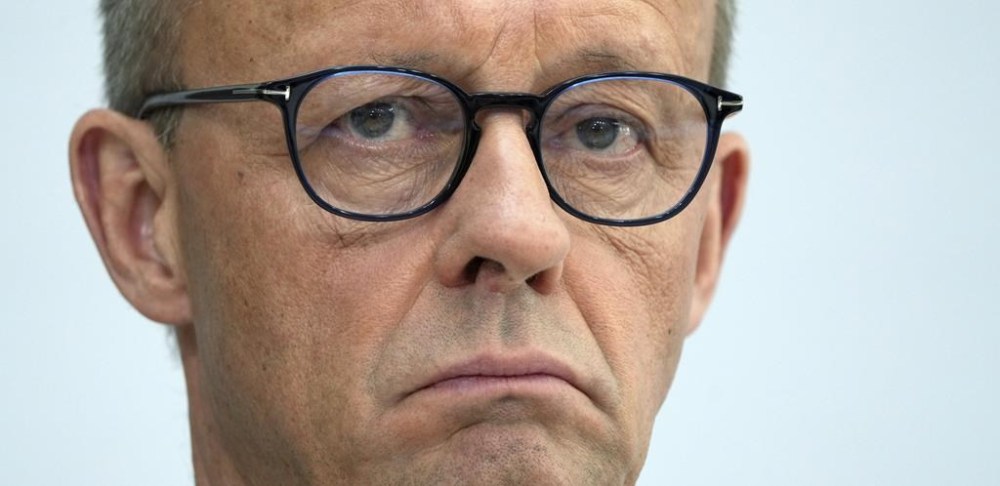
Those were democratic elections that “we have to accept,” Merz said. “And then of course ways have to be sought in local parliaments to organize the town, the countryside or the county together.”
Merz, who had dropped similar but less-noticed hints in recent weeks, did not elaborate. Several party allies downplayed his comments, but there were signs of unease.
“The CDU cannot, doesn’t want to and won’t cooperate with a party whose business model is hatred, division and exclusion,” Berlin Mayor Kai Wegner wrote on Twitter.
Yvonne Magwas, one of the national parliament’s deputy speakers, wrote: “Whether district council or (national) parliament, right-wing radicals remain right-wing radicals. For Christian Democrats, right-wing radicals are ALWAYS the enemy!”
Merz’s CDU is one of two parties that make up the main conservative opposition bloc. The leader of the other — Bavaria’s Christian Social Union, which faces a state election in October — said that his party “rejects any cooperation with AfD — no matter at what political level.”
“AfD is hostile to democracy, far-right and divides our society,” party leader and Bavarian governor Markus Soeder wrote on Twitter. “That is not compatible with our values.”
Merz himself then tweeted “to clarify again, and I never put it differently” that the CDU’s existing position remains valid and “there will be no cooperation by the CDU with AfD at local level either.”
Merz drew criticism last week for describing the conservative bloc as an “alternative for Germany with substance.” The bloc currently leads German national polls but with lackluster ratings, and has failed to capitalize fully on discontent with center-left Chancellor Olaf Scholz’s three-party coalition. AfD is particularly strong in eastern Germany, where three regions will hold state elections next year.
Merz recently has appeared keen to bolster his party’s appeal to voters on the right, replacing the official responsible for the CDU’s day-to-day political strategy with a law-and-order conservative. Another top aide last week advocated scrapping the individual right to asylum in Europe and replacing it with a system under which a “contingent” of 300,000 to 400,000 refugees per year would be allowed in.
Vice Chancellor Robert Habeck of the environmentalist Greens, which Merz has identified as a key opponent, said he was worried after Merz’s comments about the “stabilizing role” of the conservative bloc, which led Germany for 16 years until 2021 under Angela Merkel.
“Germany needs a reliable conservative party,” Habeck told German news agency dpa. “Reliable means steadfast and solution-oriented in government and opposition.”
Germany’s next national election is expected in a little over two years. The conservative bloc plans to choose its challenger to Scholz next year.