Defense presses case that mental illness spurred Pittsburgh synagogue massacre
Advertisement
Read this article for free:
or
Already have an account? Log in here »
To continue reading, please subscribe:

Digital Subscription
One year of digital access for only $205*
- Enjoy unlimited reading on winnipegfreepress.com
- Read the E-Edition, our digital replica newspaper
- Access News Break, our award-winning app
- Play interactive puzzles
*First annual payment billed as $205.00 + GST for one year. This annual subscription will automatically renew at $233.00 + GST every 52 weeks (10% off the regular annual price of $259.35). Offer available to new and qualified returning subscribers only. Cancel any time.
To continue reading, please subscribe:
Add Free Press access to your Brandon Sun subscription for only an additional
$1 for the first 4 weeks*
- Enjoy unlimited reading on winnipegfreepress.com
- Read the E-Edition, our digital replica newspaper
- Access News Break, our award-winning app
- Play interactive puzzles
*Your next Brandon Sun subscription payment will increase by $1.00 and you will be charged $17.95 plus GST for four weeks. After four weeks, your payment will increase to $24.95 plus GST every four weeks.
Read unlimited articles for free today:
or
Already have an account? Log in here »
Hey there, time traveller!
This article was published 28/07/2023 (1149 days ago), so information in it may no longer be current.
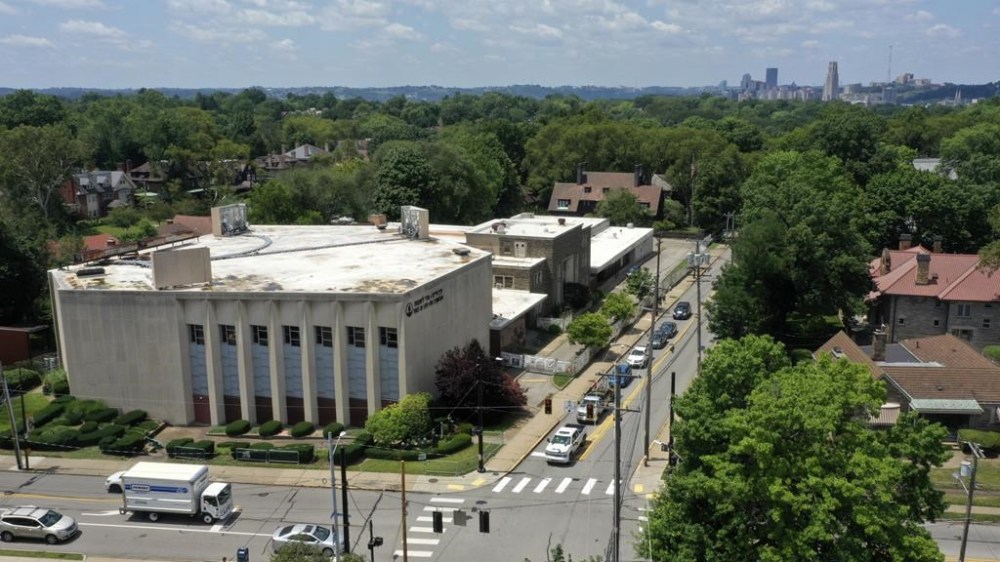
PITTSBURGH (AP) — A federal trial for the man who fatally shot 11 people at a Pittsburgh synagogue approached its conclusion Friday as the defense, trying to persuade a jury to spare his life, pressed its case that mental illness spurred the nation’s deadliest antisemitic attack.
Robert Bowers, a 50 year-old truck driver from suburban Baldwin, was convicted in June on 63 criminal counts for the 2018 massacre at Tree of Life synagogue. The jury has been hearing testimony in the penalty phase of the trial and will decide whether Bowers will receive the death penalty or life in prison without parole.
Prosecutors have presented evidence that Bowers was motivated by his hatred of Jewish people when he opened fire at the synagogue on Oct. 27, 2018, killing members of three congregations gathered for Sabbath worship and study. The defense argues Bowers has schizophrenia and acted out of a delusional belief that Jews were participating in a genocide of white people.
On Friday, a defense psychiatrist who met with Bowers 10 times for nearly 40 hours said Bowers saw himself as a soldier of God in a war in which Satan was trying to use Jewish people to bring about the end of the world. Dr. George Corvin, of Raleigh, N.C., said it was a delusion brought on by psychosis.
Corvin said Bowers continues to express delusional beliefs about Jews — “disgustingly so” — and that he is incapable of remorse. He said Bowers should be on anti-psychotic medication.
Bowers “has a belief that we’re at the end of a war that’s been going on for thousands of years,” Corvin testified. “He still envisions what he did as an unfortunate act of violence at the direction of God — that it will save lives. He believes he’s a tool for God. I know it sounds absurd. It’s psychotic.”
Corvin continued: “This is the result of a mental illness.”

Corvin was one of several defense experts who diagnosed Bowers with schizophrenia, a serious brain disorder whose symptoms include delusions and hallucinations. A neurologist testifying for the prosecution disputed that Bowers has schizophrenia, saying Bowers has a personality disorder but is not delusional, and that mental illness did not appear to play a role in the attack. Prosecutors have noted Bowers spent six months planning the shooting.
Also testifying Friday were Bowers’ aunt and uncle.
The uncle, Clyde Munger, said he visited with Bowers in prison because “he is my nephew and I love him.” He said he prays for Bowers every morning.
The aunt, Patricia Fine, was expected to the final defense witness. She said Bowers had a difficult childhood from infancy, describing the house where he lived as unsafe. She said he was a sad child and that she “was convinced” he would take his own life. A defense expert previously described Bowers’ early life as deeply unstable and said he attempted suicide several times in his teens.
Fine’s testimony was scheduled to resume Monday, with closing arguments and jury deliberations expected to follow.
The Free Press acknowledges the financial support it receives from members of the city’s faith community, which makes our coverage of religion possible.