UBC research blames bigger floods on clear-cutting, calls for more selective logging

Advertisement

Advertise with us

VANCOUVER - Reducing clear-cut logging and paying more attention to where trees are removed will help reduce the flood risk in British Columbia, a researcher says.

Read this article for free:


or

Already have an account? Log in here »

To continue reading, please subscribe:

Subscribe and receive a limited-edition Free Press branded hat or tote.

Digital Subscription

One year of digital access for only $205*

  • Enjoy unlimited reading on winnipegfreepress.com
  • Read the E-Edition, our digital replica newspaper
  • Access News Break, our award-winning app
  • Play interactive puzzles

*First annual payment billed as $205.00 + GST for one year. This annual subscription will automatically renew at $233.00 + GST every 52 weeks (10% off the regular annual price of $259.35). Offer available to new and qualified returning subscribers only. Cancel any time.

To continue reading, please subscribe:

Add Free Press access to your Brandon Sun subscription for only an additional

$1 for the first 4 weeks*

  • Enjoy unlimited reading on winnipegfreepress.com
  • Read the E-Edition, our digital replica newspaper
  • Access News Break, our award-winning app
  • Play interactive puzzles
Start now

*Your next Brandon Sun subscription payment will increase by $1.00 and you will be charged $17.95 plus GST for four weeks. After four weeks, your payment will increase to $24.95 plus GST every four weeks.

Hey there, time traveller!
This article was published 03/08/2023 (1145 days ago), so information in it may no longer be current.

VANCOUVER – Reducing clear-cut logging and paying more attention to where trees are removed will help reduce the flood risk in British Columbia, a researcher says.

A paper published by a team, including University of British Columbia Prof. Younes Alila, found that when 21 per cent of trees were harvested using clear-cut logging, the average flood size increased by 38 per cent in the Deadman River watershed and 84 per cent in Joe Ross Creek area, both snowy regions located north of Kamloops.

Alila said in an interview that while larger, intact watersheds are more effective in protecting against flooding, including by helping shade snow and slow its melt, where trees are removed also plays a critical role in how clear-cutting has increased floods.
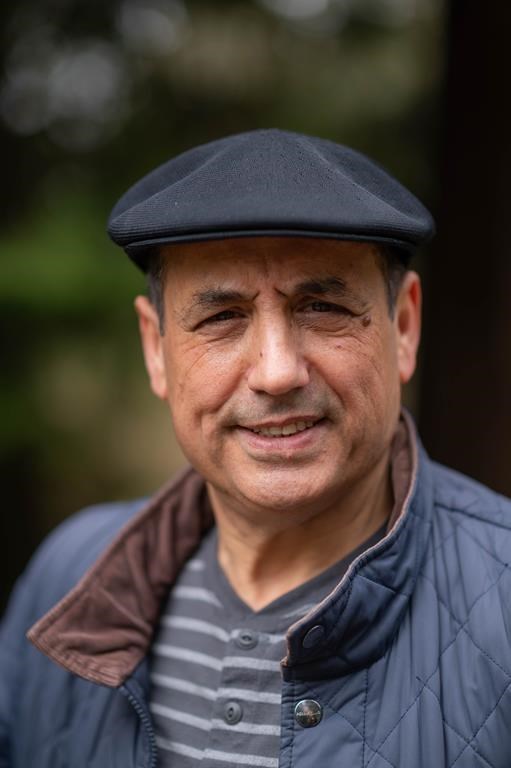
A University of British Columbia researcher is calling for a reduction in clearcut logging, as well as more attention on where trees are taken down to help reduced the province's flood risk. UBC forestry professor Younes Alila is shown in an undated handout photo. THE CANADIAN PRESS/HO-University of British Columbia, Paul H. Joseph, *MANDATORY CREDIT*

He said the amount of flooding “depends dramatically” on physical characteristics of a watershed that loses its trees, such as its topography, orientation to the sun or proximity to bodies of water that can collect the melted snow.

At Deadman River, small lakes dot the area to help mitigate melting snow, while the dramatic difference at Joe Ross Creek comes after trees were removed from parts of snow-covered mountains that receive more sun.

“The bottom line is, the only way we can appreciate the power of the forest in mitigating against the flood risk is to step back and make sure we look at cumulative effects within the watershed,” Alila said.

He said current logging practices in the province can lead to snow melt being accelerated in some parts of a watershed and coincide with other areas melting.

“And as a result, we amplify the floods downstream and that’s just the nature of the beast we call cumulative effects,” he said.

Alila said previous studies before about 2009 only looked at the increasing size of floods and not necessarily the increasing frequency, which he said meant they underestimated the impact of changes on the ground, such as through logging.

Now that the research shows how sensitive the watersheds can be to clear-cut logging, Alila said he thinks it’s “about time we take a very serious look” at reducing the amount of clear-cutting in favour of ecosystem-friendly alternatives such as thinning and selecting individual trees for harvest while saving smaller trees.

He estimated protecting smaller trees could speed up regrowth by 20 to 30 years.

“I think British Columbians and the ecosystem in British Columbia is in for drama in the next several decades until the level of clear cutting that we have been doing actually recovers, and it’s going to take decades for it to recover,” he said.

He said he hopes the research is helpful for both provincial and First Nations governments as the province is in the midst of a review of the Forest and Range Practices Act.

In a statement, the Ministry of Forests says scientists review topographic maps, surface geology maps, and detailed terrain stability maps and consider all of these factors when developing their recommendations for tree management and harvest boundaries.

It says the government is funding a new, $10-million innovation program at the Bulkley Valley Research Centre as part of a commitment to develop and implement alternatives to clear-cutting practices.

“Any science and research, including this new paper from UBC, that can assist in improving forestry practices is a welcome addition to a field of study that is always changing,” the statement says.

This report by The Canadian Press was first published Aug. 3, 2023.

Report Error Submit a Tip

More Stories

Steinbach Credit Union member warns others after scammer steals $10K

Scott Billeck 5 minute read Preview

Steinbach Credit Union member warns others after scammer steals $10K

Scott Billeck 5 minute read Friday, Sep. 18, 2026

A Winnipeg single mother whose bank account was drained of nearly $10,000 says Steinbach Credit Union needs to warn its members about what she believes is a broader security problem.

The woman, who is not being named to protect her identity, said a scammer gained access to her account earlier this week after calling SCU’s contact centre, claiming to be her and successfully completing the credit union’s authentication process.

She said she knows of at least six others who have experienced similar incidents in which callers impersonate SCU account holders and pass the authentication checks.

The woman discovered something was wrong when her minor son asked why money had been transferred out of an account they jointly hold.

Read
Friday, Sep. 18, 2026

Not falling back means time loop remains unclosed

Jen Zoratti 4 minute read Saturday, Sep. 19, 2026

I demand restitution. Where’s my hour?

In the traditional fall-back, spring-forward time change set up — you know, ol’ trusty that’s been effect for lo these 63 years — we lost an hour in the spring that we got back in the fall.

That was the social contract: you commit to feeling like you’re on cold medication for a week in March because you know a glorious extra hour of sleep will be returned to you in November. (Unless, of course, you have little kids, but look: we all make our choices.)

Well, that transaction, flawed as it was, isn’t happening this year. That hour you sacrificed to the sun gods in the spring? Gone. Not coming back. We’ve sprung forward and we shan’t be falling back — not in November, and (possibly) not ever. The scale shall remain unbalanced and the loop shall remain unclosed as Manitoba has adopted permanent daylight time.

Woman who fled abuse decries lack of consequences for landlord who breached lease-breaking confidentiality

Carol Sanders 5 minute read Preview

Woman who fled abuse decries lack of consequences for landlord who breached lease-breaking confidentiality

Carol Sanders 5 minute read 6:00 AM CDT

The provincial government is being asked to penalize landlords who breach the confidentiality of tenants breaking a lease to flee domestic violence after a survivor discovered there’s no consequences now.

“It put me in a very difficult situation,” said the woman, who was stunned to see that her landlord copied her abuser in email correspondence, including the domestic violence certificate she obtained to end a tenancy agreement early and leave an abusive relationship.

“My heart dropped to my stomach — I was in disbelief,” she said, recalling the confidentiality breach that occurred in 2025.

“I’m very lucky to be in a situation where it’s no longer a threat to my immediate safety.”

Read
6:00 AM CDT

UBC research blames bigger floods on clear-cutting

Ashley Joannou, The Canadian Press 4 minute read Preview

UBC research blames bigger floods on clear-cutting

Ashley Joannou, The Canadian Press 4 minute read Thursday, Aug. 3, 2023

VANCOUVER - Reducing clear-cut logging and paying more attention to where trees are removed will help reduce the flood risk in British Columbia, a researcher says.

A paper published by a team, including University of British Columbia Prof. Younes Alila, found that when 21 per cent of trees were harvested using clear-cut logging, the average flood size increased by 38 per cent in the Deadman River watershed and 84 per cent in Joe Ross Creek area, both snowy regions located north of Kamloops.

Alila said in an interview that while larger, intact watersheds are more effective in protecting against flooding, including by helping shade snow and slow its melt, where trees are removed also plays a critical role in how clear-cutting has increased floods.

He said the amount of flooding “depends dramatically” on physical characteristics of a watershed that loses its trees, such as its topography, orientation to the sun or proximity to bodies of water that can collect the melted snow.

Read
Thursday, Aug. 3, 2023

Airport sales pose risks

Stewart Fay 4 minute read Updated: 6:10 AM CDT

I am a retired Transport Canada manager and an aviation and airports management consultant who devoted my career serving the principal goal of making air travel and civil aviation operations safe, efficient and cost-effective. I had the pleasure of working with so many colleagues in the airports and aviation industry who shared that same goal.

I think I can speak for most of us in saying I am concerned with the latest trial balloon floated by Prime Minister Mark Carney — that our four largest airports could be turned over to huge investment funds and multinational corporations to operate as airport authorities replacing the local, non-profit authorities now in place.

Concerns have already been voiced about increased costs for air travel.

These huge investors care only about return on investment, and so they will certainly be looking at ways to maximize profit.

Former Bombers linebacker Gauthier enjoying career as electrician

Taylor Allen 6 minute read Preview

Former Bombers linebacker Gauthier enjoying career as electrician

Taylor Allen 6 minute read Friday, Sep. 18, 2026

Most professional football players don’t ride off into the sunset on their own terms.

Shayne Gauthier was well aware of that, but it didn’t make it sting any less when the Winnipeg Blue Bombers informed the veteran linebacker that they weren’t bringing him back for 2026.

“I was really hoping to play one more (season) because it would have been my 10th season, so, I’d say it didn’t really end the way I wanted,” Gauthier recently told the Free Press.

“It left a little sour taste in my mouth, but that’s part of pro sports. If everybody got the ending that they wanted, then it wouldn’t really work.”

Read
Friday, Sep. 18, 2026