UBC research blames bigger floods on clear-cutting, calls for more selective logging

Advertisement

Advertise with us

VANCOUVER - Reducing clear-cut logging and paying more attention to where trees are removed will help reduce the flood risk in British Columbia, a researcher says.

Read this article for free:


or

Already have an account? Log in here »

To continue reading, please subscribe:

Subscribe and receive a limited-edition Free Press branded hat or tote.

Digital Subscription

One year of digital access for only $205*

  • Enjoy unlimited reading on winnipegfreepress.com
  • Read the E-Edition, our digital replica newspaper
  • Access News Break, our award-winning app
  • Play interactive puzzles

*First annual payment billed as $205.00 + GST for one year. This annual subscription will automatically renew at $233.00 + GST every 52 weeks (10% off the regular annual price of $259.35). Offer available to new and qualified returning subscribers only. Cancel any time.

To continue reading, please subscribe:

Add Free Press access to your Brandon Sun subscription for only an additional

$1 for the first 4 weeks*

  • Enjoy unlimited reading on winnipegfreepress.com
  • Read the E-Edition, our digital replica newspaper
  • Access News Break, our award-winning app
  • Play interactive puzzles
Start now

*Your next Brandon Sun subscription payment will increase by $1.00 and you will be charged $17.95 plus GST for four weeks. After four weeks, your payment will increase to $24.95 plus GST every four weeks.

Hey there, time traveller!
This article was published 03/08/2023 (1143 days ago), so information in it may no longer be current.

VANCOUVER – Reducing clear-cut logging and paying more attention to where trees are removed will help reduce the flood risk in British Columbia, a researcher says.

A paper published by a team, including University of British Columbia Prof. Younes Alila, found that when 21 per cent of trees were harvested using clear-cut logging, the average flood size increased by 38 per cent in the Deadman River watershed and 84 per cent in Joe Ross Creek area, both snowy regions located north of Kamloops.

Alila said in an interview that while larger, intact watersheds are more effective in protecting against flooding, including by helping shade snow and slow its melt, where trees are removed also plays a critical role in how clear-cutting has increased floods.
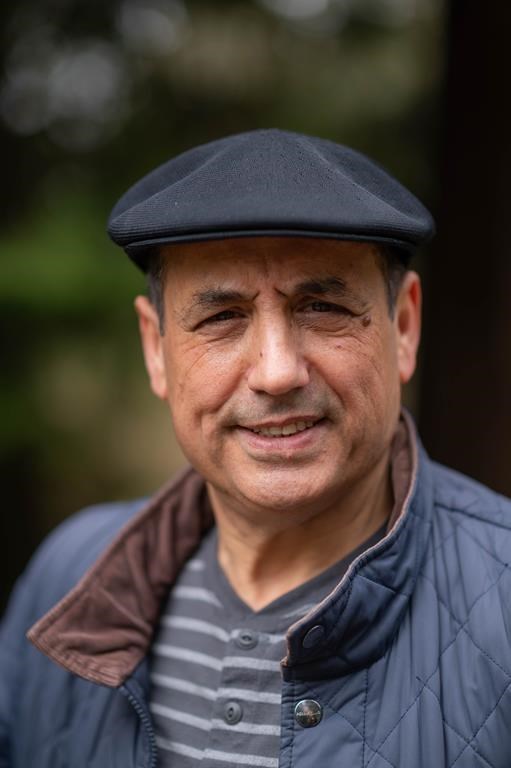
A University of British Columbia researcher is calling for a reduction in clearcut logging, as well as more attention on where trees are taken down to help reduced the province's flood risk. UBC forestry professor Younes Alila is shown in an undated handout photo. THE CANADIAN PRESS/HO-University of British Columbia, Paul H. Joseph, *MANDATORY CREDIT*

He said the amount of flooding “depends dramatically” on physical characteristics of a watershed that loses its trees, such as its topography, orientation to the sun or proximity to bodies of water that can collect the melted snow.

At Deadman River, small lakes dot the area to help mitigate melting snow, while the dramatic difference at Joe Ross Creek comes after trees were removed from parts of snow-covered mountains that receive more sun.

“The bottom line is, the only way we can appreciate the power of the forest in mitigating against the flood risk is to step back and make sure we look at cumulative effects within the watershed,” Alila said.

He said current logging practices in the province can lead to snow melt being accelerated in some parts of a watershed and coincide with other areas melting.

“And as a result, we amplify the floods downstream and that’s just the nature of the beast we call cumulative effects,” he said.

Alila said previous studies before about 2009 only looked at the increasing size of floods and not necessarily the increasing frequency, which he said meant they underestimated the impact of changes on the ground, such as through logging.

Now that the research shows how sensitive the watersheds can be to clear-cut logging, Alila said he thinks it’s “about time we take a very serious look” at reducing the amount of clear-cutting in favour of ecosystem-friendly alternatives such as thinning and selecting individual trees for harvest while saving smaller trees.

He estimated protecting smaller trees could speed up regrowth by 20 to 30 years.

“I think British Columbians and the ecosystem in British Columbia is in for drama in the next several decades until the level of clear cutting that we have been doing actually recovers, and it’s going to take decades for it to recover,” he said.

He said he hopes the research is helpful for both provincial and First Nations governments as the province is in the midst of a review of the Forest and Range Practices Act.

In a statement, the Ministry of Forests says scientists review topographic maps, surface geology maps, and detailed terrain stability maps and consider all of these factors when developing their recommendations for tree management and harvest boundaries.

It says the government is funding a new, $10-million innovation program at the Bulkley Valley Research Centre as part of a commitment to develop and implement alternatives to clear-cutting practices.

“Any science and research, including this new paper from UBC, that can assist in improving forestry practices is a welcome addition to a field of study that is always changing,” the statement says.

This report by The Canadian Press was first published Aug. 3, 2023.
Report Error Submit a Tip

More Stories

Siloam Mission, WFPS discussing on-site paramedic to reduce staggering number of emergency calls

Scott Billeck 4 minute read Preview

Siloam Mission, WFPS discussing on-site paramedic to reduce staggering number of emergency calls

Scott Billeck 4 minute read Yesterday at 2:00 AM CDT

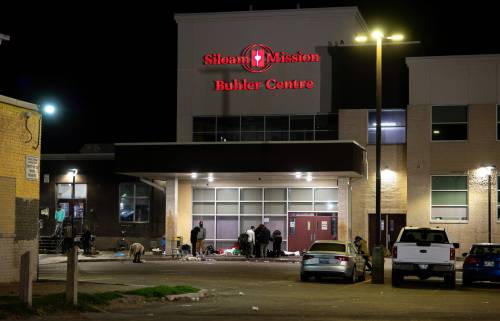
Winnipeg’s fire-paramedic service and its largest homeless-serving organization are discussing what it would look like to station at least one paramedic at Siloam Mission, as emergency calls to the downtown facility surge.

The ongoing discussions come as Winnipeg Fire Paramedic Service crews were dispatched 1,771 times during the first eight months of the year to the two adjacent Siloam properties at 303 Stanley St. and 300 Princess St.

WFPS said most of the calls were related to overdoses or other consequences of substance use, with the total nearly double the 854 calls recorded over the same period last year. By comparison, there were 831 calls during the same span in 2024, and 591 in 2023.

“The number of emergency calls isn’t sustainable for us as a service, but it’s certainly not sustainable for them as an agency trying to provide services,” WFPS chief Ryan Sneath told the Free Press. “And they recognize that they’re impacting emergency services, not them specifically, but the site in a significant way.”

Read
Yesterday at 2:00 AM CDT

Hellebuyck standoff caused by… Nathan MacKinnon?

Mike McIntyre 6 minute read Preview

Hellebuyck standoff caused by… Nathan MacKinnon?

Mike McIntyre 6 minute read Yesterday at 6:34 PM CDT

Looking for someone to blame in the Connor Hellebuyck fiasco and cast as public enemy No. 1? How about long-time Winnipeg Jets nemesis Nathan MacKinnon?

Allow us to explain as we fire up the time machine and head back to February in Italy.

Oh, what could have been if MacKinnon had been able to score on what appeared to be an open net late in the third period of the men’s gold medal game with Hellebuyck down and seemingly out of position.

Instead, the star forward fired wide, keeping the score deadlocked at 1-1 as the clock ticked down on regulation.

Read
Yesterday at 6:34 PM CDT

Canada must not accept another Iranian autocracy

David Matas 5 minute read 2:01 AM CDT

Iran is a state run by a radical government victimizing its citizens and its neighbours. How do we change that? Any regime change that repeats the mistakes of the past is not a solution.

What went wrong in the past which led to the current regime? One answer is the U.K. and American aided coup which led to the ouster in 1953 of a democratically elected government headed at the time by Mohammad Mossadegh and its replacement with an American friendly autocrat, the Shah of Iran, Mohammad Reza Pahlavi.

The Shah imposed his rule through the Iranian National Intelligence and Security Organization — SAVAK, the acronym of its Persian name. SAVAK systematically inflicted torture, arbitrary killings and extra-judicial killings on perceived opponents of the regime. It was only a matter of time before repression of a regime directed to serving foreign interests would be overthrown.

What replaced the regime of the Shah, in 1979, the current regime of the mullahs, is a regime as intolerant and violent as the regime of the Shah and then some. That was not inevitable. But neither was it surprising. The vicious nature of the current regime, following the example set by the Shah, and its hatred for the United States, reacting to the U.S. aided imposition of the Shah, both echoes and reacts to the past. In 1979, the U.S. reaped what it sowed in 1953.

Today’s horoscope

Georgia Nicols 4 minute read Preview

Today’s horoscope

Georgia Nicols 4 minute read 2:01 AM CDT

MOON ALERT: After 12:15 a.m., there are no restrictions to shopping or important decisions today. The moon is in Capricorn.

ARIES (March 21-April 19)

This is a tricky day. Don’t be too ambitious. It’s totally OK to kick back and relax. But be aware that communications with parents and authority figures might be confused, vague or subject to misunderstandings. Nevertheless, romance is sweet and cosy!

TAURUS (April 20-May 20)

Read
2:01 AM CDT

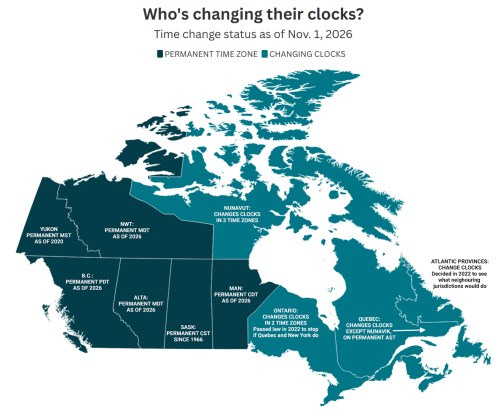
A quick look at where provinces and territories stand on time changes

The Canadian Press 2 minute read Preview

A quick look at where provinces and territories stand on time changes

The Canadian Press 2 minute read Updated: Yesterday at 6:28 AM CDT

WINNIPEG - Manitoba's government said Thursday the province will be sticking with daylight time year-round, making it the latest jurisdiction to move away from twice-annual time changes. Here's a look at where things stand across Canada:

British Columbia said in March that it was moving to permanent Pacific daylight time. The change also means that parts of northeastern B.C., which have been on mountain standard time year round, are now in alignment with the rest of the province.

Alberta also switched to permanent daylight time this year in what it calls Alberta time. The change means it now has the same time as Saskatchewan year round.

Saskatchewan has been on permanent central standard time since 1966.

Read
Updated: Yesterday at 6:28 AM CDT

Grieving child builds backyard rocket ship

Harriet Zaidman 4 minute read 2:01 AM CDT

I Built a Rocket Ship (Kids Can Press, 32 pages, hardcover, $22) by Winnipegger Anna Lazowski is a tender story for children ages 4-8 about a little girl trying to make sense of her mother’s death. The child engages in conversation with her late mom, agreeing and disagreeing about things said as she carries objects (and of course, the cat) to the backyard. There, she is building a rocket ship she will pilot into the skies to find her mom again.

Jennica Lounsbury’s varied perspectives show the range of emotions the little girl experiences.

● ● ●

Northwoods Lullaby by Mary Casanova (University of Minnesota Press, 32 pages, hardover, $25) is a bedtime book for readers up to age eight, perfect to bring a busy, happy day to a close. Just like children who are listening to adults reading the book, all the animal babies are being tucked into their nests and burrows by loving parents: “Thump and scamper,/nimble clover./ Soon it’s time to rest. Baby loon/ nestles in/as Papa floats along.”