Flash drought, invasive grasses, winds, hurricane and climate change fuel Maui’s devastating fires

Advertisement

Advertise with us

Hawaii went from lush to bone dry and thus more fire-prone in a matter of just a few weeks — a key factor in a dangerous mix of conditions appear to have combined to make the wildfires blazing a path of destruction in Hawaii particularly damaging.

Read this article for free:


or

Already have an account? Log in here »

To continue reading, please subscribe:

Subscribe and receive a limited-edition Free Press branded hat or tote.

Digital Subscription

One year of digital access for only $205*

  • Enjoy unlimited reading on winnipegfreepress.com
  • Read the E-Edition, our digital replica newspaper
  • Access News Break, our award-winning app
  • Play interactive puzzles

*First annual payment billed as $205.00 + GST for one year. This annual subscription will automatically renew at $233.00 + GST every 52 weeks (10% off the regular annual price of $259.35). Offer available to new and qualified returning subscribers only. Cancel any time.

To continue reading, please subscribe:

Add Free Press access to your Brandon Sun subscription for only an additional

$1 for the first 4 weeks*

  • Enjoy unlimited reading on winnipegfreepress.com
  • Read the E-Edition, our digital replica newspaper
  • Access News Break, our award-winning app
  • Play interactive puzzles
Start now

*Your next Brandon Sun subscription payment will increase by $1.00 and you will be charged $17.95 plus GST for four weeks. After four weeks, your payment will increase to $24.95 plus GST every four weeks.

Hey there, time traveller!
This article was published 09/08/2023 (1139 days ago), so information in it may no longer be current.

Hawaii went from lush to bone dry and thus more fire-prone in a matter of just a few weeks — a key factor in a dangerous mix of conditions appear to have combined to make the wildfires blazing a path of destruction in Hawaii particularly damaging.

Experts say climate change is increasing the likelihood of these flash droughts as well as other extreme weather events like what’s playing out on the island of Maui, where dozens of people have been killed and a historic tourist town was devastated.

“It’s leading to these unpredictable or unforeseen combinations that we’re seeing right now and that are fueling this extreme fire weather,” said Kelsey Copes-Gerbitz, a postdoctoral researcher at the University of British Columbia’s faculty of forestry. “What these … catastrophic wildfire disasters are revealing is that nowhere is immune to the issue.”
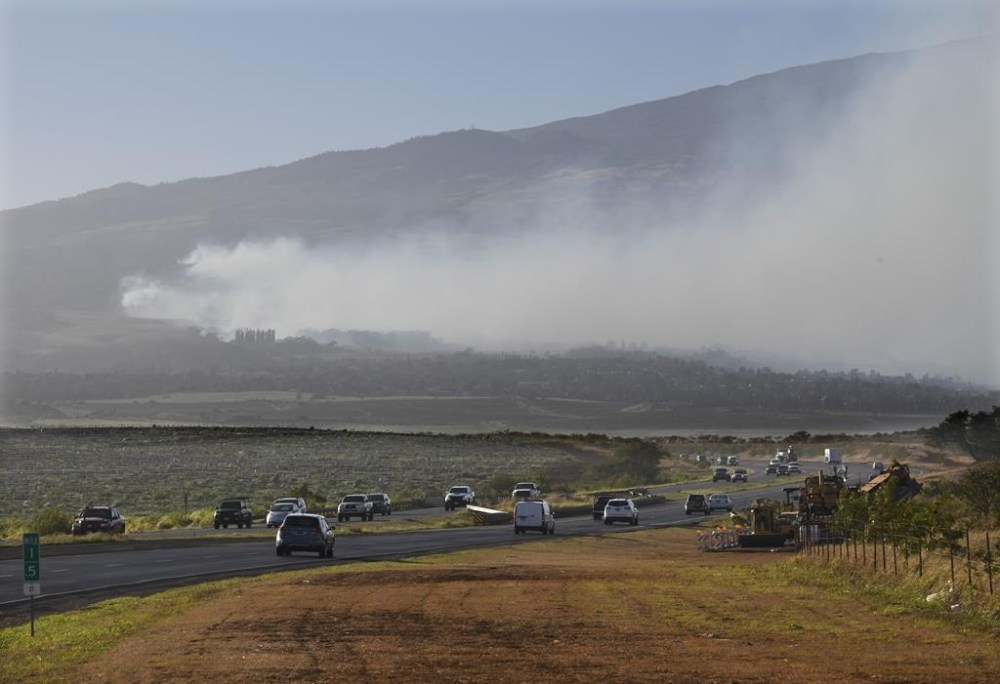
Smoke blows across the slope of Haleakala volcano on Maui, Hawaii, as a fire burns in Maui's upcountry region on Tuesday, Aug. 8. 2023. Several Hawaii communities were forced to evacuate from wildfires that destroyed at least two homes as of Tuesday as a dry season mixed with strong wind gusts made for dangerous fire conditions. (Matthew Thayer/The Maui News via AP)

Here’s a look at the Maui fires, and what’s behind them:

FLASH DROUGHTS

Flash droughts are so dry and hot that the air literally sucks moisture out of the ground and plants in a vicious cycle of hotter-and-drier that often leads to wildfires. And Hawaii’s situation is a textbook case, two scientists told The Associated Press.

As of May 23, none of Maui was unusually dry; by the following week it was more than half abnormally dry. By June 13 it was two-thirds either abnormally dry or in moderate drought. And this week about 83% of the island is either abnormally dry or in moderate or severe drought, according to the U.S. drought monitor.

Maui experienced a two-category increase in drought severity in just three weeks from May to June, with that rapid intensification fitting the definition of a flash drought, said Jason Otkin, an atmospheric scientist at the University of Wisconsin, Madison.
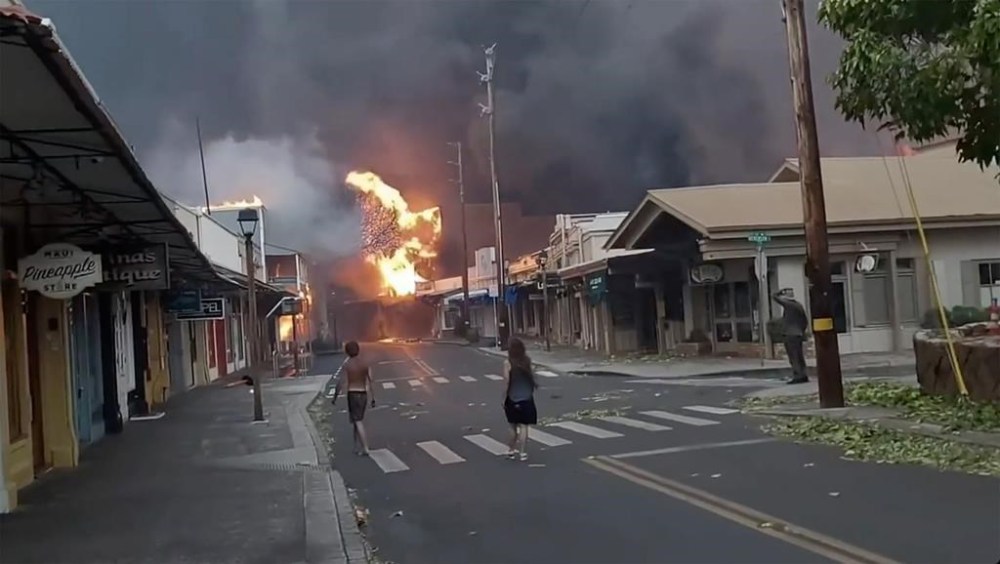
People watch as smoke and flames fill the air from raging wildfires on Front Street in downtown Lahaina, Maui on Tuesday, Aug. 9, 2023. Maui officials say wildfire in the historic town has burned parts of one of the most popular tourist areas in Hawaii. County of Maui spokesperson Mahina Martin said in a phone interview early Wednesday says fire was widespread in Lahaina, including Front Street, an area of the town popular with tourists. (Alan Dickar via AP)

Otkin co-authored an April study that shows that flash droughts are becoming more common as Earth warms by human-caused climate change. A 2016 flash drought was connected to unusual wildfires in Gatlinburg, Tennessee, he said.

Even in the past week there’s been “a quick acceleration” of that drought, said University of Virginia hydrologist Venkat Lakshmi. Flash droughts occur when the rain stops and it gets so hot that the atmosphere literally sucks moisture out of the ground and plants, making them more likely to catch fire.

“Plants are getting really, really dry,” Lakshmi said. “It’s all related to water in some ways.”

“The most destructive fires usually occur during drought. If an area falls into drought quickly, that means there is a longer window of time for fires to occur,” Otkin said. “The risk for destructive fires could increase in the future if flash droughts become more common, as some studies have indicated.”

INVASIVE GRASSES
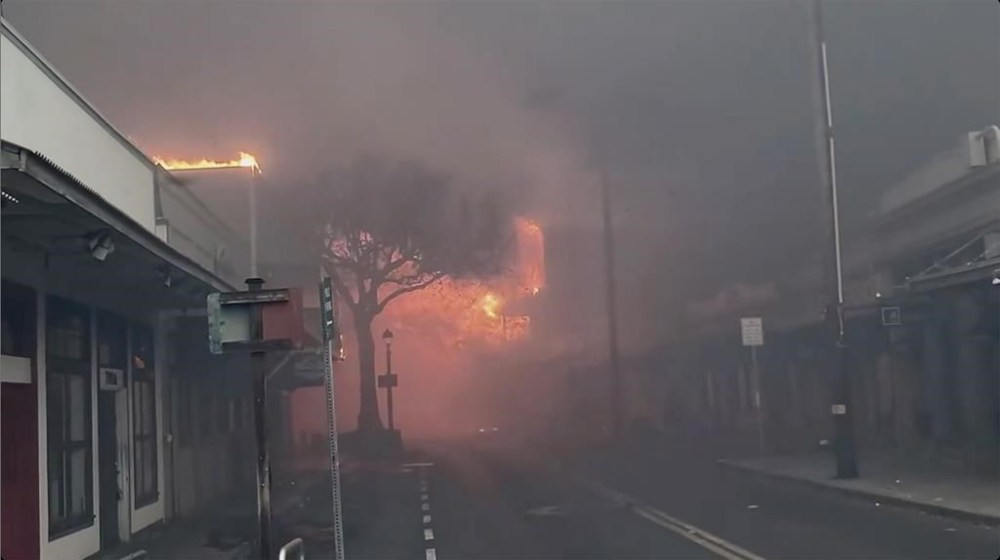
Smoke and flames fill the air from raging wildfires on Front Street in downtown Lahaina, Maui on Tuesday, Aug. 9, 2023. Maui officials say wildfire in the historic town has burned parts of one of the most popular tourist areas in Hawaii. County of Maui spokesperson Mahina Martin said in a phone interview early Wednesday says fire was widespread in Lahaina, including Front Street, an area of the town popular with tourists. (Alan Dickar via AP)

Elizabeth Pickett is the co-executive director of the Hawaii Wildfire Management Organization, a nonprofit that works with communities across Hawaii on wildfire prevention and mitigation. Pickett said there used to be massive tracts of land occupied by irrigated pineapples and sugar cane, and as those businesses declined and ceased, the lands were taken over by invasive, fire-prone grass species.

“The problem is at such a large scale, 26% of our state is now invaded by these grasses,” she said Thursday. “The landscape that has been invaded is steep, rocky and challenging to access. It’s a really hard landscape. You can’t just go with a lawn mower.”

When these grasses burn, they burn into the native forests, threatening endangered species, and then the forests are replaced by more grass, Pickett said.

WHAT’S FANNING THEM?

Major differences in air pressure drove unusually strong trade winds that fanned the destructive flames, according to meteorologists.
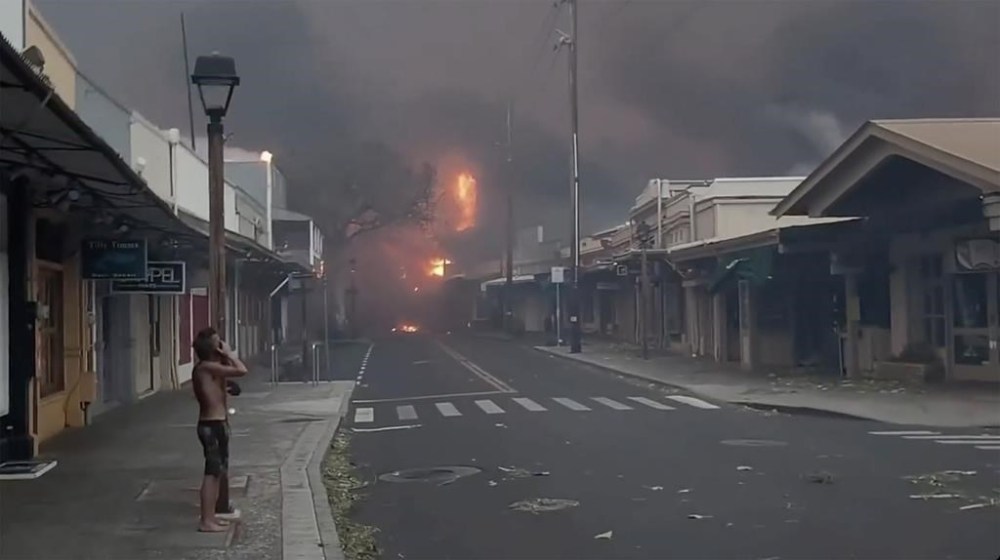
People watch as smoke and flames fill the air from raging wildfires on Front Street in downtown Lahaina, Maui on Tuesday, Aug. 8, 2023. Maui officials say wildfire in the historic town has burned parts of one of the most popular tourist areas in Hawaii. County of Maui spokesperson Mahina Martin said in a phone interview early Wednesday says fire was widespread in Lahaina, including Front Street, an area of the town popular with tourists. (Alan Dickar via AP

Trade winds are a normal feature of Hawaii’s climate. They’re caused when air moves from the high-pressure system pressure north of Hawaii — known as the North Pacific High — to the area of low pressure at the equator, to the south of the state.

But Hurricane Dora, which passed south of the islands this week, is exacerbating the low-pressure system and increasing the difference in air pressure to create “unusually strong trade winds,” said Genki Kino, a meteorologist with the National Weather Service office in Honolulu.

Hawaii’s state climatologist, Pao-Shin Chu, said he was caught off guard by the impact Dora had from roughly 500 miles (800 kilometers) away.

“Hurricane Dora is very far away from Hawaii, but you still have this fire occurrence here. So this is something we didn’t expect to see,” he said.

Strong winds, combined with low humidity and an abundance of dry vegetation that burns easily, can increase the danger of wildfire, even on a tropical island like Maui.
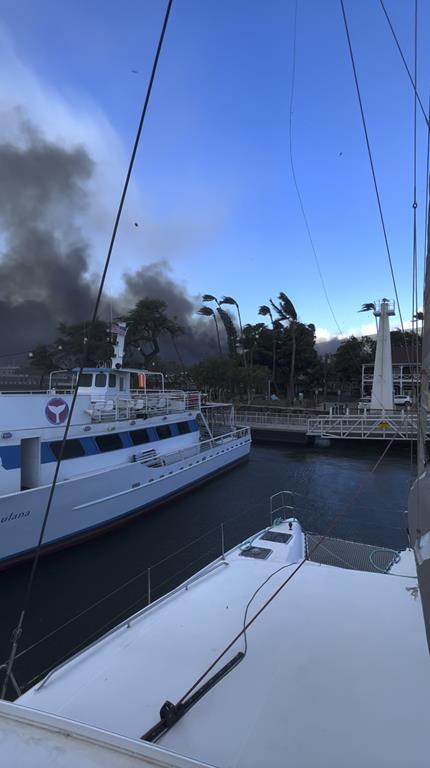
In this photo provided by Brantin Stevens, smoke fill the air from wild fires at Lahaina harbor on Tuesday, Aug. 8, 2023 in Hawaii. Fire was widespread in Lahaina Town, including on Front Street, a popular shopping and dining area, County of Maui spokesperson Mahina Martin said by phone early Wednesday. Traffic has been very heavy as people try to evacuate the area, and officials asked people who weren’t in an evacuation area to shelter in place to avoid adding to the traffic, she said. (Brantin Stevens via AP)

“If you have all of those conditions at the same time, it’s often what the National Weather Service calls ‘red flag conditions,’” said Erica Fleishman, director of the Oregon Climate Change Research Institute at Oregon State University.

HOW CLIMATE CHANGE PLAYS A ROLE

“Climate change in many parts of the world is increasing vegetation dryness, in large part because temperatures are hotter,” Fleishman said. “Even if you have the same amount of precipitation, if you have higher temperatures, things dry out faster.”

Clay Trauernicht, a fire scientist at the University of Hawaii, said the wet season can spur plants like Guinea grass, a nonnative, invasive species found across parts of Maui, to grow as quickly as 6 inches (15 centimeters) a day and reach up to 10 feet (3 meters) tall. When it dries out, it creates a tinderbox that’s ripe for wildfire.

“These grasslands accumulate fuels very rapidly,” Trauernicht said. “In hotter conditions and drier conditions, with variable rainfall, it’s only going to exacerbate the problem.”
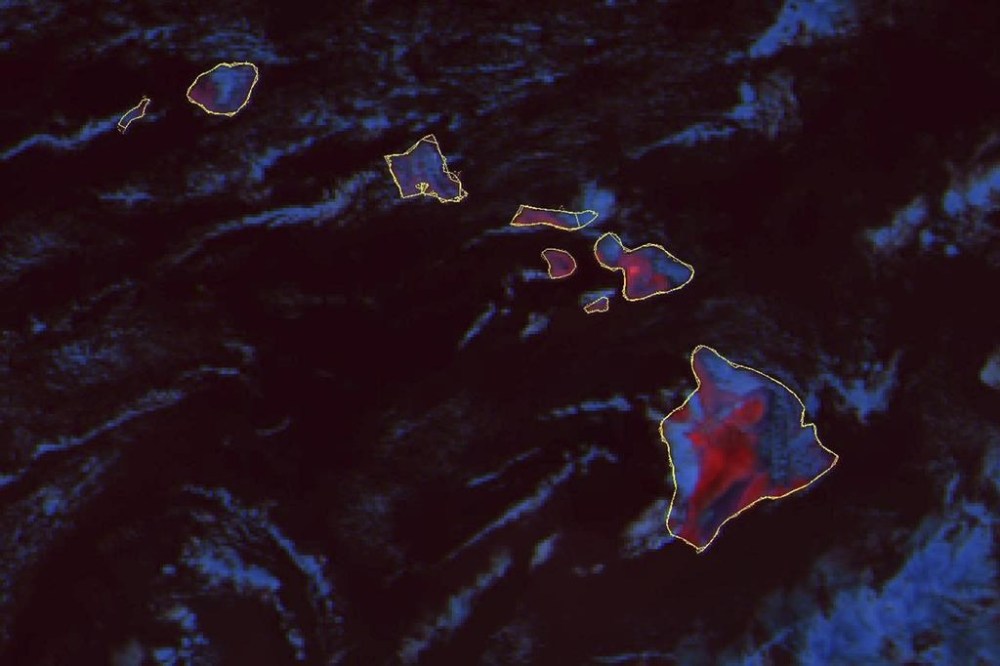
This GOES-18 fire temperature composite satellite image taken 6:30 p.m. EDT. on Wednesday, Aug. 9, 2023 and released by NOAA, shows hot land surface temperatures in red on the Hawaii Islands. A dangerous mix of conditions appear to have combined to make the wildfires blazing a path of destruction in Hawaii particularly damaging, including high winds, low humidity and dry vegetation. (NOAA via AP)

STRONGER HURRICANES

Climate change not only increases the fire risk by driving up temperatures, but also makes stronger hurricanes more likely. In turn, those storms could fuel stronger wind events like the one behind the Maui fires.

That’s on top of other threats made worse by climate changes.

“There’s an increasing trend in the intensity of hurricanes worldwide, in part because warm air holds more water,” Fleishman said. “In addition to that, sea levels are rising worldwide, so you tend to get more severe flooding from the storm surge when a hurricane makes landfall.”

While climate change can’t be said to directly cause singular events, experts say, the impact extreme weather is having on communities is undeniable.
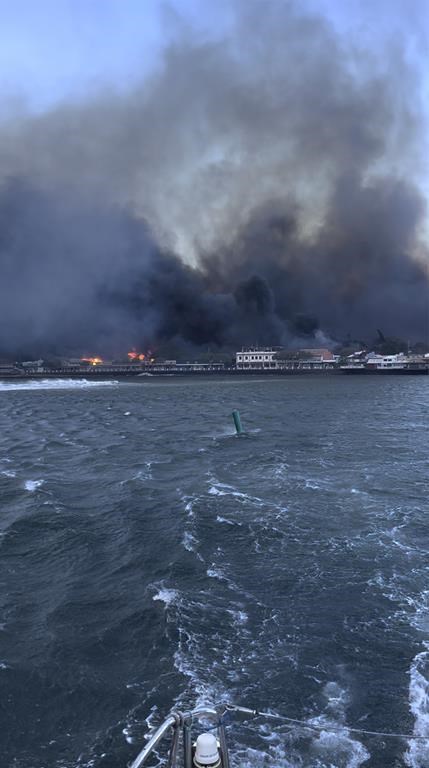
In this photo provided by Brantin Stevens smoke fill the air from wild fires at Lahaina harbor on Tuesday, Aug. 8, 2023 in Hawaii. Fire was widespread in Lahaina Town, including on Front Street, a popular shopping and dining area, County of Maui spokesperson Mahina Martin said by phone early Wednesday. Traffic has been very heavy as people try to evacuate the area, and officials asked people who weren’t in an evacuation area to shelter in place to avoid adding to the traffic, she said. (Brantin Stevens via AP)

“These kinds of climate change-related disasters are really beyond the scope of things that we’re used to dealing with,” UBC’s Copes-Gerbitz said. “It’s these kind of multiple, interactive challenges that really lead to a disaster.”

___

Associated Press climate and environmental coverage receives support from several private foundations. See more about AP’s climate initiative here. The AP is solely responsible for all content.

___

Claire Rush is a corps member for the Associated Press/Report for America Statehouse News Initiative. Report for America is a nonprofit national service program that places journalists in local newsrooms to report on undercovered issues. Follow her at @ClaireARush.
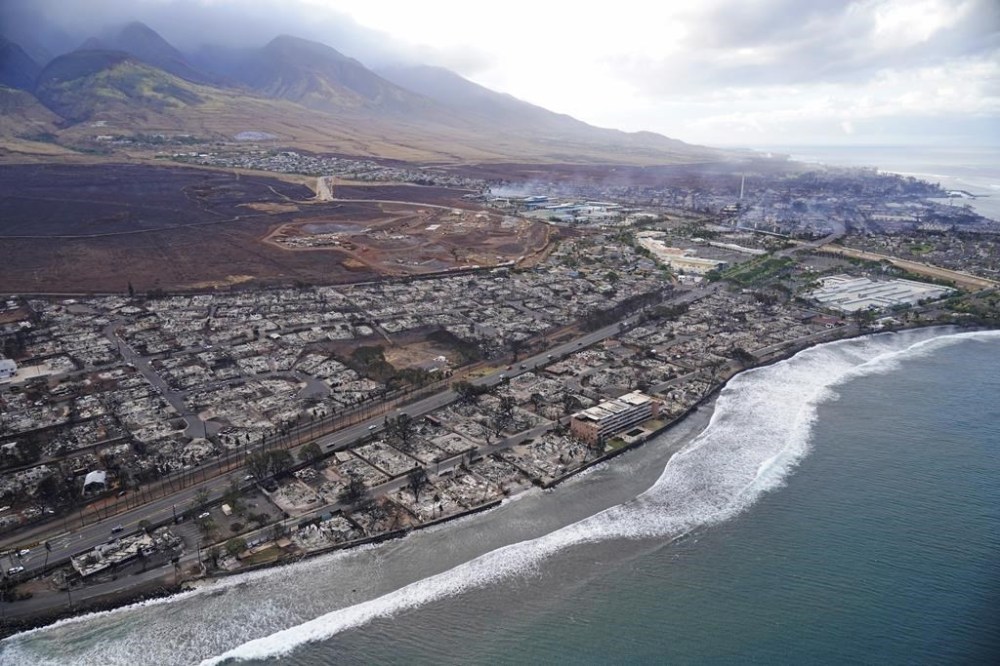
Wildfire wreckage is shown Thursday, Aug. 10, 2023, in Lahaina, Hawaii. The search of the wildfire wreckage on the Hawaiian island of Maui on Thursday revealed a wasteland of burned out homes and obliterated communities as firefighters battled the stubborn blaze making it the deadliest in the U.S. in recent years. (AP Photo/Rick Bowmer)
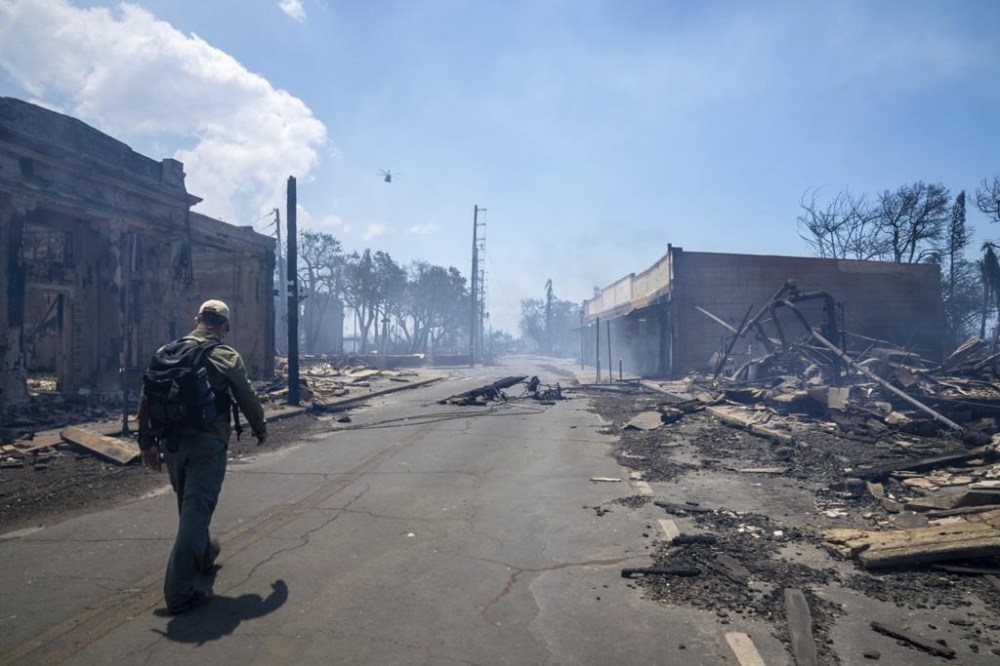
In this photo provided by Tiffany Kidder Winn, a man walks past wildfire wreckage on Wednesday, Aug. 9, 2023, in Lahaina, Hawaii. The scene at one of Maui's tourist hubs on Thursday looked like a wasteland, with homes and entire blocks reduced to ashes as firefighters as firefighters battled the deadliest blaze in the U.S. in recent years. (Tiffany Kidder Winn via AP)
Report Error Submit a Tip

More Stories

New Jets show promise despite loss to experienced Oilers

Mike McIntyre 8 minute read Preview

New Jets show promise despite loss to experienced Oilers

Mike McIntyre 8 minute read Updated: 9:34 AM CDT

Preseason hockey games are always more about the process than the result, and that’s especially true when the opposing rosters appear to be a major mismatch on paper.

So a 5-2 loss by an inexperienced group of Winnipeg Jets skaters against a star-studded Edmonton Oilers squad on Saturday night in the Alberta capital was neither surprising nor alarming.

There was, however, plenty to like from the visitors’ perspective despite the outcome.

Let’s break it down.

Read
Updated: 9:34 AM CDT

Hellebuyck standoff caused by… Nathan MacKinnon?

Mike McIntyre 7 minute read Preview

Hellebuyck standoff caused by… Nathan MacKinnon?

Mike McIntyre 7 minute read Friday, Sep. 18, 2026

Looking for someone to blame in the Connor Hellebuyck fiasco and cast as public enemy No. 1? How about long-time Winnipeg Jets nemesis Nathan MacKinnon?

Allow us to explain as we fire up the time machine and head back to February in Italy.

Oh, what could have been if MacKinnon had been able to score on what appeared to be an open net late in the third period of the men’s gold medal game with Hellebuyck down and seemingly out of position.

Instead, the star forward fired wide, keeping the score deadlocked at 1-1 as the clock ticked down on regulation.

Read
Friday, Sep. 18, 2026

Former Bombers linebacker Gauthier enjoying career as electrician

Taylor Allen 7 minute read Preview

Former Bombers linebacker Gauthier enjoying career as electrician

Taylor Allen 7 minute read Friday, Sep. 18, 2026

Most professional football players don’t ride off into the sunset on their own terms.

Shayne Gauthier was well aware of that, but it didn’t make it sting any less when the Winnipeg Blue Bombers informed the veteran linebacker that they weren’t bringing him back for 2026.

“I was really hoping to play one more (season) because it would have been my 10th season, so, I’d say it didn’t really end the way I wanted,” Gauthier recently told the Free Press.

“It left a little sour taste in my mouth, but that’s part of pro sports. If everybody got the ending that they wanted, then it wouldn’t really work.”

Read
Friday, Sep. 18, 2026

National Black Canadians Summit celebrates culture, combats racism

Gabrielle Piché 4 minute read Preview

National Black Canadians Summit celebrates culture, combats racism

Gabrielle Piché 4 minute read Yesterday at 6:06 PM CDT

Despite the event’s name — the National Black Canadians Summit — Bruce Miller felt he should attend.

He booked a ticket. And so, this weekend, the Indigenous Manitoban joined roughly 1,500 people flocking to the RBC Convention Centre.

It’s a full schedule — addresses from a former Canadian governor general, sessions on Black mental health and anti-Black racism.

The annual event draws politicians, artists and other professionals from across the country.

Read
Yesterday at 6:06 PM CDT

Cabernet Sauvignon star of wine festival

Ben Sigurdson 5 minute read Preview

Cabernet Sauvignon star of wine festival

Ben Sigurdson 5 minute read Yesterday at 3:00 AM CDT

The Winnipeg Wine Festival will celebrate the king of red wine grapes next weekend — the theme of this year’s festival, which takes place Sept. 25 and 26 at the RBC Convention Centre, is Cabernet Sauvignon.

Cab Sauv, as it’s also known, is the world’s most widely planted wine grape of any colour, first coming to prominence in the 1800s in France’s Bordeaux region, where the grape is still popular. Rather than single-variety wines, Bordeaux reds tend to be blends, with those coming from the left bank of the Gironde estuary being Cabernet-dominant, while right-bank wines are Merlot-dominant, with Cabernet Sauvignon playing a supporting role. Cabernet and Merlot work well together and many other countries have followed suit in blending the two.

A team at University of California Davis put Cabernet Sauvignon through a DNA test in 1996 and discovered its parent grapes are Cabernet Franc and Sauvignon Blanc — it’s likely that at some point the two varieties, planted next to each other in some vineyard, crossed and mutated and became the grape we know today. (Someone growing grapes in the 19th century must have had an inkling of what was up, as the grape has been called Cabernet Sauvignon since long before the DNA test.)

Flavour-wise, most Cabernet Sauvignon wines are big and bold, with a core of deep dark berry flavours, some graphite and spice notes and relatively bright acidity. It’s a grape that is well-suited to barrel aging, with most examples seeing at least some time in wood.

Read
Yesterday at 3:00 AM CDT

Not falling back means time loop remains unclosed

Jen Zoratti 4 minute read Yesterday at 2:01 AM CDT

I demand restitution. Where’s my hour?

In the traditional fall-back, spring-forward time change set up — you know, ol’ trusty that’s been effect for lo these 63 years — we lost an hour in the spring that we got back in the fall.

That was the social contract: you commit to feeling like you’re on cold medication for a week in March because you know a glorious extra hour of sleep will be returned to you in November. (Unless, of course, you have little kids, but look: we all make our choices.)

Well, that transaction, flawed as it was, isn’t happening this year. That hour you sacrificed to the sun gods in the spring? Gone. Not coming back. We’ve sprung forward and we shan’t be falling back — not in November, and (possibly) not ever. The scale shall remain unbalanced and the loop shall remain unclosed as Manitoba has adopted permanent daylight time.