New music
Reviews of this week’s releases
Advertisement
Read this article for free:
or
Already have an account? Log in here »
To continue reading, please subscribe:
Digital Subscription
One year of digital access for only $1.44 a week*
- Enjoy unlimited reading on winnipegfreepress.com
- Read the E-Edition, our digital replica newspaper
- Access News Break, our award-winning app
- Play interactive puzzles
*Billed as $5.77 plus GST every four weeks. After 52 weeks, price increases to the regular rate of $19.95 plus GST every four weeks. Offer available to new and qualified returning subscribers only. Cancel any time.
To continue reading, please subscribe:
Add Free Press access to your Brandon Sun subscription for only an additional
$1 for the first 4 weeks*
- Enjoy unlimited reading on winnipegfreepress.com
- Read the E-Edition, our digital replica newspaper
- Access News Break, our award-winning app
- Play interactive puzzles
*Your next Brandon Sun subscription payment will increase by $1.00 and you will be charged $17.95 plus GST for four weeks. After four weeks, your payment will increase to $24.95 plus GST every four weeks.
Read unlimited articles for free today:
or
Already have an account? Log in here »
Hey there, time traveller!
This article was published 10/08/2023 (1164 days ago), so information in it may no longer be current.
POP
Bethany Cosentino
Natural Disaster (Concord)
There was a (relatively minor) ruction in the music world last weekend, when indie-rock singer-songwriterJenny Lewis leapt to the defence of her colleague, Bethany Cosentino, after reading a review of Cosentino’s debut solo album at pitchfork.com.

Pitchfork’s writer didn’t like Cosentino’s debut solo album as much as Lewis thought she should, so Lewis let her X followers know how she felt. This, of course, cued a torrent of posts and ripostes on the nature of art and criticism that encompassed views both high- and, ahem… lowbrow. The bottom line is that Lewis’s post prompted dialogue, which is as it should be. Whether it led to greater understanding remains to be seen.
In the meantime, Cosentino’s album, her first under her own name after 14 years as Best Coast, a project she founded with multi-instrumentalist Bobb Bruno in 2009, is out there to be heard, assessed and appreciated (or not). Natural Disaster stakes out much different musical territory for the native of Los Angeles, shifting her into the realm of Sheryl Crow-ish Americana pop and, in doing so, stands as a declaration that she’s moved on from her days as a much-beloved, anxious-millennial indie rock artist.
It’s good stuff, too. Recorded with Butch Walker at his Nashville studio, Cosentino’s dozen open, breezy songs are expertly crafted and performed, enabling her to emphatically lay bare the state of her world, as she does on My Own City, singing: “’Cause I don’t want to stay the same / We were born to change / And you can fight it but you figure out it’s gonna happen anyway.”
Cosentino pulls on three distinct threads here. The first is her newfound sense of self-worth, as on My Own City, It’s Fine, Real Life and It’s A Journey; the other is a reflection of the existential dread of this day and age, both her own and others’, on songs such as Natural Disaster (which dovetails metaphorically with this long, hot summer but was actually written about the Black LIves Matter summer of 2020), Outta Time and Calling on Angels (the refrain of which is: “We need a miracle…”).
Underpinning these are Cosentino’s reflections and revelations on love, as on the piano ballad Easy, in which she welcomes a new love; Hope You’re Happy New, a paean to an old flame; and I’ve Got News for You, the plaintive album-closer on which she says ready to go for it, regardless of what is yet to come. ★★★★ out of 5
STREAM THESE: Natural Disaster, Easy, I’ve Got News for You
On YouTube: Four videos for songs from Natural Disaster — wfp.to/N31
— John Kendle
ROCK
Neil Young
Chrome Dreams (Reprise Records)
Neil Young is captured in his mid-1970s prime here with yet another “lost” — or “unreleased” — album officially seeing the light of day as Young originally envisioned nearly half a century ago.
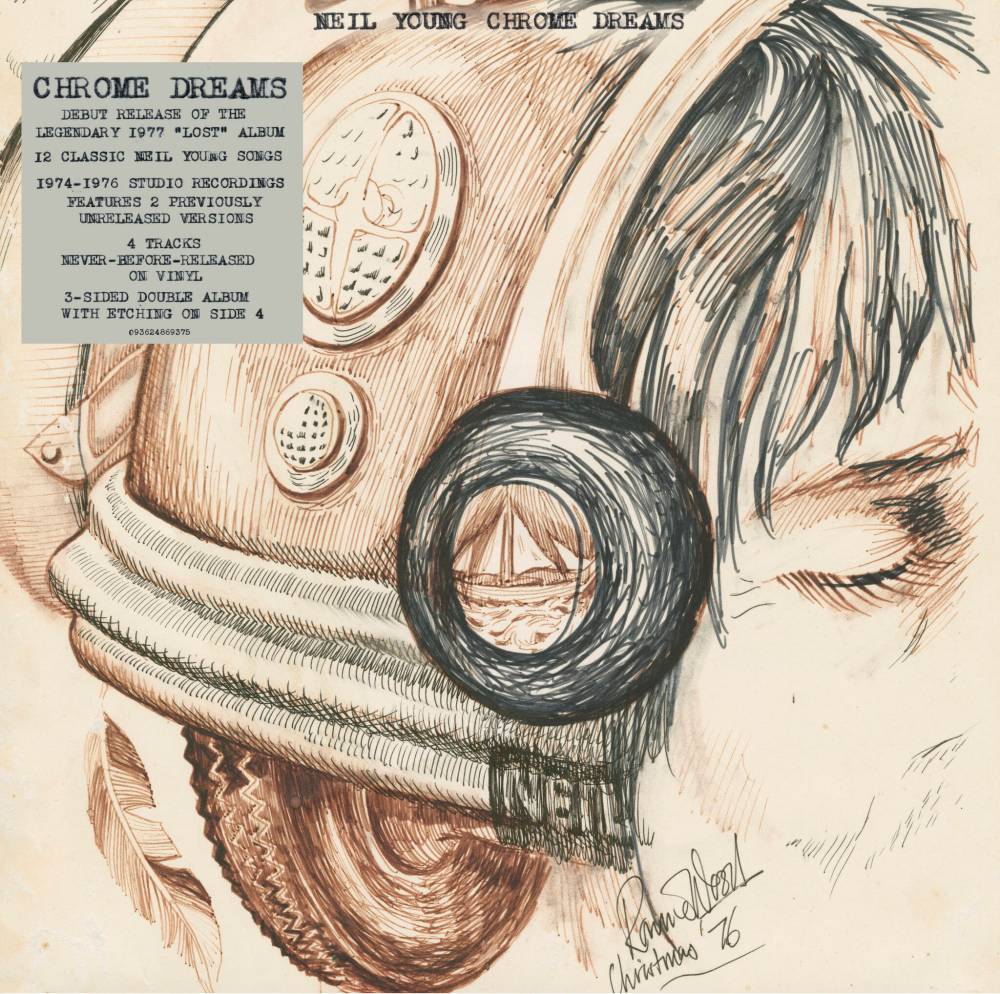
Young, 77, has been delving into his vast archive in recent years to release live albums and studio recordings that were previously slated for release, but for one reason or another never got out.
The long-bootlegged collection of 12 songs, all recorded between 1974 and 1976 and first compiled for a release in 1977, gained legendary status as it sat in the vault. Young even managed to release a titular sequel, Chrome Dreams II in 2007, before he got around to putting out the original.
It’s impossible 46 years later to know how Chrome Dreams would have altered the Neil Young career narrative had it been released when planned. Certainly, Chrome Dreams is a stunning collection, highlighted by beloved Young songs Powderfinger, Pocahontas and Like a Hurricane.
In fact, all of the songs on the album have already been released in one version or another, just not in this 1977 sequence.
There are variations here being heard for the first time, but for diehard fans hoping to hear radically different versions of the songs they’ve long been familiar with, Chrome Dreams doesn’t offer much.
Pocahontas is the same version that was released in 1979 on Rust Never Sleeps, just minus the overdubs. Like a Hurricane is the same version released in 1977 on American Stars ’n Bars. This version of Powderfinger is the original, which was previously released in 2017. Young first released another version of the song in 1979 on Rust Never Sleeps.
Two other tracks, Sedan Delivery and Hold Back the Tears, have lyrics not included in the later versions.
While there’s not a lot that’s new, Chrome Dreams succeeds in bringing together yet another tantalizing lost “what if” release from Young’s vast catalog. ★★★ out of five
STREAM THIS: Powderfinger
— Scott Bauer, The Associated Press
JAZZ
Joel Goodman
An Exquisite Moment (Self-Produced)
While Joel Goodman plays bass and keyboards, he is best known in the music business as a composer for scores of TV shows and movies.
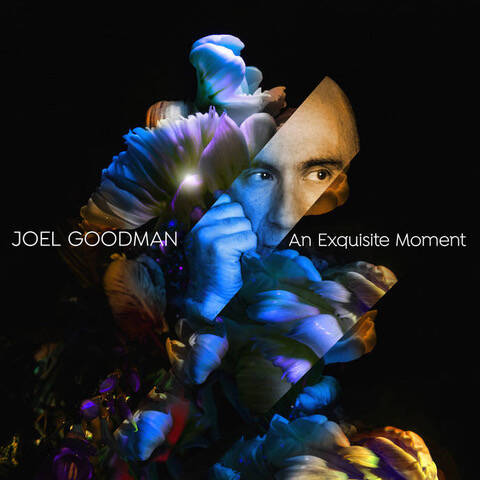
This album is noted as his debut album offering “full experience” music featuring his writing with a pretty impressive list of colleagues here. While there are actually a few additional musicians along the way, the main band has a core of Donny McCaslin on saxophones, Eric Harland on drums, Adam Rogers on guitar, Minu Cinelu on percussion, Scott Colley on bass and Goodman on keys and bass. Adding to that core are Randy Brecker on flugelhorn and trumpet, Brandee A. Younger on harp, Lisa Fischer on vocals, John Patitucci on bass and Philippe Saisse on piano, vibes and marimba. Goodman makes a point of saying that there were no rehearsals for this session because he wanted to capture the discoveries of the moment.
Several of the tracks do have a movie or TV feel, but the writing is terrifically inventive and totally sensitive to spaces for solos. The result is a sometimes hard-edged romp that is very satisfying. Tracks like A Change of Heart are funky while remaining melodic with solos on guitar and vibes that are neat. Saxophonist McCaslin is a powerful voice throughout the album without diminishing the roles of the other musicians.
The longest track, Astral Projection, is ambitious in scope with a beginning solo by trumpeter Brecker that sets the stage for a true tour de force. The mood shifts and time changes are impressive, with soloists like guitarist Rogers, saxophonist McCaslin, bassist Colley driving to a wild coda. There are added strings at times that give a continuous effect to the solos.
The opening track, What Dreamers Dream, with harp and sax solos to introduce it, is a beautiful tune with a relentless “walking” back beat that is perfect. McCaslin is outstanding. This album might be a “debut” in some ways, but the writing and execution are experienced and solidly accomplished. ★★★★ 1/2 out of five
STREAM THESE: What Dreamers Dream, An Exquisite Moment
— Keith Black
CLASSICAL
National Symphony Orchestra with Gianandrea Noseda
George Walker Five Sinfonias (NSO)
This upcoming release by the National Symphony Orchestra celebrates the legacy of the late George Walker, notably the first African-American composer to be awarded the Pulitzer Prize for music, among many other “firsts” in his illustrious career.
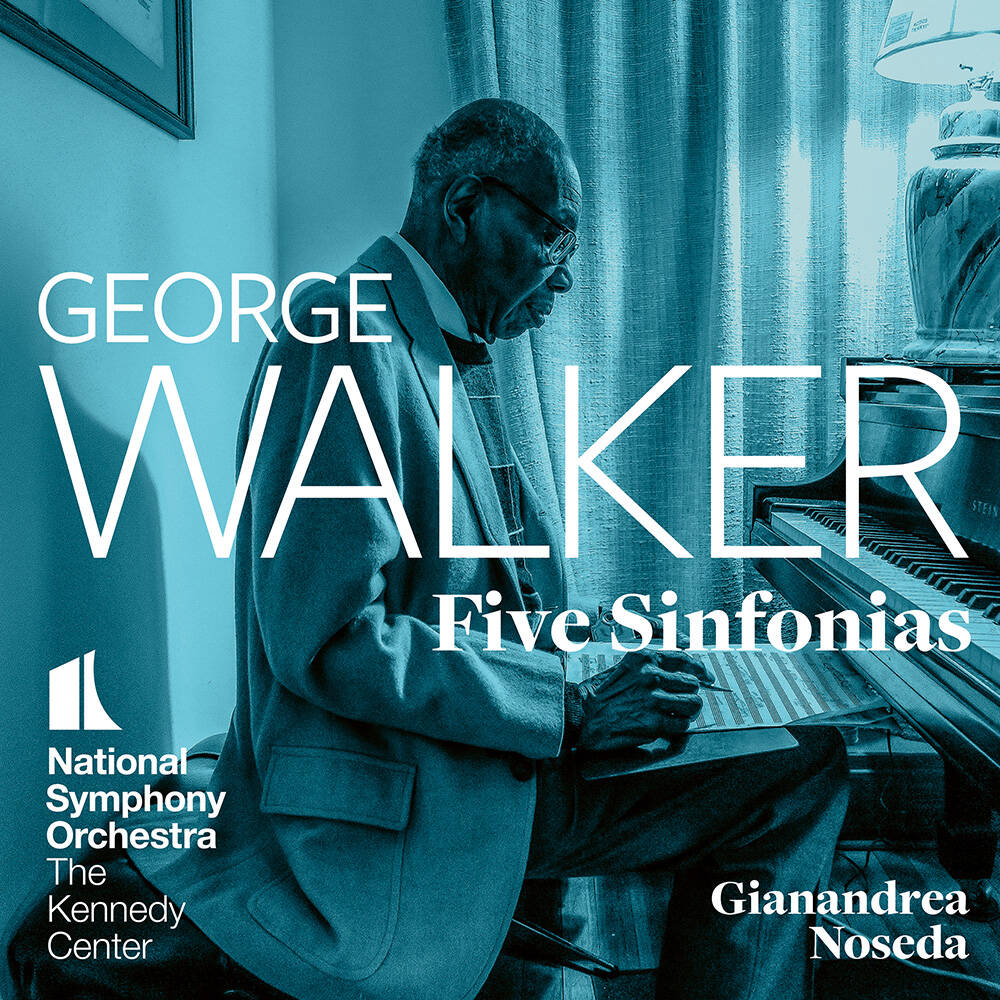
The album — marking the centenary of the Washington, D.C.-born artist’s birth in 1922 — presents the full cycle of his Five Sinfonias, composed between 1984 and 2016. This provides listeners a relatively rare opportunity to hear the scope of Walker’s creative ideas as well as his masterful orchestration.
Acclaimed NSO music director Gianandrea Noseda infuses each of these compact gems — each no more than 16 minutes in length — with passion and dramatic tension, recorded live at the John F. Kennedy Center for the Performing Arts. Highlights include the Sinfonia No. 1, Quarter Note = 92, which immediately bursts out of the gate and eases only slightly during the subsequent movement, as well as the equally intense Sinfonia No. 3. The Lamentoso from Sinfonia No. 2 ushers the listener into a deeper, more introspective sonic world with its haunting flute solo, while its rhythmic finale further highlights individual players of each section. Last but not least, the disc caps off with the two single-movement Sinfonia No. 4, Strands and Sinfonia No. 5, Visions. The latter is particularly powerful with its inclusion of five speakers paying tribute to the victims of the 2015 Charleston church massacre, offering further testament to the bold, restless spirit and conviction of this remarkable American musical pioneer. ★★★★ and a half out of five
STREAM THIS: Sinfonia No. 5 Visions
— Holly Harris