

Final edition for Canada’s oldest press club

Advertisement
Read this article for free:
or
Already have an account? Log in here »
To continue reading, please subscribe:

Digital Subscription
One year of digital access for only $205*
- Enjoy unlimited reading on winnipegfreepress.com
- Read the E-Edition, our digital replica newspaper
- Access News Break, our award-winning app
- Play interactive puzzles
*First annual payment billed as $205.00 + GST for one year. This annual subscription will automatically renew at $233.00 + GST every 52 weeks (10% off the regular annual price of $259.35). Offer available to new and qualified returning subscribers only. Cancel any time.
To continue reading, please subscribe:
Add Free Press access to your Brandon Sun subscription for only an additional
$1 for the first 4 weeks*
- Enjoy unlimited reading on winnipegfreepress.com
- Read the E-Edition, our digital replica newspaper
- Access News Break, our award-winning app
- Play interactive puzzles
*Your next Brandon Sun subscription payment will increase by $1.00 and you will be charged $17.95 plus GST for four weeks. After four weeks, your payment will increase to $24.95 plus GST every four weeks.
Read unlimited articles for free today:
or
Already have an account? Log in here »
Hey there, time traveller!
This article was published 22/08/2023 (1076 days ago), so information in it may no longer be current.
It’s last call — after 136 years — for the Winnipeg Press Club.
The club, which was established in Winnipeg’s former ‘gingerbread’ city hall on Feb. 12, 1887, has officially wound down. It surrendered its titles of the country’s oldest press club.
Only the Denver Press Club, formed in 1877, the Press Club in London, England in 1882, and the Milwaukee Press Club in 1885, are older.
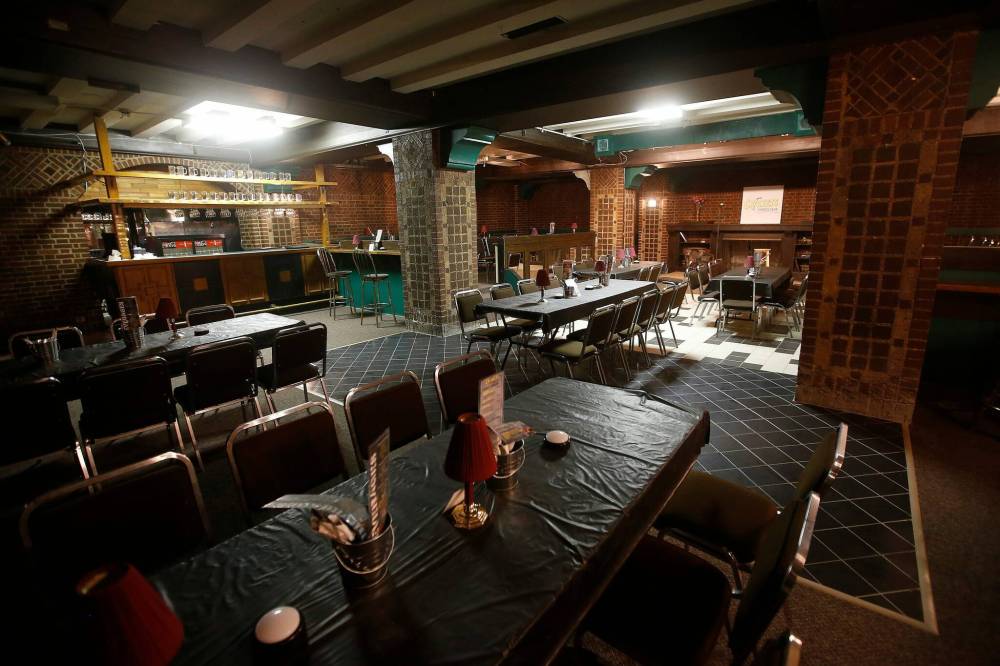
The Winnipeg Press Club was located at the Marlborough Hotel from 1961 to 2008.
Dwight MacAulay, the club’s final president and Manitoba’s former chief of protocol, said turning the page of the club’s final chapter was bittersweet.
“We haven’t met together for a few years,” MacAulay said on Tuesday.
“I think there is a best-before date for everything and for the press club it is now.”
Throughout the years, politicians of all stripes, whether federal, provincial or municipal, as well as other notable people passed through the club’s doors to meet with journalists in a casual setting.
Its initial membership was restricted to newspaper reporters and editors, but in 1947, broadcast journalists were allowed to join and then, in 1970, women were allowed into what had been a men’s club.
While the club was formed by journalists at city hall, it moved out three years later and popped up in various temporary areas until opening its first club room on the third floor of the Northern Life Assurance Co. at 300 Main St. in 1953.
A few years later, the club moved again to its longest home, the Marlborough Hotel, first in the basement, then on the mezzanine and then back to the basement. It was there from 1961 to 2008. There was a brief stop in a room at the Irish Association of Manitoba on Erin Street, before its final move to the Royal Canadian Legion’s St. James Branch.
Wherever the club had a home, its bar had a brass rail along the bottom not only to put a foot on, but also to emphasize a rule: anything that was said in the club, stayed in the club.
The club was known beyond its walls for its annual Beer and Skits show in which journalists took on roles to skewer politicians and other notable people, and for its annual baseball tournament.
Its presidents were also a who’s who of local journalists, including Eric Wells, Gordon Sinclair Sr., Jack Matheson, Gene Telpner, Lee Major and the club’s first female president, CJOB’s Carol Partridge. (Full disclosure: I was president in 1992).
“There was nothing else like the press club,” said Deb Thompson, who was president in 1996 and 1997, and again in 2005-2009.
“It wasn’t just a bar, as significant as that aspect was. Where else would you argue against the merits of Esperanto with the likes of Eric Wells or attend a ‘bear pit’ session with Linda Lovelace? The characters and conversations were unique — stimulating, challenging, enlightening and sometimes emotionally hot with unbending conviction.”
Paul McKie, who was president in 1990, said “older members told me the club began because in the old days journalists weren’t paid a lot of money so it was a cheap place to drink.
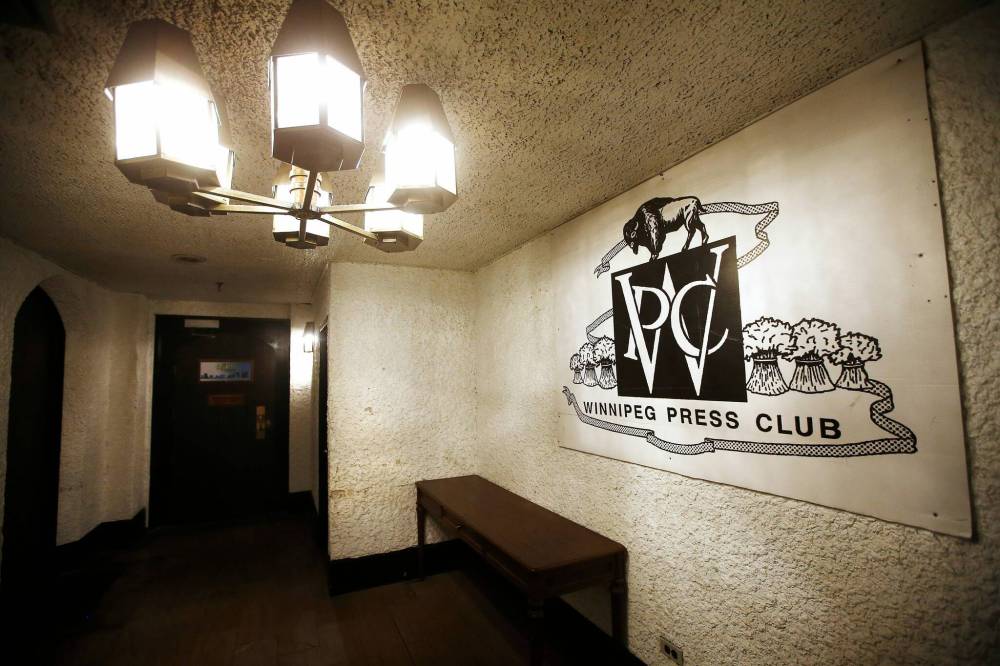
Dwight MacAulay, the Winnipeg Press Club’s final president and Manitoba’s former chief of protocol, said turning the page of the club’s final chapter was bittersweet.
“But now, people are drinking less than they used to and we are long gone from the days reporters used to have flasks in their desks. Even while I was president it was always on the tipping point of going under.”
Gordon Goldsborough, head researcher of the Manitoba Historical Society, said the club was one of the oldest organizations in the city and province.
“(It’s) a shame that it is shutting down, but a reflection of the times,” Goldsborough said.
“Participation in social and cultural organizations of all types is in decline and several of them have closed in recent years or will soon. Church congregations, fraternal organizations… all will be gone.”
MacAulay said the press club isn’t the only victim of changing times: the media landscape that included newspapers, whether large or small, as well as radio and television stations and magazines has been upended in recent years.
“I was CKX news director in Brandon and it’s gone, too,” he said. “The media itself has changed.
“But 136 years — that’s a pretty good run.”
kevin.rollason@freepress.mb.ca

Kevin Rollason
Reporter
Kevin Rollason was a general assignment reporter at the Free Press.
Our newsroom depends on a growing audience of readers to power our journalism. If you are not a paid reader, please consider becoming a subscriber.
Our newsroom depends on its audience of readers to power our journalism. Thank you for your support.
Kevin Rollason
Reporter
Kevin Rollason was a general assignment reporter at the Free Press.
Our newsroom depends on a growing audience of readers to power our journalism. If you are not a paid reader, please consider becoming a subscriber.
Our newsroom depends on its audience of readers to power our journalism. Thank you for your support.
Advertisement Advertise With Us
Advertisement Advertise With Us
History
Updated on Thursday, August 24, 2023 12:31 PM CDT: Updates cutline