Fear, falsehoods and conspiracy theories ignite amid Canada’s wildfires
Advertisement
Read this article for free:
or
Already have an account? Log in here »
To continue reading, please subscribe:

Digital Subscription
One year of digital access for only $205*
- Enjoy unlimited reading on winnipegfreepress.com
- Read the E-Edition, our digital replica newspaper
- Access News Break, our award-winning app
- Play interactive puzzles
*First annual payment billed as $205.00 + GST for one year. This annual subscription will automatically renew at $233.00 + GST every 52 weeks (10% off the regular annual price of $259.35). Offer available to new and qualified returning subscribers only. Cancel any time.
To continue reading, please subscribe:
Add Free Press access to your Brandon Sun subscription for only an additional
$1 for the first 4 weeks*
- Enjoy unlimited reading on winnipegfreepress.com
- Read the E-Edition, our digital replica newspaper
- Access News Break, our award-winning app
- Play interactive puzzles
*Your next Brandon Sun subscription payment will increase by $1.00 and you will be charged $17.95 plus GST for four weeks. After four weeks, your payment will increase to $24.95 plus GST every four weeks.
Read unlimited articles for free today:
or
Already have an account? Log in here »
Hey there, time traveller!
This article was published 25/08/2023 (1109 days ago), so information in it may no longer be current.
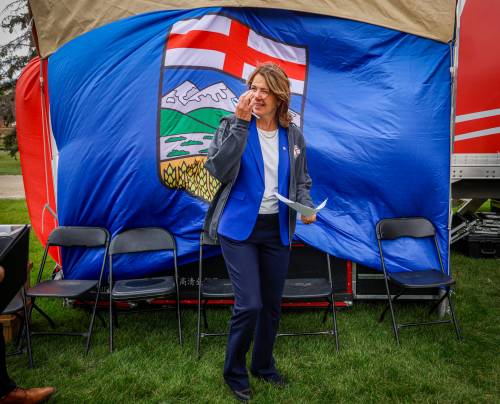
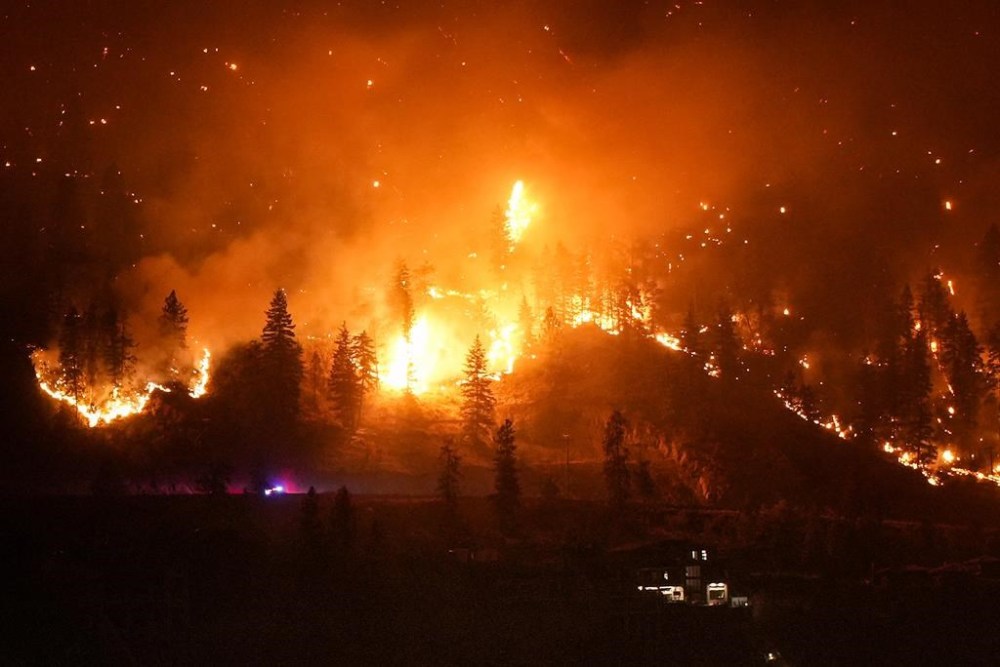
Canada’s current wildfire season is devastating evidence of the effects of climate change, scientists say, but for some conspiracy theorists, the thousands of square kilometres of burnt ground isn’t enough to convince them.
Instead, space lasers, arsonists and government plots to restrict people’s movement are some of the causes of the fires, according to fringe online circles. But despite being fringe, these theories are widely circulated and boosted by social media algorithms.
People turn to conspiracy theories to help them make sense of disasters like the recent wildfires on the Hawaiian island of Maui, in British Columbia or the Northwest Territories, said Eric Kennedy, associate professor at York University’s school of administrative studies.
“Some of the conspiracy theories about wildfires create simple villains, or simple evil characters — ‘this is Bill Gates, this is the World Economic Forum, this is a particular evil actor,’” said Kennedy, who studies decision-making in emergency contexts, particularly wildfires.
“Sometimes the simple stories are very appealing. Sometimes it’s about fitting into an existing world view and making things make sense within that paradigm.”
Kawser Ahmed, political science adjunct professor at University of Winnipeg, said almost all conspiracy theories have a spark of truth but are distorted to attract attention or fuel outrage.
Forest fires, he said, are spectacular events — like terrorist attacks — that draw attention before the full facts come to light, and in the ensuing uncertainty, conspiracy theories fill in the gaps in information. But such theories harm those who are fleeing the fires and those who are fighting the blazes, he noted.
Cliff Chapman, BC Wildfire Service director of operations, said conspiracy theories “really hit me and, I think, our organization in a really big way.”
He told reporters that firefighters, who return home after a 14-hour gruelling shift, turn on their phones and see negative social media posts about the fires and their work.
“We are doing everything that we can to try to protect those homes,” Chapman said. “We’re doing everything that we can to try to make sure that people can get home as fast as they can. And so it has a big impact on our staff.”
Conspiracy theories also risk affecting people who are victims of forest fires, like those forced from their homes, Ahmed said.
They are vulnerable, stressed out and sometimes suffer from a lack of confidence in authorities, so it is easy to fall into the trap of a conspiracy theory, which offers a more clearly defined villain, he said.
“This is what I’m really worried about,” he said. “Once they even go back home, they could become more antagonistic against institutions, governments, police.”
Scientists are blaming climate change for the severity of Canada’s wildfire season. A study by the U.K.-based World Weather Attribution group released this week says greenhouse gas emissions made Quebec’s fire weather about 50 per cent more conducive to fire between May and June.
But conspiracy theorists play down or deny the link between climate change and wildfires, and invoke ideas of eco-terrorism, arsonists and environmental extremists to explain what’s happening, Ahmed said. “It’s easier to sell.”
Ahmed said conspiracy theories have been around as long as time but were easier to contain to certain areas or communities before the era of mass communication.
“But now, the ability of a single human being to spread something which has no basis in science or in rationality, and is illogical, is enormous.”
Social media algorithms accelerate the spread of conspiracy theories because once someone clicks on one link, other links on similar topics pop up, creating a feedback loop that reinforces false beliefs, he said.
“It will take you to a very defined trajectory.”
Studies have shown that the misinformation that gets the most attention is scary, emotional, moral or ideological, and easy to process, said Timothy Caulfield, Canada Research Chair in health law and policy at the University of Alberta. “The wildfire misinformation checks all those boxes. Add fear and uncertainty and you have a perfect mix.”
Chris Russill, associate professor at Carleton University’s school of journalism and communication, said journalism is one way to correct such misinformation. The “poverty of local news,” he said, compounded by Meta’s decision to block news content in Canada, is aiding in the spread of bizarre wildfire conspiracy theories.
“It’s created a condition in which this unreliable information can circulate in a more unchecked way.”
Kennedy said conspiracy theories can cause diminishing trust among people, which could reduce compliance with evacuation orders.
Solutions at “lots of different levels” are required to snuff out conspiracy theories, he said. The most important thing that people can do is to be “very careful” when they find information that confirms their belief, he said. At an institutional level, Kennedy said, emergency management agencies need to earn public trust and not take it for granted.
People who are forced out of their homes during wildfires sometimes feel their needs aren’t being understood by government agencies that may not fully appreciate how disruptive an evacuation is, he said.
“Agencies can perhaps continue to invest in and do an even better job at listening to those concerns and responding to them in a way that builds trust,” he said.
“It’s not something that happens overnight, or just with an ad on Facebook. We need to see this not as a problem of … fact-checking alone, but really about building trusted relationships in our institutions and our organizations.”
This report by The Canadian Press was first published Aug. 25, 2023.
Related Articles
Fire forces crews to retreat at Hay River, N.W.T.
Advertisement Advertise With Us
Advertisement Advertise With Us