Singer’s conversion to Islam overlooked
Sinead O’Connor took the name Shuhada’ Sadaqat after choosing Islamic faith five years ago

Advertisement
Read this article for free:
or
Already have an account? Log in here »
To continue reading, please subscribe:
Digital Subscription
One year of digital access for only $1.44 a week*
- Enjoy unlimited reading on winnipegfreepress.com
- Read the E-Edition, our digital replica newspaper
- Access News Break, our award-winning app
- Play interactive puzzles
*Billed as $5.77 plus GST every four weeks. After 52 weeks, price increases to the regular rate of $19.95 plus GST every four weeks. Offer available to new and qualified returning subscribers only. Cancel any time.
To continue reading, please subscribe:
Add Free Press access to your Brandon Sun subscription for only an additional
$1 for the first 4 weeks*
- Enjoy unlimited reading on winnipegfreepress.com
- Read the E-Edition, our digital replica newspaper
- Access News Break, our award-winning app
- Play interactive puzzles
*Your next Brandon Sun subscription payment will increase by $1.00 and you will be charged $17.95 plus GST for four weeks. After four weeks, your payment will increase to $24.95 plus GST every four weeks.
Read unlimited articles for free today:
or
Already have an account? Log in here »
Hey there, time traveller!
This article was published 26/08/2023 (1156 days ago), so information in it may no longer be current.
When Sinead O’Connor died, there was a lot of emphasis in the media about her singing career and her strained relations with the Roman Catholic faith — the faith she was born into.
Less attention was paid to something that had become very important to her in the last few years of her life: her conversion to Islam in 2018.
This omission was noted by Muslim commentators. They also noted the global media rarely used the Irish singer’s preferred name: Shuhada’ Sadaqat, the name she took for herself after converting to Islam five years ago.
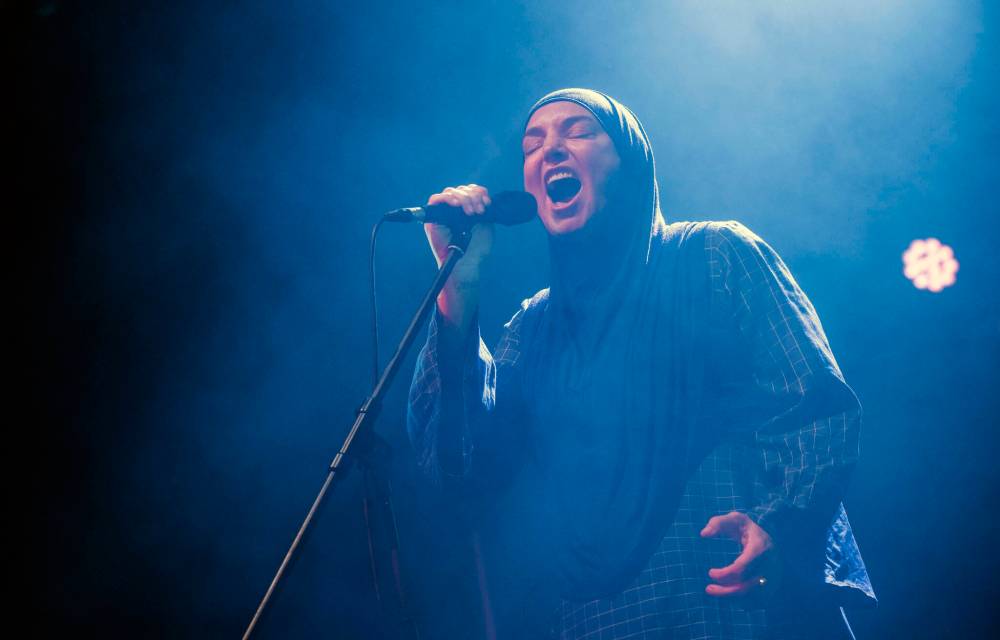
If religion was mentioned at all, it was mostly about her conflict with the Roman Catholic Church. This included the time in 1992 she ripped up a photo of John Paul II on Saturday Night Live to protest the church’s then-handling of sexual abuse by priests.
Little was also said about how her burial rites were not Catholic but Muslim, or that the person who eulogized her was Sheikh Umar Al-Qadri, an Islamic scholar and the chief imam at the Islamic Center of Ireland.
As someone tweeted out following her death: “You’d be forgiven for missing that Sinéad O’Connor passed away as a Muslim named Shuhada’ Sadaqat, as almost all posted photos are from before her converting and there’s entire big media obituaries not using her chosen name even once.”
For Anna Piela, a visiting scholar in religious studies and gender at Northwestern University, and author of Wearing the Niqab: Muslim Women in the U.K. and the U.S., this represented “a seemingly willful ignorance” on the part of the media that was “more interested in her reputation as a rebellious and even sacrilegious celebrity.”
When she converted to Islam, Sadaqat said it was “the natural conclusion of any intelligent theologian’s journey.”
In an interview in 2019, she said it was while reading the Quran that she discovered “I’ve been a Muslim all my life and didn’t realize it… I realized, ‘Oh my God, I am home.’”
She chose the name “Shuhada’” because it referred to the idea of bearing witness, as she hoped her life would be a witness to truth, justice and mercy.
Her conversion prompted supportive comments from Muslims. In response, Sadaqat thanked them, saying, “You can’t begin to imagine how much your tenderness means to me.”
But there were also negative comments from non-Muslims. The Islamophobic comments were, she said, “disgusting.”
But most of that was missed by media reports following her death. In so doing, the media not only failed to explore “the religion that eventually brought her peace after a tumultuous faith journey,” Piela said, it also missed “a chance to challenge Islamophobia.”
By overlooking her Muslim faith, it also was disrespectful of her human and religious agency, Piela said. “Her religious choice, belief, practice and identity… was seen as an afterthought.”
In a statement about the singer’s death, the Council on American-Islamic Relations noted many of the photos used in her obituaries were prior to her conversion where she had bare arms and her head uncovered. Those photos, it said, would have been counter to how she would have wanted to be depicted after converting, when she often wore a hijab and abaya in public.
CAIR went on to urge the media to “respect her acceptance of Islam by acknowledging the name she chose for herself and using recent photos that depict how she chose to present herself.”

In an interview with NPR, Al-Qadri, the imam who aided her conversion, acknowledged the lack of interest in her Muslim faith bothered him.
Noting this is a time when society is increasingly willing to address people by their preferred pronouns, Al-Qadri noted she didn’t get the same respect or treatment by the media which didn’t use her Muslim name.
She had “embraced Islam. She had accepted the identity. She had changed her name. And if one wants to honour her, let’s honour her comprehensively, her personality comprehensively. And she was a proud Irish woman, but also, she was a proud Irish Muslim woman. And I think that should be acknowledged,” he said.
Speaking about her death, Al-Qadri said Muslims were sad because of the loss of someone who had such a global cultural impact. But they were also sad because they had “lost a sister in faith.”
faith@freepress.mb.ca
The Free Press is committed to covering faith in Manitoba through our Religion in the News project. This reporting continues because readers like you step forward to fund it.
Donate now to support our reporting on religion.
Your donation is eligible for a charitable tax receipt.
BECOME A FAITH JOURNALISM SUPPORTER
Our newsroom depends on a growing audience of readers to power our journalism. If you are not a paid reader, please consider becoming a subscriber.
Our newsroom depends on its audience of readers to power our journalism. Thank you for your support.
Advertisement Advertise With Us
Advertisement Advertise With Us
The Free Press acknowledges the financial support it receives from members of the city’s faith community, which makes our coverage of religion possible.