Online News Act could see Google, Meta pay combined $230 million to Canadian media
Advertisement
Read this article for free:
or
Already have an account? Log in here »
To continue reading, please subscribe:

Digital Subscription
One year of digital access for only $205*
- Enjoy unlimited reading on winnipegfreepress.com
- Read the E-Edition, our digital replica newspaper
- Access News Break, our award-winning app
- Play interactive puzzles
*First annual payment billed as $205.00 + GST for one year. This annual subscription will automatically renew at $233.00 + GST every 52 weeks (10% off the regular annual price of $259.35). Offer available to new and qualified returning subscribers only. Cancel any time.
To continue reading, please subscribe:
Add Free Press access to your Brandon Sun subscription for only an additional
$1 for the first 4 weeks*
- Enjoy unlimited reading on winnipegfreepress.com
- Read the E-Edition, our digital replica newspaper
- Access News Break, our award-winning app
- Play interactive puzzles
*Your next Brandon Sun subscription payment will increase by $1.00 and you will be charged $17.95 plus GST for four weeks. After four weeks, your payment will increase to $24.95 plus GST every four weeks.
Read unlimited articles for free today:
or
Already have an account? Log in here »
Hey there, time traveller!
This article was published 01/09/2023 (1133 days ago), so information in it may no longer be current.
The federal government has put a price tag on how much it would like to see Google and Facebook spend under legislation that requires the tech giants to compensate media companies for Canadian journalism.
Federal officials estimate Google would need to offer $172 million and Facebook $62 million in annual compensation to satisfy criteria they’re proposing be used to give exemptions under the Online News Act, a bill passed over the summer that will force tech companies to broker deals with media companies whose work they link to or repurpose.
Draft regulations released by the government Friday outlined for the first time how it proposes to level the playing field between Big Tech and Canada’s news media sector, and which companies it will apply to.
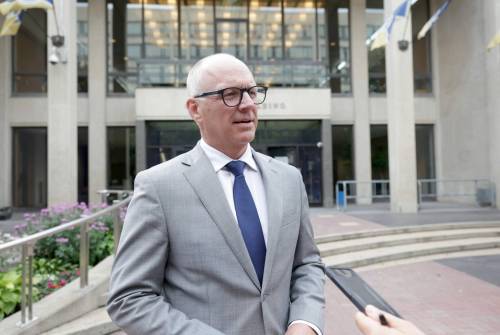
“The goal of it is to make sure that those that benefit the most from the Canadian market fall under the bill,” newly minted Heritage Minister Pascale St-Onge said in an interview after the proposal’s release.
The government said companies will fall under the legislation if they have a total global revenue of $1 billion or more in a calendar year, “operate in a search engine or social media market distributing and providing access to news content in Canada” and have 20 million or more Canadian average monthly unique visitors or average monthly active users.
For now, Google and Meta’s Facebook are the only companies to meet the criteria, though officials said Microsoft’s Bing search engine is the next closest to falling under the act.
Veronica Langvee, head of communications for Microsoft in Canada, said the company “intends to comply with the legislation as it applies to our products.”
Instagram and Threads won’t be captured by the proposed legislation because they have yet to reach 20 million or more monthly Canadian users, officials added.
“We know how technology evolves or how the market changes, sometimes at a rapid pace, and we want to make sure that this bill is relevant in five and 10 years,” St-Onge said.
Companies meeting the criteria can receive an exemption from the act if they already contribute an amount laid out by a government formula to Canadian journalism.
The formula is based on the tech company’s global revenues and Canada’s share of global GDP. The government believes the calculation will deliver a contribution that is within 20 per cent of the earnings of full-time journalists working in a Canadian news organization.
Companies would be able to satisfy the criteria with both monetary and non-monetary compensation. While the draft does not specify what non-monetary contributions would count, officials said training and advertising could wind up meeting criteria.
The draft regulations will be subject to a further 30-day consultation, but Facebook and Instagram parent company Meta, which blocked news on its platforms in anticipation of the law coming into effect at the end of the year, immediately expressed its disappointment with the proposal.
The draft is based around a “fundamentally flawed premise,” said Rachel Curran, head of public policy at Meta Canada.
“As the legislation is based on the incorrect assertion that Meta benefits unfairly from the news content shared on our platforms, today’s proposed regulations will not impact our business decision to end news availability in Canada,” she said in a statement.
Google, which St-Onge has painted as more co-operative than Meta, has also threatened to pull Canadian news from its offerings.
“We’re carefully reviewing the proposed regulations to assess whether they resolve the serious structural issues with C-18 that regrettably were not dealt with during the legislative process,” Google spokesperson Shay Purdy said in response to the draft.
The two companies have long lobbied against the legislation, with Meta claiming news is a tiny fraction of its business and removing it would result in little revenue loss for the social networking giant.
Google’s president of global affairs Kent Walker, meanwhile, has said the legislation “exposes us to uncapped financial liability” and claimed the company being targeted just because it shows links to news, “something that everyone else does for free.”
But St-Onge maintained the legislation is a “reasonable and predictable path forward for both media platforms and newsrooms.
“This is what we have said that we do,” she said. “I think we delivered on finding a way forward that should please everyone.”
The government said it is pushing forward with the act because Google and Meta have a combined 80-per-cent share of the $14 billion in online ad revenue seen in the country in 2022.
At the same time, news outlets have seen their advertising revenues shrink, forcing layoffs, a loss of media coverage in small and rural communities and 474 closures of Canadian news businesses between 2008 and 2023.
The government says 69 per cent of Canadians access news online but only 11 per cent pay for it.

After Meta made good on its threats to remove Canadian news, the federal government pulled $10 million in annual advertising spend from Meta’s platforms. News and telecommunications businesses Quebecor, Bell Media, Torstar Corp., Cogeco, and Postmedia Network Canada Corp. replicated the move.
Paul Deegan, president and chief executive of News Media Canada, praised St-Onge’s deft approach to the “tricky” issue and was pleased it provided “clarity and predictability.”
“No regulatory framework is ever perfect, but clearly she has strived to be extremely fair and balanced to all stakeholders, he said in an email.
“This is something everyone acting in good faith should be able to live with.”
This report by The Canadian Press was first published Sept. 1, 2023.
Related Articles
Leaving Google's search engine isn't easy, government witness says in antitrust case

Advertisement Advertise With Us
Advertisement Advertise With Us