What are biofuels and why is it so confusing whether they are a source of clean energy or not?

Advertisement

Advertise with us

BENGALURU, India (AP) — India, the current president of the Group of 20 industrialized and developing nations, has proposed a global biofuel alliance that seeks to accelerate the development of sustainable biofuels to support the global energy transition.

Read this article for free:


or

Already have an account? Log in here »

To continue reading, please subscribe:

Subscribe and receive a limited-edition Free Press branded hat or tote.

Digital Subscription

One year of digital access for only $205*

  • Enjoy unlimited reading on winnipegfreepress.com
  • Read the E-Edition, our digital replica newspaper
  • Access News Break, our award-winning app
  • Play interactive puzzles

*First annual payment billed as $205.00 + GST for one year. This annual subscription will automatically renew at $233.00 + GST every 52 weeks (10% off the regular annual price of $259.35). Offer available to new and qualified returning subscribers only. Cancel any time.

To continue reading, please subscribe:

Add Free Press access to your Brandon Sun subscription for only an additional

$1 for the first 4 weeks*

  • Enjoy unlimited reading on winnipegfreepress.com
  • Read the E-Edition, our digital replica newspaper
  • Access News Break, our award-winning app
  • Play interactive puzzles
Start now

*Your next Brandon Sun subscription payment will increase by $1.00 and you will be charged $17.95 plus GST for four weeks. After four weeks, your payment will increase to $24.95 plus GST every four weeks.

Hey there, time traveller!
This article was published 06/09/2023 (1118 days ago), so information in it may no longer be current.

BENGALURU, India (AP) — India, the current president of the Group of 20 industrialized and developing nations, has proposed a global biofuel alliance that seeks to accelerate the development of sustainable biofuels to support the global energy transition.

The alliance is likely to get an official announcement at the G-20 summit that opens this week in New Delhi, and it’s expected that more than 15 countries will sign up to be part of the alliance.

The United States, Canada and Brazil are among a few of the countries expected to join India in such an alliance.
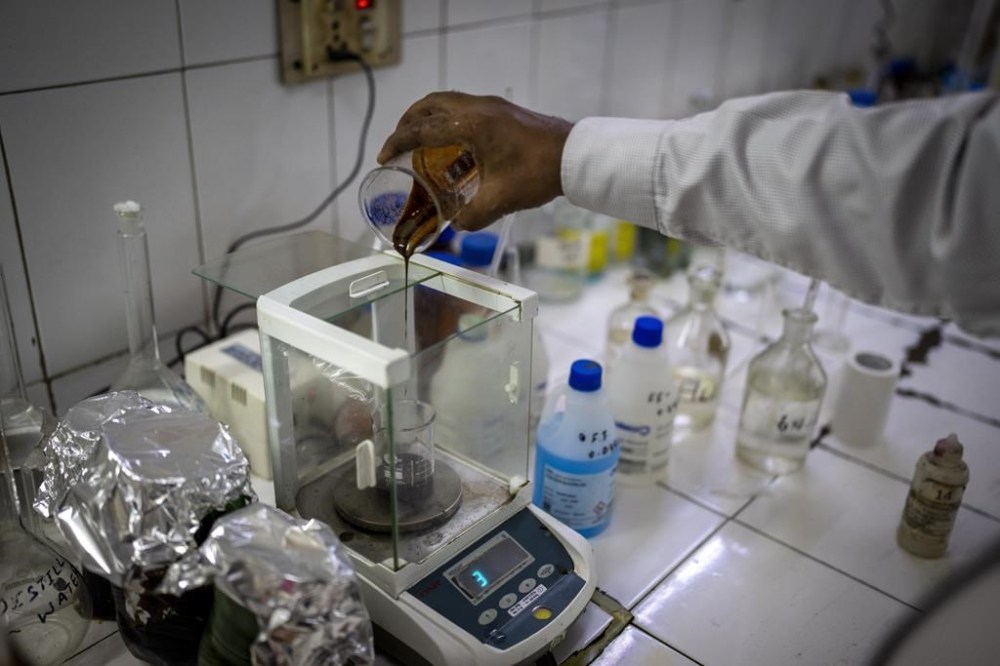
A lab technician analyze molasses, a key ingredient in making of ethanol, inside a laboratory at Bajaj Hindustan Sugar factory in Meerut, India, Wednesday, Aug., 23, 2023. India, the current president of the Group of 20 industrialized and developing nations, has proposed a global biofuel alliance that seeks to accelerate the development of sustainable biofuels to support the global energy transition. (AP Photo/Altaf Qadri)

WHAT ARE BIOFUELS?

Any fuel produced from agricultural produce or organic waste is a biofuel.

Humans have used biofuels since time immemorial — for example, burning wood and manure for cooking, heating and light.

They’ve gained popularity in recent decades for their potential to deliver cleaner energy than some other sources.

Biofuels are categorized based on their source, with each category known as a “generation.” First-generation biofuels are derived from food crops like corn and sugar cane, second generation from inedible vegetation and agricultural waste and third-generation from algae.

Popular types of biofuels such as ethanol, biodiesel and biogas can be produced from any of these sources and are classified based on the source from which they are produced. For example, ethanol produced from farm-grown corn is classified as first-generation ethanol.

ARE BIOFUELS ALWAYS A SOURCE OF CLEAN ENERGY?

Not always. It depends on how it’s produced. A biofuel made from waste or inedible vegetation, with renewable energy to power the production, would have little or no greenhouse gas emissions, making it a clean fuel. But when crops are grown explicitly to produce biofuels — such as making ethanol from corn, soybeans, sugar cane or palm — all the fertilizers and fossil fuels needed to grow, cultivate and process the fuel give it a much larger carbon footprint.

“If you look at the full life cycle of producing biofuels, it’s many times not clean,” said Lydia Powell, an energy policy analyst at the New Delhi-based Observer Research Foundation, who has followed developments related to biofuels for over two decades.

Biofuels can also mean land that could have produced food is instead being used for energy. And they can add to deforestation when land is cleared for their production.

Powell noted Europe’s imports of palm oil from Indonesia and other East Asian countries to make biodiesel for cars and trucks. Those imports dropped sharply after European Union regulations banned the sale of palm oil and other commodities when they could be linked to deforestation.

“They were destroying natural forests to plant palm trees so you produce oil to export to Europe. When you destroy forests, you destroy large chunks of carbon sinks,” Powell said.

Those issues have clouded the picture of exactly how sustainable biofuels are, and led to skepticism of them as a clean energy option.
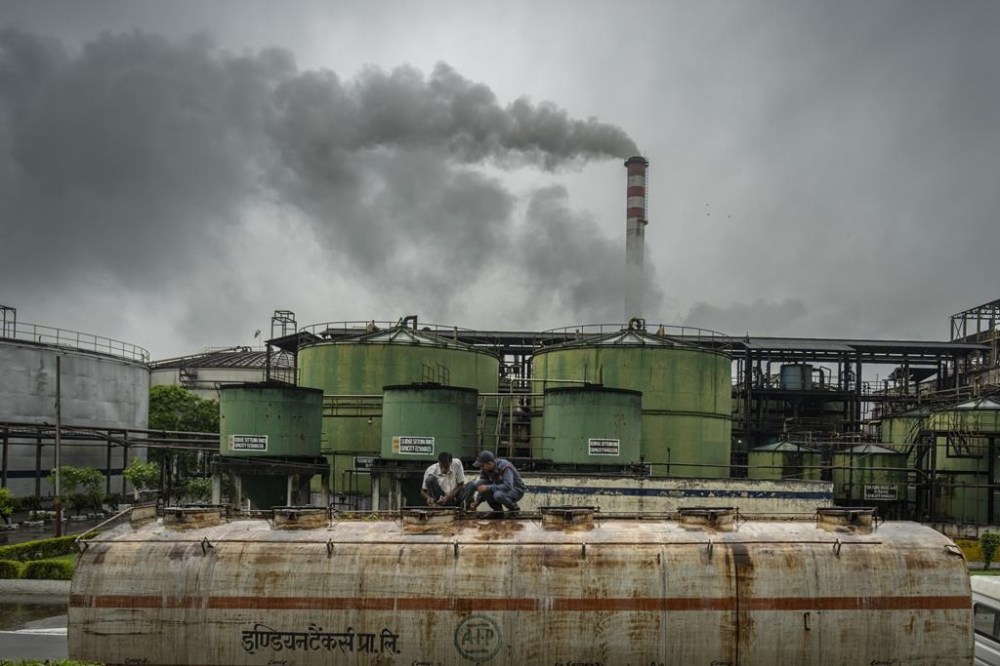
A security personal watches as a worker seals the lid of a tanker filled with ethanol a type of biofuels at Bajaj Hindustan Sugar factory, in Meerut, India, Wednesday, Aug. 23, 2023. India, the current president of the Group of 20 industrialized and developing nations, has proposed a global biofuel alliance that seeks to accelerate the development of sustainable biofuels to support the global energy transition. (AP Photo/Altaf Qadri)

WHAT ARE BIOFUELS USED FOR?

Transportation, including passenger vehicles, but also transport — trucking, shipping and aviation.

Once they’re made, experts say, biofuels have advantages over pure fossil fuels by contributing little to no emissions at the tailpipe. The same can’t be said of the gasoline and diesel they are blended with.

But there’s a hope that the biofuels might completely replace fossil fuels in the future in aviation and in certain kinds of ships. And if the biofuels were derived from organic waste and inedible crops grown on wasteland — not on land reserved for food production, or on deforested land — it would be cleaner.

“They are one option among a larger set of solutions,” said Jane O’Malley of International Council on Clean Transportation, a Washington-based independent nonprofit.

O’Malley, whose research includes fuel life cycles and exhaust emissions, said the key is to use the right kind of biofuel for the right purpose. O’Malley said it’s essential for countries using biofuels for transportation to move as quickly as possible to producing them with little or no emissions.

Experts say biofuels can also contribute to employment and energy security, especially if the crops used to produce them are locally grown.

____

Associated Press climate and environmental coverage receives support from several private foundations. See more about AP’s climate initiative here. The AP is solely responsible for all content.


Report Error Submit a Tip

More Stories

Winnipeg Police Service recognizes, honours residential school survivors as Orange Shirt Day approaches

Malak Abas 3 minute read Preview

Winnipeg Police Service recognizes, honours residential school survivors as Orange Shirt Day approaches

Malak Abas 3 minute read 7:27 PM CDT

Winnipeg Police Service members lit a sacred fire outside of their North District Station in recognition of residential school survivors ahead of the upcoming Orange Shirt Day.

“We know that the relationship between policing and Indigenous communities has not always been one of trust,” WPS Chief Gene Bowers told visitors at a gathering outside of the station Sunday afternoon.

“We cannot change that history, but we can acknowledge it, we can learn from it, and we can take responsibility for how we move forward.”

The sacred fire, guided by elder Mike Calder, will burn for 24 hours at the Sinclair Street station, and then be allowed to extinguish naturally. It’s the second year the WPS has lit a sacred fire in recognition of residential school survivors — last year, the fire was lit outside of WPS headquarters on Smith Street.

Read
7:27 PM CDT

What’s open, what’s closed, what’s up in Winnipeg on National Day of Truth and Reconciliation Sept. 30, 2026

Free Press staff 4 minute read Preview

What’s open, what’s closed, what’s up in Winnipeg on National Day of Truth and Reconciliation Sept. 30, 2026

Free Press staff 4 minute read 10:38 AM CDT

The National Day of Truth and Reconciliation, or Orange Shirt Day, as it's known in Manitoba, happens Sept. 30 with many commemorative community events scheduled.

Read
10:38 AM CDT

The wheels on the bus burned down, down, down…

Russell Wangersky 7 minute read Preview

The wheels on the bus burned down, down, down…

Russell Wangersky 7 minute read Yesterday at 2:00 AM CDT

Up on the high ground, a year after the big forest fire in Newfoundland’s Conception Bay North, and the bare rock is startling.

It’s ghostly. The little birds flit and chirp from the naked silver bare-wood branches, and a solitary northern flicker makes its call from — somewhere. But mostly, it’s still, and silent. With the underbrush gone, you can see how little animal life is here right now.

But the most astounding thing is underfoot. On the high rock behind Adam’s Cove and away from the sea, not only are the trees and low brush gone, but much of the soil has burned away as well.

It burned very, very hot.

Read
Yesterday at 2:00 AM CDT

Blue Bombers whiff on their opportunities to put game away

Taylor Allen 7 minute read Preview

Blue Bombers whiff on their opportunities to put game away

Taylor Allen 7 minute read Friday, Sep. 25, 2026

In theory, Bryce Perkins has a simple job.

When it’s third and short, the Winnipeg Blue Bombers trot out the short-yardage quarterback, and all he has to do is plunge forward for a yard or two to make everyone on his sideline happy.

But on Friday night against the visiting Toronto Argonauts, he went above and beyond his job description.

The Bombers, down 24-21 with six minutes left, faced a third-and-one from their own end when Perkins found a hole and burst through it for a 76-yard touchdown to put the home team in front 28-24 late.

Read
Friday, Sep. 25, 2026

Bombers let another one slip away and face pivotal issue

Taylor Allen 7 minute read Preview

Bombers let another one slip away and face pivotal issue

Taylor Allen 7 minute read Yesterday at 6:07 PM CDT

Mike O’Shea summed it up best.

“That one doesn’t feel very good.”

Nor should it.

The Winnipeg Blue Bombers started out hot Friday night, only to run out of gas down the stretch and allow the visiting Toronto Argonauts to steal a 30-28 victory.

Read
Yesterday at 6:07 PM CDT

Unhappy Dynacare staff refuse OT shifts; doors could be closed at clinics with Saturday hours

Carol Sanders 4 minute read Preview

Unhappy Dynacare staff refuse OT shifts; doors could be closed at clinics with Saturday hours

Carol Sanders 4 minute read Friday, Sep. 25, 2026

Some Winnipeg Dynacare sites normally open on Saturday were closed last week, and may continue to be because staff are refusing to pick up overtime shifts after they were forced back to work amid a labour dispute with the company.

Read
Friday, Sep. 25, 2026