

Ibrahim Ali’s lawyer suggests person whose DNA was inside victim may not be killer
Advertisement
Read this article for free:
or
Already have an account? Log in here »
To continue reading, please subscribe:

Digital Subscription
One year of digital access for only $205*
- Enjoy unlimited reading on winnipegfreepress.com
- Read the E-Edition, our digital replica newspaper
- Access News Break, our award-winning app
- Play interactive puzzles
*First annual payment billed as $205.00 + GST for one year. This annual subscription will automatically renew at $233.00 + GST every 52 weeks (10% off the regular annual price of $259.35). Offer available to new and qualified returning subscribers only. Cancel any time.
To continue reading, please subscribe:
Add Free Press access to your Brandon Sun subscription for only an additional
$1 for the first 4 weeks*
- Enjoy unlimited reading on winnipegfreepress.com
- Read the E-Edition, our digital replica newspaper
- Access News Break, our award-winning app
- Play interactive puzzles
*Your next Brandon Sun subscription payment will increase by $1.00 and you will be charged $17.95 plus GST for four weeks. After four weeks, your payment will increase to $24.95 plus GST every four weeks.
Read unlimited articles for free today:
or
Already have an account? Log in here »
Hey there, time traveller!
This article was published 15/09/2023 (1070 days ago), so information in it may no longer be current.
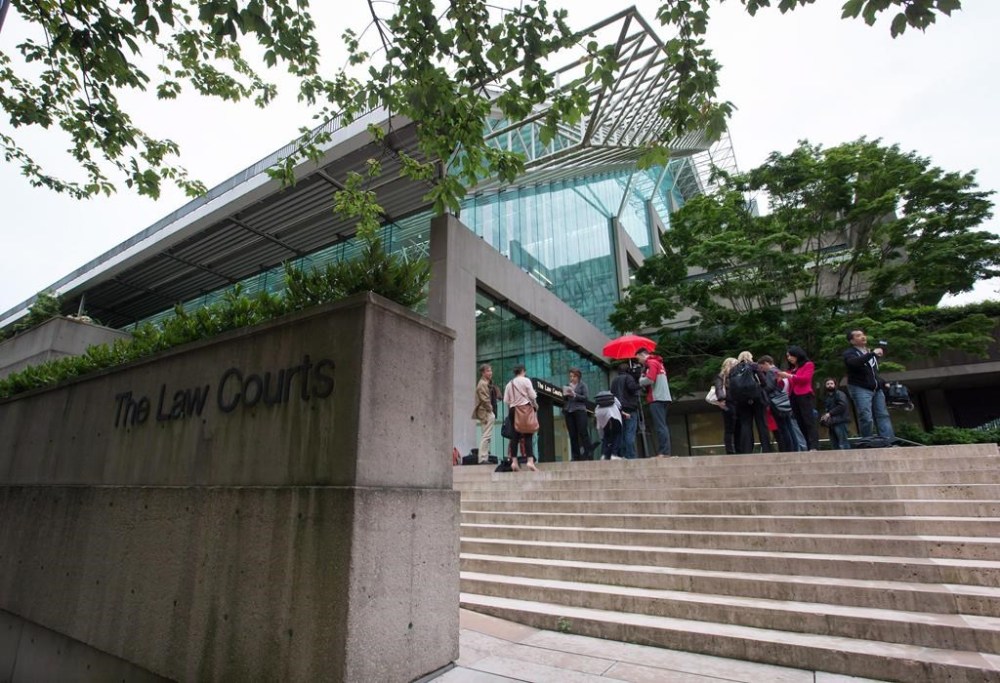
VANCOUVER – A defence lawyer at the Ibrahim Ali murder trial in British Columbia Supreme Court has raised the possibility that the person whose DNA was found inside the victim may not be the one who killed the teenager.
Kevin McCullough concluded his cross-examination of Crown witness and RCMP forensic biologist Christine Crossman on Friday, focusing on the fact that Ali’s genetic profile only matched samples from the 13-year-old girl’s vaginal and anal areas.
During questioning late Thursday, McCullough asked Crossman why tests on samples from elsewhere on the victim’s body, which may have helped his client’s case, weren’t conducted by her lab.
He suggested that it wasn’t Crossman’s role as a scientist to consider whether the person who had “had either forced sex or sex” with the girl was the person who killed her. Crossman agreed it had “nothing to do with what I do.”
The body of the girl, who can’t be named because of a publication ban, was found in Central Park in Burnaby, B.C., in July 2017. Ali has pleaded not guilty to first-degree murder.
The defence has not yet formally presented its theory of events in the case. But on Friday, McCullough questioned the implications of some genetic evidence, including an oral swab of the deceased girl that found no trace of his client’s DNA.
He raised the scenario of Ali and the girl having “engaged in oral sex,” and the girl then eating or drinking something. This would have reduced the chances of Ali’s DNA being found in an oral swab, he suggested.
“Yes, certainly, eating or drinking could reduce any foreign DNA in the oral cavity,” Crossman said.
McCullough asked Crossman to confirm that several pieces of evidence were not tested for DNA, including the girl’s stained clothing. These could have established another suspect in the case, he suggested.
“Are you aware whether the police came back to you and said, ‘Look, the time of when this person had sex and the time this person got killed, it’s a very important thing to at least attempt to try to figure out’?”
Crossman replied that DNA cannot be used to establish timelines since testing cannot determine when genetic material was left behind.
The girl’s mother told the trial earlier that her daughter never had sleepovers with friends and she never saw her with boys or men.
Crown prosecutors said in April that evidence would show that Ali sexually assaulted the girl in a random killing.
Crossman told the court earlier this week during questioning from the Crown that police initially obtained Ali’s DNA from a discarded cigarette butt, matching it to the genetic material found on the dead girl.
The police then acquired a warrant for an official sample from Ali, which was again matched to samples from the girl’s body.
Crossman had told the court the odds of the DNA on the girl’s body belonging to someone other than Ali were infinitesimally small.
McCullough questioned whether the odds would have been larger had the forensic lab compared the DNA to a database of genetic profiles from ethnic minority communities, since the comparison in this case was made with a database of the Caucasian Canadian population.
Crossman told the court that while a different database may have increased the presence of a similar DNA profile ten-fold or even a hundred-fold, Ali’s genetic profile was so unique that it would not have made a significant difference.
She had previously testified that the odds that someone other than Ali also had DNA matching that found on the girl’s body was one-in-72-quintillion, with 18 zeros. A quintillion is a billion billions.
“When we are talking about a number such as a quintillion, a ten-fold difference is not significant at all,” Crossman told the court.
The Crown is expected to present a new witness on Monday.
This report by The Canadian Press was first published Sept. 15, 2023.