Cinematic synergy
Corporate biopics have audiences buzzing about boardrooms

Advertisement
Read this article for free:
or
Already have an account? Log in here »
To continue reading, please subscribe:

Digital Subscription
One year of digital access for only $205*
- Enjoy unlimited reading on winnipegfreepress.com
- Read the E-Edition, our digital replica newspaper
- Access News Break, our award-winning app
- Play interactive puzzles
*First annual payment billed as $205.00 + GST for one year. This annual subscription will automatically renew at $233.00 + GST every 52 weeks (10% off the regular annual price of $259.35). Offer available to new and qualified returning subscribers only. Cancel any time.
To continue reading, please subscribe:
Add Free Press access to your Brandon Sun subscription for only an additional
$1 for the first 4 weeks*
- Enjoy unlimited reading on winnipegfreepress.com
- Read the E-Edition, our digital replica newspaper
- Access News Break, our award-winning app
- Play interactive puzzles
*Your next Brandon Sun subscription payment will increase by $1.00 and you will be charged $17.95 plus GST for four weeks. After four weeks, your payment will increase to $24.95 plus GST every four weeks.
Read unlimited articles for free today:
or
Already have an account? Log in here »
Hey there, time traveller!
This article was published 16/09/2023 (1104 days ago), so information in it may no longer be current.
What’s with all the corporate biopics?
This year has seen a preponderance of films about brands, practically one for every month of the year.
Tetris, Jon S. Baird’s look at the world’s most addictive game, arrived in March, followed by Air, Ben Affleck’s Air Jordan movie, in April. BlackBerry, Matthew Johnson’s Canadian entry into the genre about the rise and fall of the first smartphone, came out in May, followed by Eva Longoria’s directorial debut Flamin’ Hot (yes, about the Cheetos) in June, and then The Beanie Bubble, Kristin Gore and Damian Kulash’s take on the Beanie Baby craze of the late 1990s, in July.
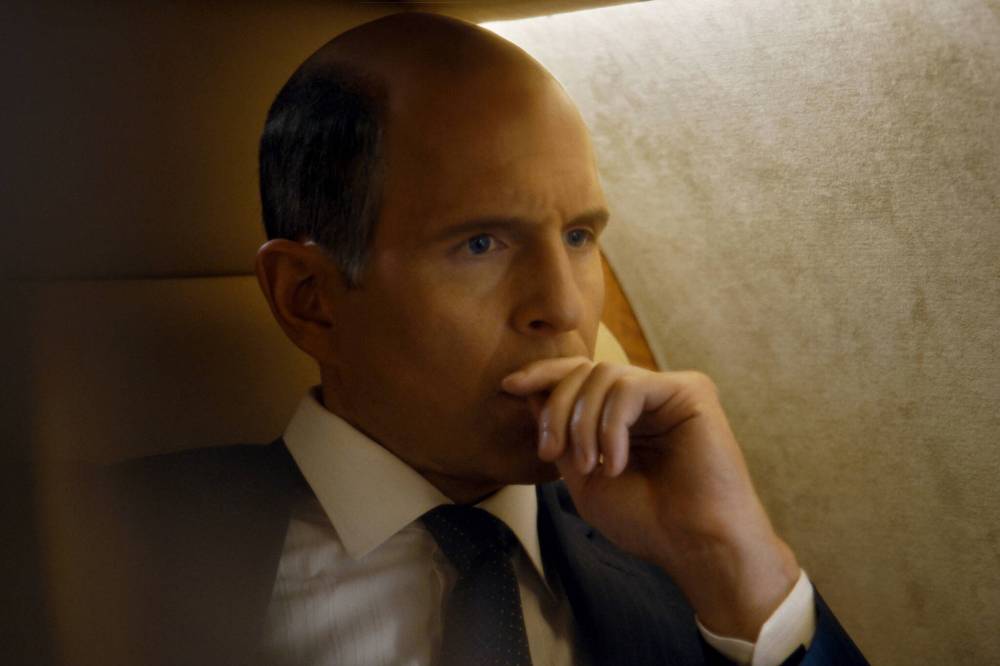
Glenn Howerton as Jim Balsillie in “BlackBerry.” MUST CREDIT: IFC Films
It’s understandable that filmmakers are going to this particular well. There are stories here, compelling ones, with fully formed characters at their hearts. (The Social Network — David Fincher’s 2010 drama about Facebook’s origins — is widely regarded as the high watermark of the genre to which all other corporate biopics are measured.)
This current slate varies in terms of genre (Tetris is a Cold War thriller; BlackBerry is a workplace comedy) and quality (BlackBerry was a New York Times critic’s pick; the consensus on The Beanie Bubble is that it’s “understuffed” or whatever pun you want to use).
The ubiquity of the subject means these films have built-in audiences. Even if you’ve never spent hours playing Tetris or clack-a-lacking on the keys of a BlackBerry or banked your retirement on a Princess Diana Beanie Baby, you know what those things are.
There’s also the nostalgia piece, not just for the products but for the stories, too. We know how most of them end.
Some of them are cautionary tales about corporate greed, some are rags to riches (to rags), some are the American Dreams writ large. The stories might change but no matter how you cut it, somebody, somewhere is, at some point, Scrooge McDucking into a swimming pool of money. That’s capitalism, baby.
This deluge of corporate biopics seems like the Final Boss of treating brands like people and people like brands. Brands don’t just post like people on social media, they have biographical films made about them now, too.
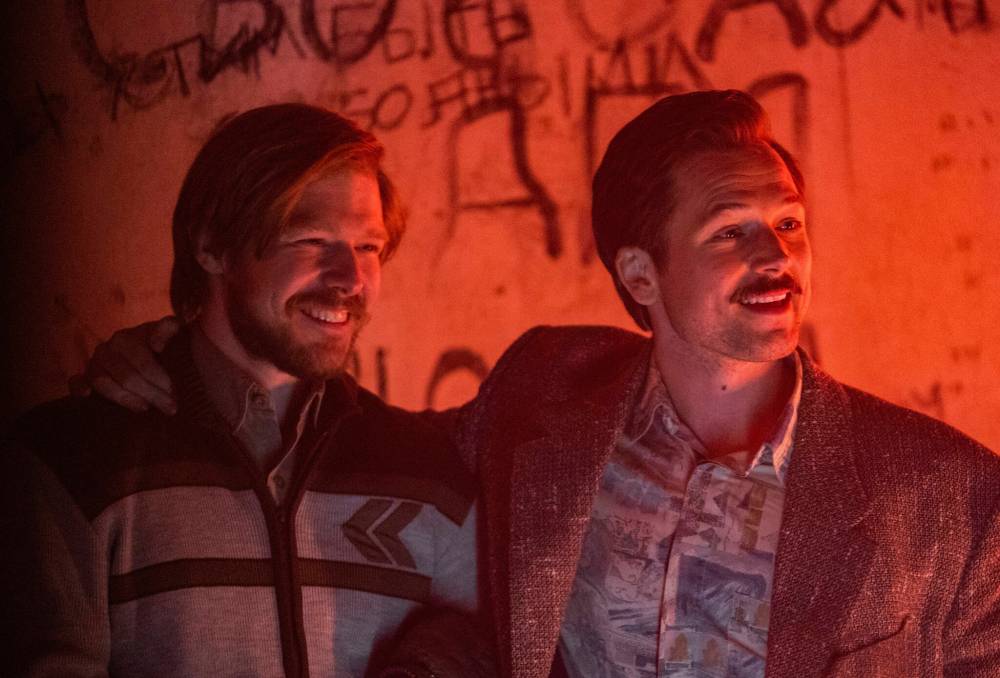
Nikita Efremov, left, and Taron Egerton in a scene from Tetris.’ (Angus Pigott/Apple TV+ via The Associated Press)
People, meanwhile, have long been cultivating personal brands, and some have leveraged those personal brands to hawk products for brand-brands, which is essentially the conceit of Air: Nike needed Michael Jordan’s brand to bolster its own brand. The internet has just democratized that process. One no longer has to be Michael Jordan to bring in lucrative sponsorships and #collabs.
We are what we buy, what we use every day; we know those choices communicate something about us beyond our consumer preferences — our taste, our values. There are so many brands being sold by so many people that there is now a whole industry built on recommendations to combat the paralysis of bottomless choice. Recommendations that come, naturally, from trusted brands, both corporate (the New York Times’ Wirecutter, say) and personal (an influencer whose taste you like).
So it all makes sense. The timing is just interesting. We’ve spent the last three-odd years slogging through a pandemic during which many exhausted, disillusioned people re-evaluated their toxic relationships to ambition and capitalism, vocally rejecting the kind of hustle culture that helped create these hyper-visible brands.

People were let down or laid off by companies they were encouraged to call “family,” and they questioned the systems that keep “essential workers” poor and billionaires — even the scrappiest, most innovative and entrepreneurial among them — unfathomably rich.
Now, as we navigate inflation, economic uncertainty and CEOs complaining that “no one wants to work anymore,” we’re getting a slate of corporate success stories about the gambit to become the biggest game/toy/sneaker/snack/smartphone in the world.
Even if the meteoric (always meteoric) rise is accompanied by a spectacular fall, these stories still paint corporate North America (always North America) — and, for that matter, the office — as a thrilling place to try to achieve an impossible dream. A “your corporate biopic is not yet written” kind of thing.
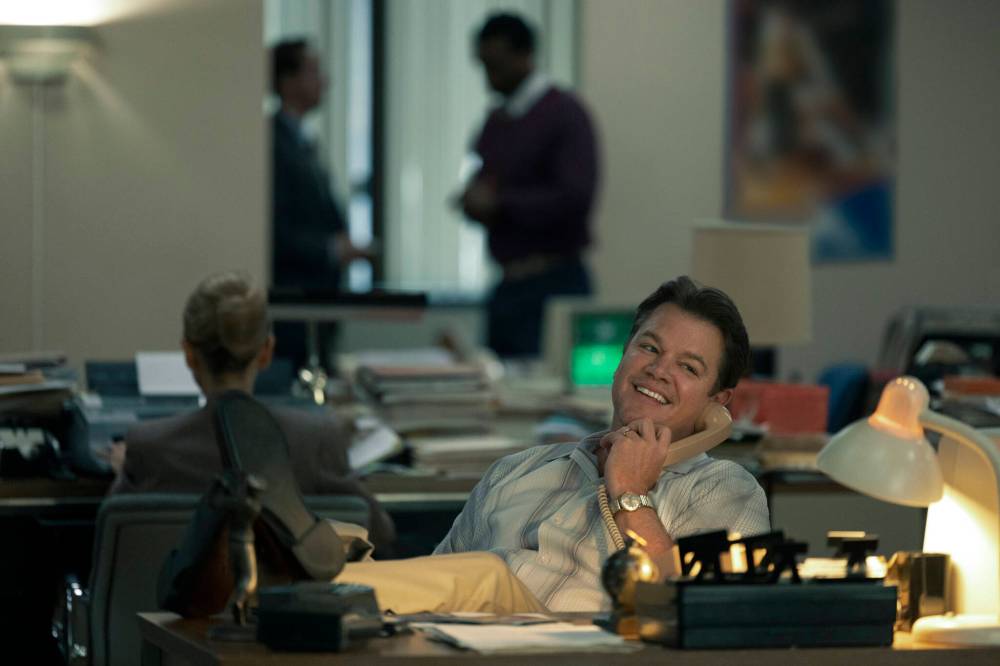
Ana Carballosa / Amazon Studios
Matt Damon stars in Air.
In that way, this current crop of corporate biopics feel like a rebranding exercise: make capitalism inspiring again. Because damned if they don’t make you cheer for a bunch of dudes in a boardroom.
jen.zoratti@winnipegfreepress.com
Jen Zoratti is a columnist and feature writer working in the Arts & Life department, as well as the author of the weekly newsletter NEXT. A National Newspaper Award finalist for arts and entertainment writing, Jen is a graduate of the Creative Communications program at RRC Polytech and was a music writer before joining the Free Press in 2013. Read more about Jen.
Every piece of reporting Jen produces is reviewed by an editing team before it is posted online or published in print – part of the Free Press‘s tradition, since 1872, of producing reliable independent journalism. Read more about Free Press’s history and mandate, and learn how our newsroom operates.
Our newsroom depends on a growing audience of readers to power our journalism. If you are not a paid reader, please consider becoming a subscriber.
Our newsroom depends on its audience of readers to power our journalism. Thank you for your support.
Jen Zoratti is a columnist and feature writer working in the Arts & Life department, as well as the author of the weekly newsletter NEXT. A National Newspaper Award finalist for arts and entertainment writing, Jen is a graduate of the Creative Communications program at RRC Polytech and was a music writer before joining the Free Press in 2013. Read more about Jen.
Every piece of reporting Jen produces is reviewed by an editing team before it is posted online or published in print – part of the Free Press‘s tradition, since 1872, of producing reliable independent journalism. Read more about Free Press’s history and mandate, and learn how our newsroom operates.
Our newsroom depends on a growing audience of readers to power our journalism. If you are not a paid reader, please consider becoming a subscriber.
Our newsroom depends on its audience of readers to power our journalism. Thank you for your support.
Advertisement Advertise With Us
Advertisement Advertise With Us