

Federal judge rules Texas university that canceled drag show didn’t violate free speech rights
Advertisement
Read this article for free:
or
Already have an account? Log in here »
To continue reading, please subscribe:

Digital Subscription
One year of digital access for only $205*
- Enjoy unlimited reading on winnipegfreepress.com
- Read the E-Edition, our digital replica newspaper
- Access News Break, our award-winning app
- Play interactive puzzles
*First annual payment billed as $205.00 + GST for one year. This annual subscription will automatically renew at $233.00 + GST every 52 weeks (10% off the regular annual price of $259.35). Offer available to new and qualified returning subscribers only. Cancel any time.
To continue reading, please subscribe:
Add Free Press access to your Brandon Sun subscription for only an additional
$1 for the first 4 weeks*
- Enjoy unlimited reading on winnipegfreepress.com
- Read the E-Edition, our digital replica newspaper
- Access News Break, our award-winning app
- Play interactive puzzles
*Your next Brandon Sun subscription payment will increase by $1.00 and you will be charged $17.95 plus GST for four weeks. After four weeks, your payment will increase to $24.95 plus GST every four weeks.
Read unlimited articles for free today:
or
Already have an account? Log in here »
Hey there, time traveller!
This article was published 22/09/2023 (1087 days ago), so information in it may no longer be current.
A federal judge has ruled that a university in the Texas Panhandle did not violate the constitutional right to free speech when the school’s president canceled a drag show earlier this year.
The ruling, handed down by U.S. District Judge Matthew Kacsmaryk on Thursday, stands out among a string of high-profile legal battles over drag shows across the United States. Notably, federal courts have blocked drag show bans in Florida, Montana and Tennessee, and a separate federal judge in Texas blocked a ban from being implemented.
Yet in his decision, Kacsmaryk argued that drag shows are “sexualized content” and therefore can be more regulated than other forms of free speech.
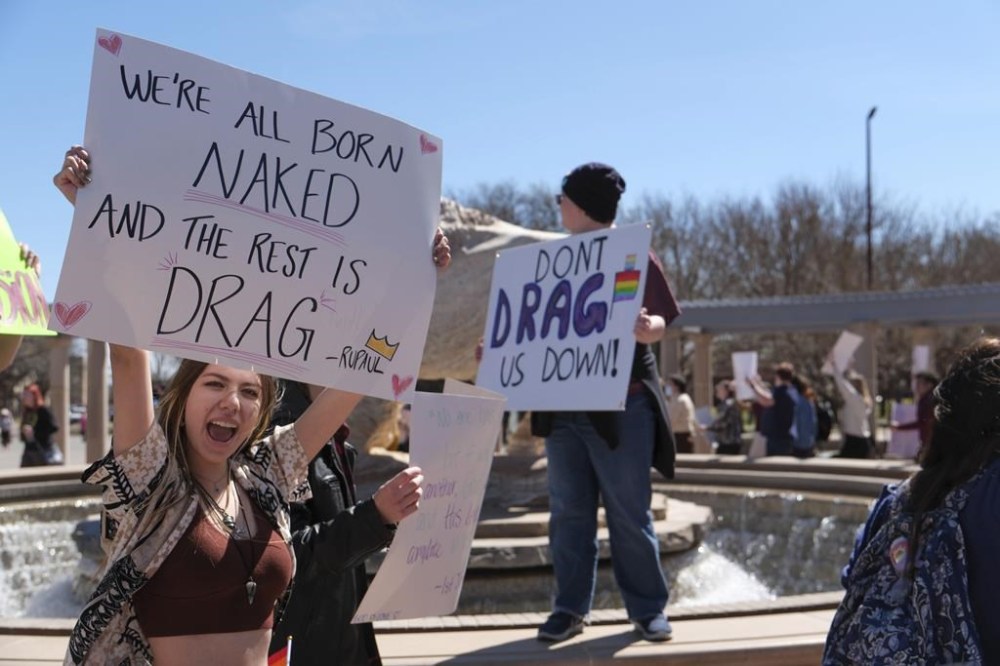
“The First Amendment does not prevent school officials from restricting ‘vulgar and lewd’ conduct that would ‘undermine the school’s basic educational mission’ — particularly in settings where children are physically present,” Kacsmaryk wrote.
Earlier this year, Walter Wendrell, the president of West Texas A&M University in Canyon, located just south of Amarillo, announced in a letter and column laden with religious references that drag performances would not be allowed on campus because, he said, they discriminate against women. He also wrote that such performances were “derisive, divisive and demoralizing misogyny, no matter the stated intent.”
Spectrum WT — a group for LGBTQ+ students and allies — had scheduled a drag show on campus for March 31 to raise money for the Trevor Project, a nonprofit group that works to prevent suicide among LGBTQ+ young people. Spectrum WT has said that drag wasn’t designed to be offensive, arguing that it’s a celebration of many things, including “queerness, gender, acceptance, love and especially femininity.”
Spectrum WT and its two student leaders who filed the lawsuit are represented by the Foundation for Individual Rights and Expression, or FIRE, a national civil liberties group.
“FIRE strongly disagrees with the court’s approach to First Amendment analysis and its conclusions. We will appeal, and our fight for the expressive rights of these brave college students will continue,” said JT Morris, a senior attorney for FIRE, in a statement.
University spokesperson Kelly Polden said Friday that they cannot comment on litigation.
Kacsmaryk, an appointee of former President Donald Trump, previously gained national attention when he issued an unprecedented ruling halting approval of the nation’s most common method of abortion. The ruling sparked a legal firestorm, but the U.S. Supreme Court has since preserved access to the drug and refused to allow the restriction to take effect as a lawsuit continues.
Meanwhile, drag shows across the country continue to be targeted by right-wing activists and politicians, with Republican lawmakers in several states, including Texas, proposing restrictions. And events nationwide like drag story hours, where drag queens read books to children, have drawn protesters.
Drag does not typically involve nudity or stripping, which are more common in the separate art of burlesque. Explicitly sexual and profane language is common in drag performances, but such content is avoided when children are the target audience. At shows meant for adults, venues or performers generally warn beforehand about age-inappropriate content.