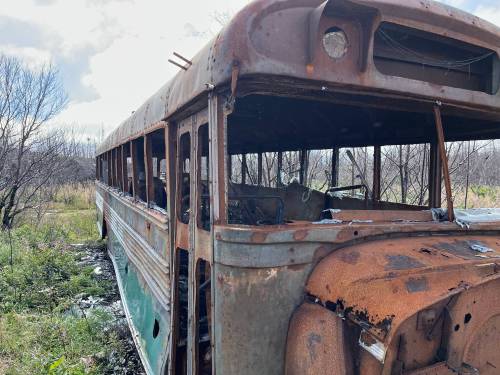
When Kula needed water to stop wildfire, it got a trickle. Many other US cities are also vulnerable
Advertisement
Read this article for free:
or
Already have an account? Log in here »
To continue reading, please subscribe:

Digital Subscription
One year of digital access for only $205*
- Enjoy unlimited reading on winnipegfreepress.com
- Read the E-Edition, our digital replica newspaper
- Access News Break, our award-winning app
- Play interactive puzzles
*First annual payment billed as $205.00 + GST for one year. This annual subscription will automatically renew at $233.00 + GST every 52 weeks (10% off the regular annual price of $259.35). Offer available to new and qualified returning subscribers only. Cancel any time.
To continue reading, please subscribe:
Add Free Press access to your Brandon Sun subscription for only an additional
$1 for the first 4 weeks*
- Enjoy unlimited reading on winnipegfreepress.com
- Read the E-Edition, our digital replica newspaper
- Access News Break, our award-winning app
- Play interactive puzzles
*Your next Brandon Sun subscription payment will increase by $1.00 and you will be charged $17.95 plus GST for four weeks. After four weeks, your payment will increase to $24.95 plus GST every four weeks.
Read unlimited articles for free today:
or
Already have an account? Log in here »
Hey there, time traveller!
This article was published 30/09/2023 (1094 days ago), so information in it may no longer be current.
Hours before devastating fires scorched the historic town of Lahaina on Maui, Kyle Ellison labored to save his rental house in Kula, a rural mountain town 24 miles away, from a different blaze.
As high winds whipped burning trees and grass, Ellison and his landlord struggled with plummeting water pressure. Ellison had to wait for pots to slowly fill in the sink before running them to the fire; his landlord wielded a garden hose with little more than a trickle. Firefighters had to rush away for half-hour stretches to find a working fire hydrant to refill their tanker, and every time they did, the fire gained.
“It’s a very disconcerting feeling when the fire department shows up and they don’t have water,” Ellison said.
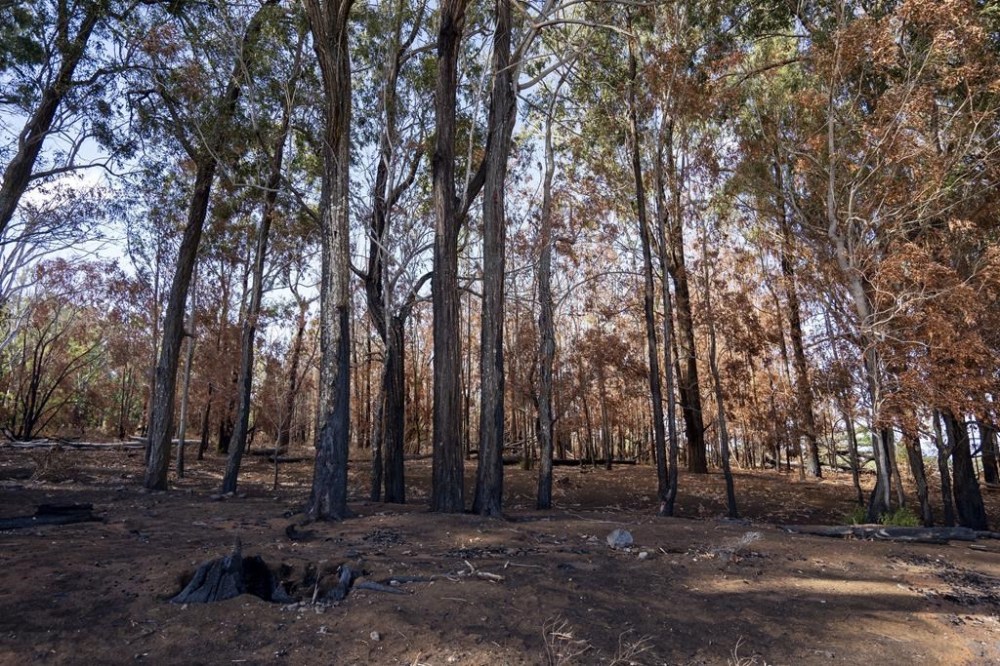
The lack of backup power for critical pumps seriously hindered firefighting in Kula, county water director John Stufflebean told The Associated Press. Once the winds knocked out electricity, pumps were unable to push water up into tanks and reservoirs that were key to maintaining pressure.
“If all those (pumps) had had generators, I think there is a pretty good chance we could have kept up,” Stufflebean said.
Kula’s experience exposed a common vulnerability in the U.S., where many water systems don’t have sufficient backup power to guarantee pressure if fires, storms or cold take electricity offline for long periods. Besides hamstringing firefighting, the lack of pressure can make water systems vulnerable to contamination that jeopardizes clean drinking water.
The impact of August’s fires in Kula was far smaller than in Lahaina, where at least 97 people were killed and some 2,200 buildings destroyed in a fire so hot that thousands of water pipes melted. More generators wouldn’t have made a difference there, Stufflebean said. But it might have in Kula, where no one died and a few dozen buildings burned.
Experts said backup power systems are expensive. The Environmental Protection Agency, which enforces clean drinking water standards, recommends but doesn’t require utilities to have backup systems — even as climate change is leading to more frequent and damaging extreme weather events.
“Right now, a robust national study to understand the degree of that vulnerability is what’s needed,” said Alan Roberson, executive director of the Association of State Drinking Water Administrators.
The fire wasn’t the first time Kula’s lack of backup power was exposed. A 2021 storm knocked out power for several days, and without enough water pressure, bacteria got into pipes that took months to clear.
Stufflebean, who became director of Maui’s water systems in January, said it would cost about $12 million to install the generators needed. He says the department will buy several diesel generators and seeks outside funding for others, but “we may need to live with whatever we can get.”
“It really comes down to funding,” he said. “The Maui water supply department has been underfunded for decades.”
Brief power disruptions are fairly common and water systems typically rely on water still in the pipes or kept in tanks and reservoirs to temporarily maintain pressure, according to Chad Seidel, president of Corona Environmental Consulting. The problem comes when a catastrophe hits and water quickly leaves through fire hoses or damaged pipes, and there’s no power to keep moving new water in.
The American Water Works Association advises providers to have a plan for up to three days without power. Big cities usually have done some emergency planning, and some states have added requirements in recent years to ensure utilities function at least a while without power. But much of the responsibility to keep water flowing falls to thousands of local utilities across the country, many with limited funds, said Andrew Whelton, a Purdue University professor who studies drinking water contamination following wildfires.
In fire-prone California, most small water providers serving poorer communities in rural areas do not have enough backup power to run properly when the power goes out, said Andrew Reynolds, assistant field manager with Rural Community Assistance Corporation, a nonprofit that helps rural communities in several western states. A California grant program to help these utilities buy backup power is overwhelmed every time officials open it to new applicants, he said.
The state is requiring utilities to install backup generators by 2024, but some communities might have a hard time meeting the deadline. The issue is “going to be lingering for a long time,” Reynolds said.
The city of Louisville, Colorado, installed backup generators many years ago for their pumps — one diesel, the other powered by a natural gas line. Public works director Kurt Kowar said back then the city was in a “low if nonexistent” fire risk zone, before climate change made some wildfires increasingly common and more intense. They didn’t expect a major blaze would engulf the city and take down the electrical grid, as the Marshall Fire did after it erupted on a dry and windy day in December 2021. The natural gas provider shut off fuel to avoid an explosion, and with only the diesel-powered generator bringing water into city pipes, firefighters quickly struggled with a depleted system.
The water department had workers manually open valves and let untreated water from the Colorado River and Boulder Creek into pipes to restore pressure, which allowed firefighting but also meant contamination in the system. They also trucked in tanks of natural gas to power the fuel-less generator.
Today, the water department is spending about a half-million dollars to convert its natural gas generator, which powers a treatment plant and several pumps, to diesel.
A couple of months after the Marshall Fire ravaged Louisville, Winter Storm Uri hit Texas, causing rolling blackouts that affected millions. Shallow water pipes froze and burst; the problem worsened when pumps lost power and stopped moving water. Officials issued some 2,000 boil orders.
Texas lawmakers subsequently required utilities to devise plans to last a day in an emergency without losing too much water pressure. Water providers have several ways they can comply, including installing backup power or ensuring they have enough water storage to get through an emergency.
Sarah Kirkle, director of policy and legislative affairs at the Texas Water Conservation Association, which represents utilities, said cost is the biggest obstacle. In San Antonio, for example, water officials said it would cost roughly $200 million over a decade to comply with the law, with generators being the majority of the expense.
Amy Hardberger, a water expert at Texas Tech University, said installing backup power is important but it can’t come at the expense of strengthening the electric grid against major storms. Prevention is “way less expensive than putting in a generator and thinking it’s all fixed,” she said.
But disasters will happen, and experts say water providers are largely underprepared. Stufflebean said Maui’s water systems were built with the capacity to put out smaller fires, not the large wildfires that struck this summer. He also said some main lines were smaller than called for by modern engineering standards, though it wasn’t clear if that would have affected firefighting efforts if pumps had delivered water pressure.
The system is going to have to be rethought, he said.
At Ellison’s rental property in Kula, the flames were finally stopped about 10 feet from his home. But smoke and ash penetrated every surface, and Ellison, his wife and their three sons have had to live in a series of temporary homes since then.
He said he learned of the generator issue at a community meeting a couple of weeks after the fires, where Stufflebean told residents that the county was “working to get generators on all the pumps going forward.”
Ellison said he exchanged baffled looks with the people near him.
“Kinda like, ‘Little late, don’t you think?’” he said.
__
The Associated Press receives support from the Walton Family Foundation for coverage of water and environmental policy. The AP is solely responsible for all content. For all of AP’s environmental coverage, visit https://apnews.com/hub/climate-and-environment