Imperial, Alberta regulator knew for years about tailings seepage at mine: documents
Advertisement
Read this article for free:
or
Already have an account? Log in here »
To continue reading, please subscribe:

Digital Subscription
One year of digital access for only $205*
- Enjoy unlimited reading on winnipegfreepress.com
- Read the E-Edition, our digital replica newspaper
- Access News Break, our award-winning app
- Play interactive puzzles
*First annual payment billed as $205.00 + GST for one year. This annual subscription will automatically renew at $233.00 + GST every 52 weeks (10% off the regular annual price of $259.35). Offer available to new and qualified returning subscribers only. Cancel any time.
To continue reading, please subscribe:
Add Free Press access to your Brandon Sun subscription for only an additional
$1 for the first 4 weeks*
- Enjoy unlimited reading on winnipegfreepress.com
- Read the E-Edition, our digital replica newspaper
- Access News Break, our award-winning app
- Play interactive puzzles
*Your next Brandon Sun subscription payment will increase by $1.00 and you will be charged $17.95 plus GST for four weeks. After four weeks, your payment will increase to $24.95 plus GST every four weeks.
Read unlimited articles for free today:
or
Already have an account? Log in here »
Hey there, time traveller!
This article was published 02/10/2023 (1080 days ago), so information in it may no longer be current.
EDMONTON – Documents filed by Imperial Oil Ltd. show the company and Alberta’s energy regulator knew the Kearl oilsands mine was seeping tailings into groundwater years before a pool of contaminated fluid was reported on the surface, alarming area First Nations and triggering three investigations.
“They knew there was seepage to groundwater,” said Mandy Olsgard, an environmental toxicologist who has consulted for area First Nations.
“The (Alberta Energy Regulator) and Imperial decided not to notify the public and just manage it internally.”
Imperial said in a statement that seepage was anticipated in Kearl’s original design. Spokeswoman Lisa Schmidt said the company has kept both the regulator and area communities informed.
“We have been working to address the areas of shallow seepage from our operating lease area,” she said. “We recognize there are concerns regarding water quality, and we take this very seriously.”
Alberta Energy Regulator spokeswoman Lauren Stewart said the agency is committed to strong oversight of the Kearl site.
“It is of upmost priority that downstream water continues to remain safe, and any potential impacts to the public are both mitigated and communicated transparently,” she said in an email.
“During this period, there were no signs that indicated the system was not functioning according to its intended design.”
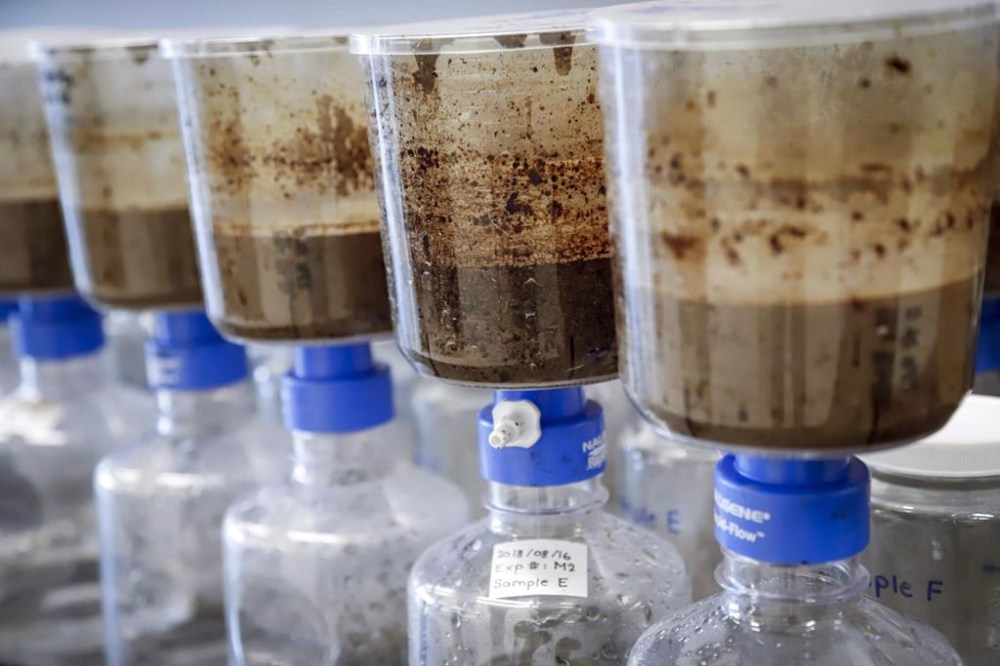
Olsgard points to groundwater monitoring reports filed by Imperial to the regulator. The 2020 and 2021 documents acknowledge tailings were seeping from the ponds that were supposed to contain them. The tailings were detected at monitoring wells within the mine’s lease area, about 70 kilometres north of Fort McMurray.
Earlier studies suggest those results could have been influenced by natural variation or chemical processes in the soil. The 2021 document says little room for doubt remained.
“(Process affected water) seepage, or potential early arrival of (such water), was reported at 11 monitoring locations in 2021, indicated by trends and/or (control objective) exceedances in multiple (key indicator parameters),” it says.
Substances found at concentrations above desired limits included naphthenic acids, dissolved solids and sulphates — a common proxy for hydrocarbon residue. Oilsands tailings are considered toxic to fish and other wildlife.
In May 2022, the seepage was reported to First Nations and communities as discoloured water pooling on the surface. They received little information after that until last February, when the regulator issued environmental protection orders against Imperial — and then only after 5.3 million litres of contaminated wastewater escaped from a holding pond.
Olsgard said the regulator had reports of seepage as early as 2019. Imperial had instituted a “seepage interception system” in 2015.
Stewart acknowledged seepage had been confirmed.
“Imperial initiated, and (the regulator) confirmed, mitigation activities that included activation of the (seepage interception system) and adding more pumping wells,” she said.
Four pumping wells activated in 2021 to contain the seepage “diverted” more than a billion litres of groundwater, says the report. After that, key parameters dropped or stabilized at “most” locations.
“These original interception pumping wells were first activated in early 2021 in response to the detection of process affected water above control objectives, in accordance with approved operating procedures,” Schmidt said.
“Imperial shared this information with the (regulator) and communities in early 2021 and has provided annual updates.”
Groundwater in the area moves at between three and 27 metres a year. Some evidence suggests tailings have seeped off the lease.
Data filed to the Oilsands Monitoring Program shows sulphates at a sampling station in the Muskeg River began climbing drastically in March 2022. Within a year, they were 18 times higher than the 2021 average.
That sampling station is south of the Kearl lease. The releases that trigged the protection order were on the north side.
Schmidt said those readings were unrelated to tailings.
Stewart said Imperial has increased its monitoring frequency and is working to understand the extent of the release.
The seepage at Kearl continues. Data posted on the regulator’s website shows several test wells continue to show hydrocarbon levels in surface water that exceed provincial environmental guidelines.
“There is no indication of adverse impacts to wildlife or fish populations in nearby river systems or risks to drinking water for local communities,” Schmidt said.
Over the summer, Imperial expanded Kearl’s seepage interception with additional pumps and drainage structures. Monitoring continues.
“The (regulator) did not stop the seepage in 2022 and they didn’t acknowledge it since 2019,” Mikisew Cree First Nation Chief Billy-Joe Tuccaro said in a statement.
“They say they have contained the seepage. They have not. The fact that they did not tell us about the seepage for nine months is the tip of the iceberg.”
Both the Mikisew and the Athabasca Chipewyan First Nation use the area outside the mine lease for traditional activities such as hunting and gathering. Both nations are downstream of the mine and say they fear for their water quality.
On Wednesday, the regulator’s board released a third-party report by Deloitte into how the agency handled communications around the releases. Although it found the regulator followed its rules, it concluded those rules were outdated, vague and had significant gaps.
Olsgard said Deloitte’s investigation was specifically limited to events occurring after May 2022.
“They were not being given the authority to go back to 2019, when I think the groundwater was being contaminated.”
Imperial’s actions are also being probed by regulator staff as well as federal investigators.
Tuccaro said the regulator has denied Mikisew’s request for a stop-work order at Kearl. He called that a double standard.
“The Alberta Utilities Commission and the Alberta government had no problem instituting a moratorium on renewable energy projects, but they won’t take simple regulatory measures in the face of a known human and environmental health problem.”
The Athabasca Chipewyan First Nation has called for the federal government to step in.
“We do not believe that the Kearl leak was an isolated incident, and we do not believe the regulator would inform the public if another incident occurred,” the band said in a statement.
The First Nation also has called for a full technical audit of oilsands tailings facilities as well as a long-term study of health impacts.
Schmidt said Imperial acknowledges shortcomings.
“We recognize that our communication in the past has not met communities’ expectations and we are working with communities to improve our communications.”
This report by The Canadian Press was first published Oct. 2, 2023.