

Judge denies Texas inmate’s request to stop execution over claims that fire damaged injection drugs
Advertisement
Read this article for free:
or
Already have an account? Log in here »
To continue reading, please subscribe:

Digital Subscription
One year of digital access for only $205*
- Enjoy unlimited reading on winnipegfreepress.com
- Read the E-Edition, our digital replica newspaper
- Access News Break, our award-winning app
- Play interactive puzzles
*First annual payment billed as $205.00 + GST for one year. This annual subscription will automatically renew at $233.00 + GST every 52 weeks (10% off the regular annual price of $259.35). Offer available to new and qualified returning subscribers only. Cancel any time.
To continue reading, please subscribe:
Add Free Press access to your Brandon Sun subscription for only an additional
$1 for the first 4 weeks*
- Enjoy unlimited reading on winnipegfreepress.com
- Read the E-Edition, our digital replica newspaper
- Access News Break, our award-winning app
- Play interactive puzzles
*Your next Brandon Sun subscription payment will increase by $1.00 and you will be charged $17.95 plus GST for four weeks. After four weeks, your payment will increase to $24.95 plus GST every four weeks.
Read unlimited articles for free today:
or
Already have an account? Log in here »
Hey there, time traveller!
This article was published 06/10/2023 (1085 days ago), so information in it may no longer be current.
HOUSTON (AP) — A federal judge on Friday denied a request to stop the execution of a Texas inmate who had alleged in a lawsuit that the drugs he is to be injected with next week were exposed to extreme heat and smoke during a recent fire, making them unsafe.
The Texas Attorney General’s Office says testing done after the fire on samples of the state’s supplies of pentobarbital, the drug used in executions, showed they “remain potent and sterile.”
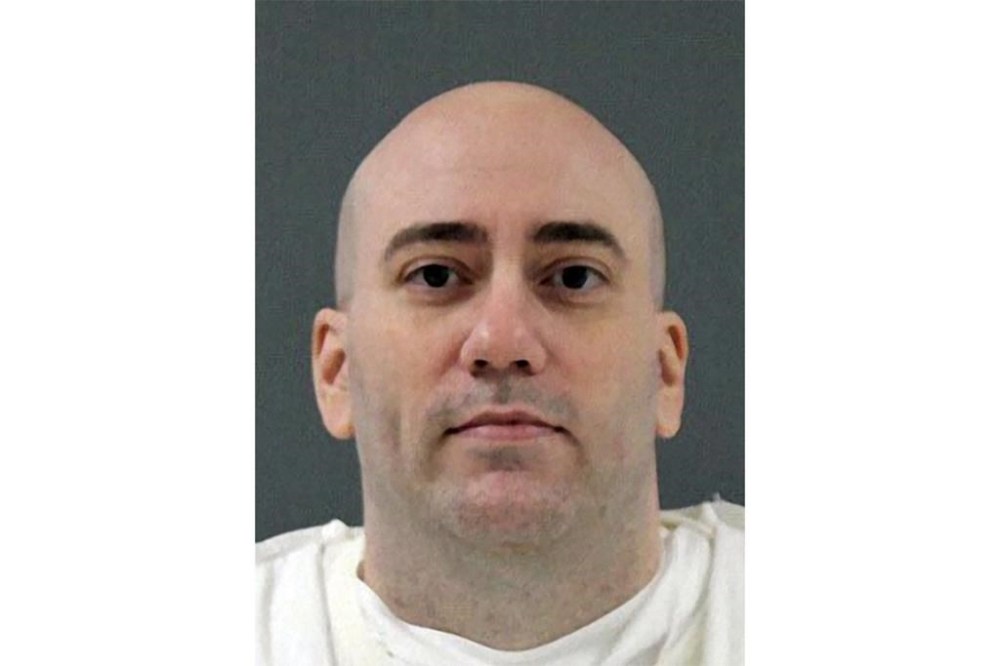
Jedidiah Murphy, 48, is scheduled to be executed Tuesday. He was condemned for the fatal October 2000 shooting of 80-year-old Bertie Lee Cunningham, of Garland, a Dallas suburb, during a carjacking.
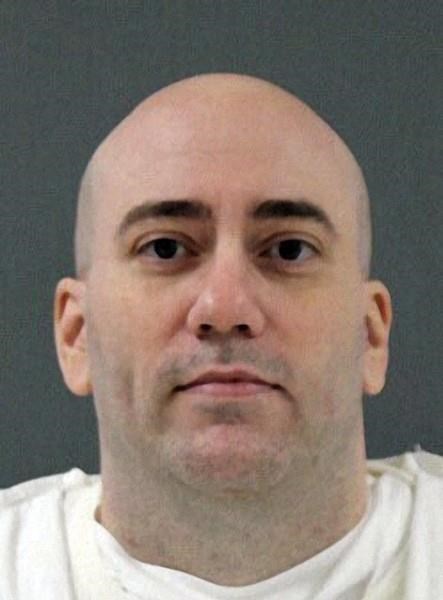
In a lawsuit filed Wednesday in federal court in Austin, Murphy’s attorneys allege that during an Aug. 25 fire that caused “catastrophic damage” to the administration building of a prison unit in Huntsville, the execution drugs the state uses were exposed to excessively high temperatures, smoke and water.
Records from the Texas Department of Criminal Justice show the agency has stored pentobarbital at the Huntsville Unit, located about 70 miles (113 kilometers) north of Houston.
In response to questions about what kind of impact the fire might have had on the execution drugs and the area where they are stored, Amanda Hernandez, a TDCJ spokeswoman replied, “TDCJ has viable execution drugs available.”
According to a copy of a Huntsville Fire Department report included in the lawsuit, a prison guard and a fire captain entered the burning building to check “on the pharmacy,” but as they approached the third floor, they had to evacuate because “the area was about to be overtaken by fire.”
When pentobarbital is exposed to high temperatures, it can quickly degrade, compromising its chemical structure and impacting its potency, the lawsuit said.
“This creates substantial risks of serious, severe, and superadded harm and pain,” according to the lawsuit.
But in an order issued Friday evening, U.S. District Judge Robert Pitman denied Murphy’s request to stay his execution, saying the test results of the pentobarbital samples undermine Murphy’s claims that all of TDCJ’s execution drugs were damaged in the fire.
“As a result, Murphy’s claim that the so-called ‘fire-blighted’ pentobarbital is sure or very-likely to cause serious illness or suffering is meritless,” Pitman wrote in his 10-page order.
Murphy’s lawyers also alleged the criminal justice department is using expired execution drugs, a claim made by seven other death row inmates in a December lawsuit.
Pitman said there was no validity to these claims as well and there was nothing to support Murphy’s allegations “that TDCJ’s current execution method is sure or very likely to cause needless suffering and illness.”
In responding to Murphy’s lawsuit, the Texas attorney general’s office submitted a laboratory report of test results completed in late September of two pentobarbital samples. One sample had a potency level of 94.2% while the other was found to be 100% potent. Both samples also passed sterility tests and had acceptable levels of bacterial toxins, according to the report.
The lab report “also undermines Murphy’s claim that TDCJ is improperly using expired drugs in its executions — the Defendants’ testing shows that, even if Murphy’s allegation that the drugs are expired is true — which it is not — they remain potent and sterile,” the attorney general’s office wrote in its response.
Murphy’s lawsuit is the latest challenge in recent years to Texas’ execution procedures.
In the December lawsuit filed by the seven death row inmates, a civil judge in Austin preliminarily agreed with their claims. But her order was stopped by Texas’ top criminal appeals court. Five of the inmates have since been executed, even though the lawsuit remains pending.
In 2022, the U.S. Supreme Court ruled, in response to a lawsuit from a Texas death row inmate, that states must accommodate the requests of death row inmates who want to have their spiritual advisers pray aloud and touch them during their executions.
Texas has worked to keep secret the details of its execution procedures, with lawmakers in 2015 banning the disclosure of drug suppliers for executions. Murphy’s attorneys had accused the Texas Department of Criminal Justice of blocking their efforts to find out whether the fire damaged the drugs.
But the recent lawsuits have offered a rare glimpse into lesser-known aspects of Texas’ execution procedures.
Court documents from the lawsuit by the seven inmates showed that the compounding pharmacy or pharmacies that supply the state with pentobarbital filled an order Jan. 5.
The court documents also include a copy of receipts from the last few years of purchases the department made from its supplier for pentobarbital and for testing of the drug. Some of the receipts are for purchases of over $4,000 and $6,100. “Thank you for shopping @ … Returns with Receipt Only,” is printed at the bottom of these receipts, with the name of the business redacted in black.
Like other states in recent years, Texas has turned to compounding pharmacies to obtain pentobarbital after traditional drug makers refused to sell their products to prison agencies in the U.S.
___
Follow Juan A. Lozano on X, the platform formerly known as Twitter: https://twitter.com/juanlozano70