Things to know about the Nobel Prizes
Advertisement
Read this article for free:
or
Already have an account? Log in here »
To continue reading, please subscribe:

Digital Subscription
One year of digital access for only $205*
- Enjoy unlimited reading on winnipegfreepress.com
- Read the E-Edition, our digital replica newspaper
- Access News Break, our award-winning app
- Play interactive puzzles
*First annual payment billed as $205.00 + GST for one year. This annual subscription will automatically renew at $233.00 + GST every 52 weeks (10% off the regular annual price of $259.35). Offer available to new and qualified returning subscribers only. Cancel any time.
To continue reading, please subscribe:
Add Free Press access to your Brandon Sun subscription for only an additional
$1 for the first 4 weeks*
- Enjoy unlimited reading on winnipegfreepress.com
- Read the E-Edition, our digital replica newspaper
- Access News Break, our award-winning app
- Play interactive puzzles
*Your next Brandon Sun subscription payment will increase by $1.00 and you will be charged $17.95 plus GST for four weeks. After four weeks, your payment will increase to $24.95 plus GST every four weeks.
Read unlimited articles for free today:
or
Already have an account? Log in here »
Hey there, time traveller!
This article was published 09/10/2023 (1074 days ago), so information in it may no longer be current.
STOCKHOLM (AP) — The annual Nobel Prize announcements are over with the final award, for economics, going to Harvard professor Claudia Goldin for advancing the understanding of women’s labor market outcomes.
The 2023 prize announcements started on Oct. 2 with the Nobel Prize in medicine being awarded to two scientists whose discoveries enabled the development of mRNA vaccines against COVID-19.
The following day, three scientists won the physics prize for their work on how electrons zip around the atom in the tiniest fractions of seconds.
Three U.S.-based researchers shared the chemistry prize on Oct. 4 for their study of quantum dots — tiny particles that can release very bright colored light and are used in electronics and medical imaging.
On Oct. 5, the Swedish Academy awarded Norwegian writer Jon Fosse the literature award for works that “give voice to the unsayable.”
Imprisoned activist Narges Mohammadi won the Nobel Peace Prize the next day for her campaign against the oppression of women and for human rights in Iran.
The awards will be handed out on Dec. 10.
Here are some things to know about the Nobel Prizes:
AN IDEA MORE POWERFUL THAN DYNAMITE
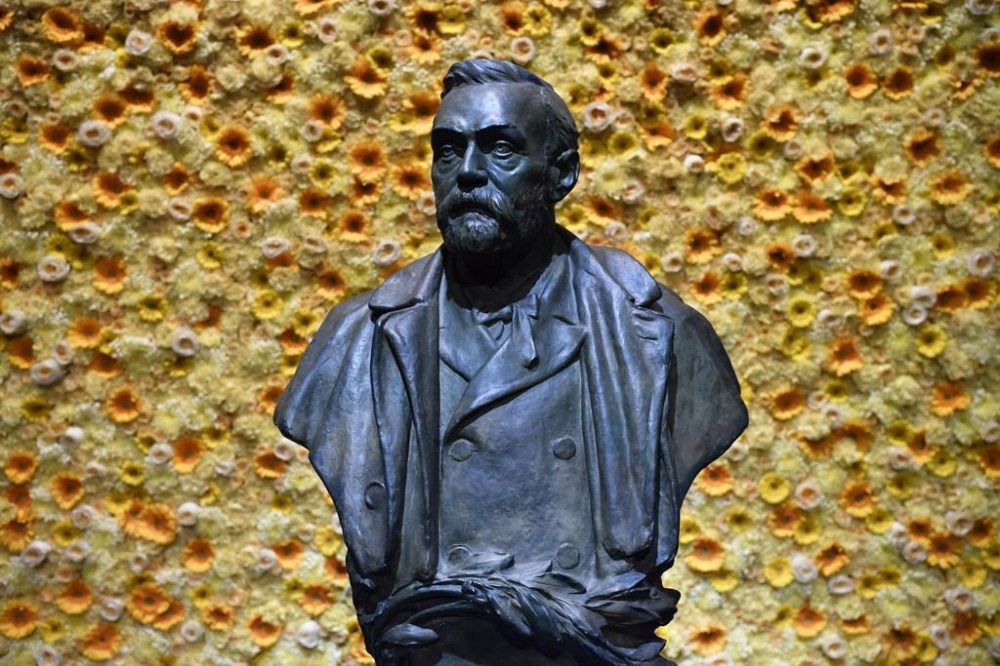
The Nobel Prizes were created by Alfred Nobel, a 19th-century businessman and chemist from Sweden. He held more than 300 patents but his claim to fame before the Nobel Prizes was having invented dynamite by mixing nitroglycerine with a compound that made the explosive more stable.
Dynamite soon became popular in construction and mining as well as in the weapons industry. It made Nobel a very rich man. Perhaps it also made him think about his legacy, because toward the end of his life he decided to use his vast fortune to fund annual prizes “to those who, during the preceding year, have conferred the greatest benefit to humankind.”
The first Nobel Prizes were presented in 1901, five years after his death. In 1968, a sixth prize was created, for economics, by Sweden’s central bank. Though Nobel purists stress that the economics prize is technically not a Nobel Prize, it’s always presented together with the others.
PEACE IN NORWAY
For reasons that are not entirely clear, Nobel decided that the peace prize should be awarded in Norway and the other prizes in Sweden. Nobel historians suspect Sweden’s history of militarism may have been a factor.
During Nobel’s lifetime, Sweden and Norway were in a union, which the Norwegians reluctantly joined after the Swedes invaded their country in 1814. It’s possible that Nobel thought Norway would be a more suitable location for a prize meant to encourage “fellowship among nations.”
To this day, the Nobel Peace Prize is a completely Norwegian affair, with the winners selected and announced by a Norwegian committee. The peace prize even has its own ceremony in the Norwegian capital of Oslo on Dec. 10 — the anniversary of Nobel’s death — while the other prizes are presented in Stockholm.
WHAT’S POLITICS GOT TO DO WITH IT?
The Nobel Prizes project an aura of being above the political fray, focused solely on the benefit of humanity. But the peace and literature awards, in particular, are sometimes accused of being politicized. Critics question whether winners are selected because their work is truly outstanding or because it aligns with the political preferences of the judges.
The scrutiny can get intense for high-profile awards, such as in 2009, when President Barack Obama won the peace prize less than a year after taking office.
The Norwegian Nobel Committee is an independent body that insists its only mission is to carry out the will of Alfred Nobel. However, it does have links to Norway’s political system. The five members are appointed by the Norwegian Parliament, so the panel’s composition reflects the power balance in the legislature.
To avoid the perception that the prizes are influenced by Norway’s political leaders, sitting members of the Norwegian government or Parliament are barred from serving on the committee. Even so, the panel isn’t always viewed as independent by foreign countries. When imprisoned Chinese dissident Liu Xiaobo won the peace prize in 2010, Beijing responded by freezing trade talks with Norway. It took years for Norway-China relations to be restored.
GOLD AND GLORY
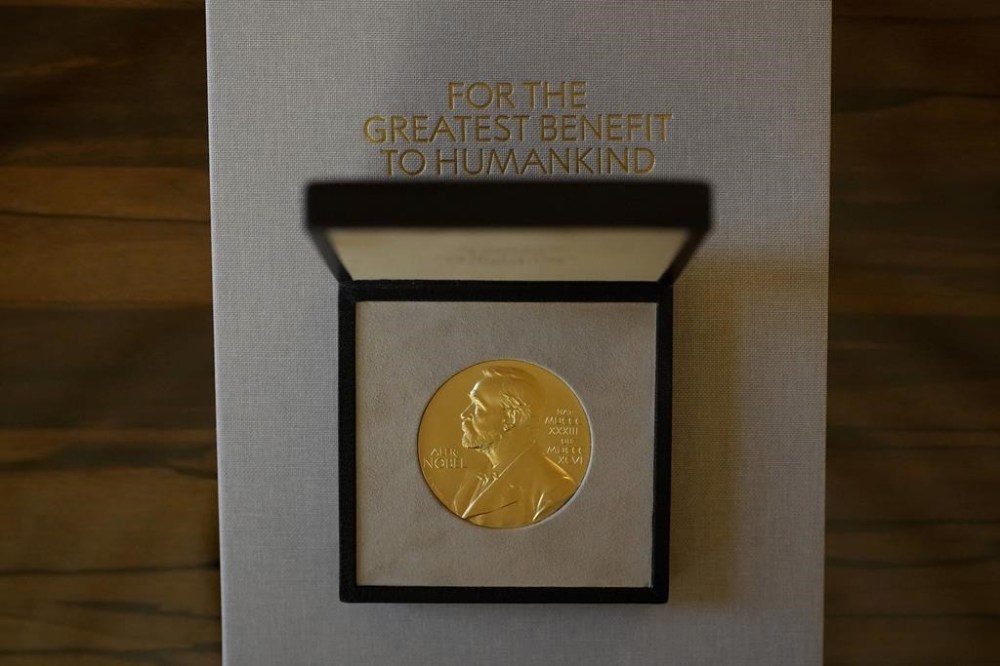
One reason the prizes are so famous is they come with a generous amount of cash. The Nobel Foundation, which administers the awards, raised the prize money by 10% this year to 11 million kronor (about $1 million). In addition to the money, the winners receive an 18-carat gold medal and diploma when they collect their Nobel Prizes at the award ceremonies in December.
Most winners are proud and humbled by joining the pantheon of Nobel laureates, from Albert Einstein to Mother Teresa. But two winners refused their Nobel Prizes: French writer Jean-Paul Sartre, who turned down the literature prize in 1964, and Vietnamese politician Le Duc Tho, who declined the peace prize that he was meant to share with U.S. diplomat Henry Kissinger in 1973.
Several others were not able to receive their awards because they were imprisoned, such as Belarusian pro-democracy activist Ales Bialiatski, who shared last year’s peace prize with human rights groups in Ukraine and Russia.
LACK OF DIVERSITY
Historically, the vast majority of Nobel Prize winners have been white men. Though that’s started to change, there is still little diversity among Nobel winners, particularly in the science categories.
With Monday’s announcement, 64 women have won Nobel Prizes, including 28 in the scientific categories. Only five women have won the physics award, and just three have won the economics prize.
Four women were among the 11 Nobel Prize winners this year.
In the early days of the Nobel Prizes, the lack of diversity among winners could be explained by the lack of diversity among scientists in general. But today critics say the judges need to do a better job at highlighting discoveries made by women and scientists outside Europe and North America.
The prize committees say their decisions are based on scientific merit, not gender, nationality or race. However, they are not deaf to the criticism. Five years ago, the head of the Royal Swedish Academy of Sciences said it had started to ask nominating bodies to make sure they don’t overlook “women or people of other ethnicities or nationalities in their nominations.”
___
Follow all AP stories about the Nobel Prizes at https://apnews.com/hub/nobel-prizes