Swine details

Longtime connection between humans and pigs pondered in wide-ranging study

Advertisement

Advertise with us

There’s an almost universal craving for bacon, arguably the most popular protein food derived from pigs. And even though sacred texts prohibit Jews and Muslims from eating pork, many humans display an almost insatiable demand for pork chops, pork loins and pork bellies.

Read this article for free:


or

Already have an account? Log in here »

To continue reading, please subscribe:

Subscribe and receive a limited-edition Free Press branded hat or tote.

Digital Subscription

One year of digital access for only $205*

  • Enjoy unlimited reading on winnipegfreepress.com
  • Read the E-Edition, our digital replica newspaper
  • Access News Break, our award-winning app
  • Play interactive puzzles

*First annual payment billed as $205.00 + GST for one year. This annual subscription will automatically renew at $233.00 + GST every 52 weeks (10% off the regular annual price of $259.35). Offer available to new and qualified returning subscribers only. Cancel any time.

To continue reading, please subscribe:

Add Free Press access to your Brandon Sun subscription for only an additional

$1 for the first 4 weeks*

  • Enjoy unlimited reading on winnipegfreepress.com
  • Read the E-Edition, our digital replica newspaper
  • Access News Break, our award-winning app
  • Play interactive puzzles
Start now

*Your next Brandon Sun subscription payment will increase by $1.00 and you will be charged $17.95 plus GST for four weeks. After four weeks, your payment will increase to $24.95 plus GST every four weeks.

Hey there, time traveller!
This article was published 28/10/2023 (1030 days ago), so information in it may no longer be current.

There’s an almost universal craving for bacon, arguably the most popular protein food derived from pigs. And even though sacred texts prohibit Jews and Muslims from eating pork, many humans display an almost insatiable demand for pork chops, pork loins and pork bellies.

While activists continue to release documented examples of animal abuse — especially by pork producers — an ever-increasing demand for protein-rich food tends to silence their concerns.

Our complicated relationship with one of the planet’s major sources of protein is now clearly revealed in a wide-ranging study showing how pigs aren’t only an important food source, but have also become contributors to humanity’s cache of reusable body parts such as heart valves, prolonging the lives of countless hospitalized patients.
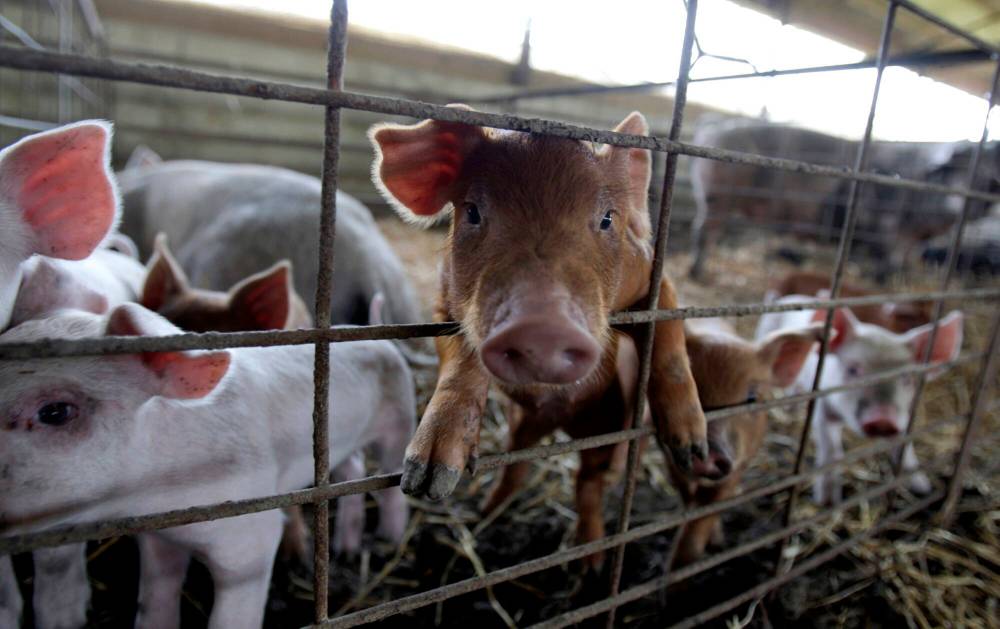
Jeff Roberson / The Associated Press files
                                Bucolic farms of yesteryear have largely been replaced by sprawling ‘pig farms’ that resemble highly industrialized facilities, with nearly two billion pigs slaughtered globally every year.

Jeff Roberson / The Associated Press files

Bucolic farms of yesteryear have largely been replaced by sprawling ‘pig farms’ that resemble highly industrialized facilities, with nearly two billion pigs slaughtered globally every year.

The complex, millennia-long connection between human and porcine species is clearly revealed in an enlightening study titled The Pig & I, first published in Norway in 2020. This first book by Norwegian journalist and historian Kristoffer Hatteland Endresen is now available in bookstores as an English translation by London-born award-winning translator Lucy Moffatt.

The Pig & I chronicles Endresen’s six-month tenure at a pig farm in Norway, where some astute observations as a farm labourer who mucked the crowded stalls and helped to artificially inseminate sows combines with his extensive research into the long association between humans and pigs, tracing a historical love-hate relationship replete with graphic depictions that could sour the taste for bacon.

It confirms how the bucolic farms of yesteryear have been replaced by sprawling “pig farms” resembling highly industrialized facilities, supplying equally industrialized slaughterhouses with almost two billion pigs per year.

Although Norway’s pig farms are shown to be more humane than the several-stories-high pig farms in China, embodying all that is distasteful about the treatment of domesticated animals, large pork production facilities throughout the world are shown to be similarly highly industrialized, where concern for “animal comfort” is trumped by a “production line process” and where six-month-old pigs await the inevitable slaughter truck coming to fetch them.

Tapping into a trove of resources listed in the well-stocked notes and bibliography sections accompanying his pig-oriented study, Endresen interweaves his own personal observations and experiences with those found in mythology, archeological records and ancient Greek and Roman history.

They all reveal a dependence upon pigs that has always been paradoxically accompanied by revulsion towards a species described as “a living metaphor for all that is vulgar, tasteless, shameful and sinful.”
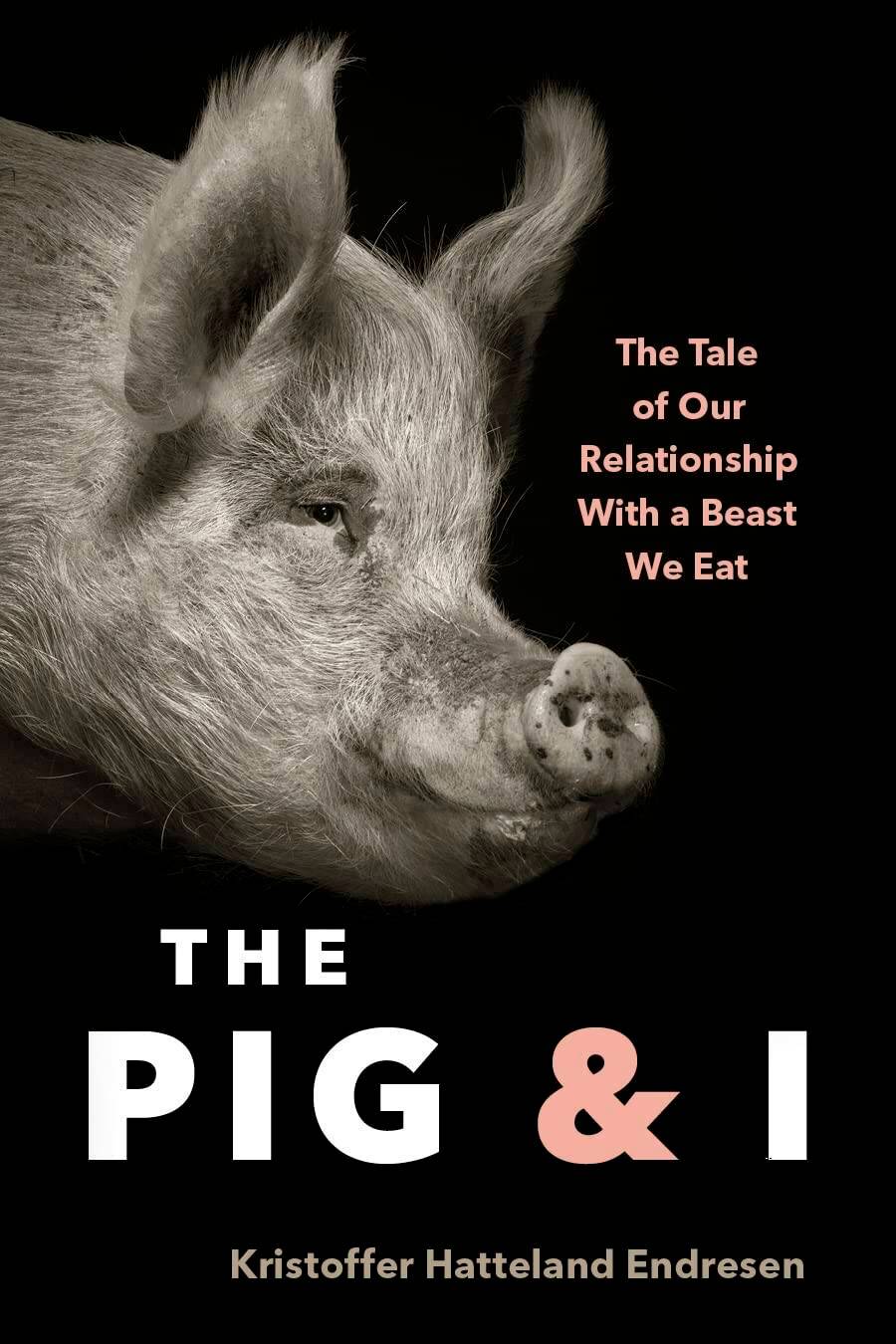
The Pig & I

The Pig & I

Pigs, like humans, are omnivorous — and in order to be able to eat virtually everything, they have similar sets of tearing and grinding teeth. As Endresen reminds us, “once the enamel on a pig’s tooth is gone, there is, practically speaking, nothing to distinguish it from that of a human,” one of several troublesome truths for disbelievers of Darwin’s evolutionary theories.

Plumbing literary works such as George Orwell’s satirical Animal Farm and William Golding’s Lord of the Flies, Endresen shows how the lives of pigs and humans have become so entwined that even the literary and artistic worlds often portray these separate species as interchangeable, enlivening otherwise drab television shows with characters such as Miss Piggy.

Unfortunately, this captivating study reveals neither an irrefutable proof, nor a complete denial, of a special bond or undiscovered link between pigs and humans, in spite of a heavy reliance on the published works of well-known Australian moral philosopher Peter Singer (Animal Liberation).

Instead, there is only Endresen’s expressed satisfaction in accepting that humans are inextricably tied to other beings, including pigs, while also recognizing that in spite of similarities between pigs and humans, they remain two distinct species.

Reaching this conclusion conveniently justifies the production of other protein food sources from chickens, cattle, goats and sheep, making the domestication of all birds and animals a natural human endeavour at providing food.

Ingrid Aukland photo
                                Kristopher Hatteland Endresen

Ingrid Aukland photo

Kristopher Hatteland Endresen

Nevertheless, it offers a voice and echoes a genuine concern for the treatment of animals.

Joseph Hnatiuk is a retired teacher.
Report Error Submit a Tip

More Stories

Five Things: PM Carney explains why Canada left the U.S. negotiating table

David Baxter, The Canadian Press 5 minute read Preview

Five Things: PM Carney explains why Canada left the U.S. negotiating table

David Baxter, The Canadian Press 5 minute read Updated: Yesterday at 1:58 PM CDT

OTTAWA - Canada is preparing to hit the U.S. with dollar-for-dollar tariffs in response to new 50 per cent duties on $28 billion worth of Canadian products that took effect when talks between the two nations collapsed as negotiations neared the finish line. 

Prime Minister Mark Carney was quiet publicly during the final days of negotiations, but now has now explained his rationale for telling the Canadian negotiating team, led by Canada-U.S. Trade Minister Dominic LeBlanc and chief negotiator Janice Charette, to leave the table.

Restrictions on further trade deals

"The U.S. Introduced at the last hours, in the last hours, efforts to restrict our ability to have other trade deals. You heard me say a moment ago, what we've accomplished in the past year, 20 new deals, economic and security partnerships, the prospect of doubling our market access because we believe in free trade. We're the partner of choice in many respects for countries around the world and the Americans wanted to restrict that. They had language that what they wanted to restrict that, unacceptable," Carney said during a press conference on Parliament Hill.

Read
Updated: Yesterday at 1:58 PM CDT

City inundated with thousands of complaints after launch of new transit system

Morgan Modjeski 11 minute read Preview

City inundated with thousands of complaints after launch of new transit system

Morgan Modjeski 11 minute read Friday, Aug. 21, 2026

Despite complaints from thousands of dissatisfied users, Winnipeg hasn't hit the brakes on the rollout of its new primary transit network. And it appears that ignoring the public response cost Winnipeg Transit millions of dollars in lost revenue and ridership.

Read
Friday, Aug. 21, 2026

ER wait times have hit all-time highs in Winnipeg and are impacting nearly all aspects of hospital operations

Tom Brodbeck 17 minute read Preview

ER wait times have hit all-time highs in Winnipeg and are impacting nearly all aspects of hospital operations

Tom Brodbeck 17 minute read Friday, Aug. 21, 2026

On most days at Health Sciences Centre’s adult emergency department, all 58 treatment beds are filled with sick patients. Another dozen or so brought in by ambulance line the hallways on stretchers, with only one nurse to look after them.

Out in the waiting room, about 30 or 40 people — sometimes more — are slouched in chairs in pain or discomfort, waiting hours to see a doctor. Most have been assessed by a triage nurse, but many will have to wait 10 to 20 hours to be examined by a physician because there’s no room for them in the treatment area.

Some patients leave because they can no longer tolerate the excruciating wait, only to return days later, sicker than they were before.

Welcome to the emergency department at Manitoba’s largest hospital, where some of the highest-acuity patients seek medical care but now face delays that were unimaginable a few years ago.

Read
Friday, Aug. 21, 2026

Canada vows dollar-for-dollar tariff retaliation, suspends trade talks with U.S.

Catherine Morrison, The Canadian Press 7 minute read Preview

Canada vows dollar-for-dollar tariff retaliation, suspends trade talks with U.S.

Catherine Morrison, The Canadian Press 7 minute read Updated: Yesterday at 8:27 AM CDT

OTTAWA - A last-ditch effort to reach a new trade deal before a midnight tariff deadline failed Friday, as Prime Minister Mark Carney suspended talks with the United States and summoned his negotiators back to Ottawa.

The decision meant new 50 per cent tariffs on billions of dollars in Canadian exports to the U.S. took effect at 12:01 a.m., and Carney vowed Canada would retaliate with equal measures of its own.

"In recent weeks, we made important progress toward improving Canada's position as having the best deal in the world with the U.S.," Carney said in a statement just before Trump's tariff deadline.

"However, that progress has not been enough to meet our objectives for Canadians."

Read
Updated: Yesterday at 8:27 AM CDT

Unresolved issues leave little space for you

Maureen Scurfield 5 minute read Yesterday at 2:00 AM CDT

DEAR MISS LONELYHEARTS: My boyfriend — who is newly divorced — has two great children from his marriage. Although he and I have been together since Christmas, it’s obvious he loves his kids much more than he loves me! For instance, he lavishes affection on the kids when they’re over and completely leaves me out. I’m just the cook and dish-washer for the night.

When I brought this up recently, he said, “My girlfriends don’t last, because if I’m openly affectionate with them, the kids tell their mother we’re making out in front of them! They want all my affection and attention when I’m with them.” Then he added, “Stick around, and the kids will probably loosen up.”

Stick around? The explanation and his “advice” totally turned me off. What do you think?

— Not Second-Best to Anyone, St. Vital

Wooed by wood, Cedarella founder takes pride in handcrafted designs

David Sanderson 8 minute read Preview

Wooed by wood, Cedarella founder takes pride in handcrafted designs

David Sanderson 8 minute read Yesterday at 6:00 AM CDT

Marina Bulan is the founder of Cedarella, a two-year-old venture that turns out eye-catching wood products such as jewelry, kitchen decor, children’s toys and, most recently, metre-high outdoor planters that double as home street-number indicators.

Ahead of immigrating to Winnipeg a decade ago from their native Russia, Bulan and her partner thought it would be prudent to conduct some research on their soon-to-be new home, a city they knew next to nothing about.

Imagine their surprise as they were viewing the 2007 surrealist film My Winnipeg, which comically blends historical facts about our burg with what Winnipeg-born writer/director Guy Maddin has termed “mystical hypothesizing.”

(For instance, there is no proof that, as reported in the award-winning flick, Winnipeg is the sleepwalking capital of the world, and that residents keep keys to their former abodes on their person in the event they turn up there during a bout of somnambulism.)

Read
Yesterday at 6:00 AM CDT