
Privacy bill fails to address dangers of facial recognition technology: coalition

Advertisement

Advertise with us

OTTAWA - A coalition pushing for better regulation of facial recognition and other biometric surveillance technologies says proposed federal privacy legislation is in "dire need of significant amendments."

Read this article for free:


or

Already have an account? Log in here »

To continue reading, please subscribe:

Subscribe and receive a limited-edition Free Press branded hat or tote.

Digital Subscription

One year of digital access for only $205*

  • Enjoy unlimited reading on winnipegfreepress.com
  • Read the E-Edition, our digital replica newspaper
  • Access News Break, our award-winning app
  • Play interactive puzzles

*First annual payment billed as $205.00 + GST for one year. This annual subscription will automatically renew at $233.00 + GST every 52 weeks (10% off the regular annual price of $259.35). Offer available to new and qualified returning subscribers only. Cancel any time.

To continue reading, please subscribe:

Add Free Press access to your Brandon Sun subscription for only an additional

$1 for the first 4 weeks*

  • Enjoy unlimited reading on winnipegfreepress.com
  • Read the E-Edition, our digital replica newspaper
  • Access News Break, our award-winning app
  • Play interactive puzzles
Start now

*Your next Brandon Sun subscription payment will increase by $1.00 and you will be charged $17.95 plus GST for four weeks. After four weeks, your payment will increase to $24.95 plus GST every four weeks.

Hey there, time traveller!
This article was published 01/11/2023 (1078 days ago), so information in it may no longer be current.

OTTAWA – A coalition pushing for better regulation of facial recognition and other biometric surveillance technologies says proposed federal privacy legislation is in “dire need of significant amendments.”

In an open letter Wednesday to Industry Minister François-Philippe Champagne, the Right2YourFace Coalition warns the use of facial recognition technology threatens human rights, equity principles and fundamental freedoms, including the right to privacy.

Facial recognition tools can allow an image of a person’s face to be matched against a database of photos with the aim of identifying the individual.
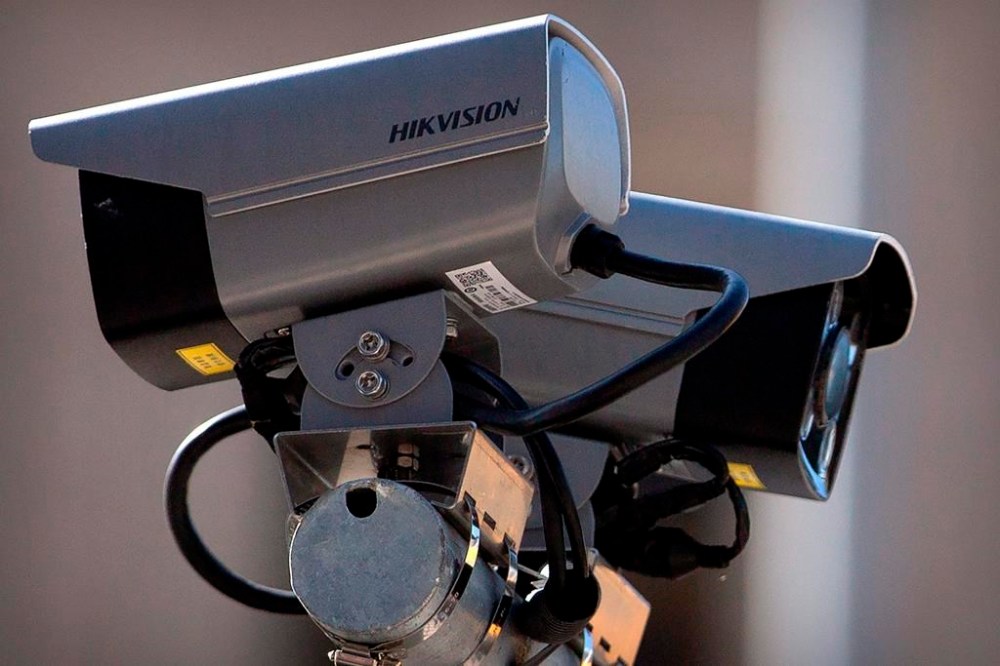
A coalition pushing for better regulation of facial recognition and other biometric surveillance technologies says proposed federal privacy legislation is in
A coalition pushing for better regulation of facial recognition and other biometric surveillance technologies says proposed federal privacy legislation is in "dire need of significant amendments." Security cameras monitor a pedestrian shopping street in Beijing, on Oct. 8, 2019. THE CANADIAN PRESS/AP-Mark Schiefelbein

The coalition says the technology can prompt biased or flawed results, creating a risk of false identifications.

The letter is signed by representatives of the Canadian Civil Liberties Association, the International Civil Liberties Monitoring Group, the Privacy and Access Council of Canada and several others.

The coalition says Bill C-27, now before Parliament, fails to address the harms posed by facial recognition tools as businesses and government agencies adopt artificial intelligence systems at an increasingly rapid pace.

“AI is neither artificial, nor is it intelligent, and its use is largely unregulated,” Sharon Polsky of the Privacy and Access Council told a news conference Wednesday.

“Research has repeatedly confirmed that facial recognition results are unreliable, yet hundreds of millions of dollars are spent every year by Canadian municipalities, airports, retailers, schools and of course, law enforcement, that embed more and more AI and facial recognition systems for safer communities.”

The Liberals introduced privacy legislation last year to give Canadians more control over how their personal data is used by commercial entities. The bill would also impose fines for non-compliant organizations and introduce new rules for the use of artificial intelligence.

The coalition is concerned about a lack of discussion on the bill’s “troubling implications for facial recognition,” said Daniel Konikoff, interim director of the privacy, technology and surveillance program at the Canadian Civil Liberties Association.

The letter says the privacy section of the bill must include special provisions for sensitive information and explicitly provide enhanced protection of biometric details, such as face data, fingerprints and vocal patterns, which can involve particular risks of racial and gender bias.

The coalition fears a provision of the bill that allows the collection of information for legitimate business purposes without the user’s knowledge or consent will be too broad, favouring profit over privacy.

The government says the artificial intelligence elements of the bill are aimed at protecting Canadians by ensuring high-impact AI systems are developed and deployed in a way that identifies, assesses and lessens the risks of harm and bias.

The bill would also establish an AI and data commissioner to monitor company compliance, order third-party audits and share information with other regulators.

The coalition is concerned the proposed legislation includes no definition of what qualifies as high-impact, leaving what they consider a crucial step to regulations. A definition of high-impact systems that includes facial recognition technology and other biometric identification tools must be included in the bill itself, the letter says.

Last month Champagne wrote the House of Commons committee on industry and technology, which is studying the bill, to say the government was prepared to work with MPs to develop amendments to define classes of high-impact systems.

Among the classes Champagne suggested for inclusion is the use of AI to process biometric information for the purposes of identifying someone without their consent, or to determine an individual’s behaviour or state of mind.

The coalition hasn’t seen “what those actual tangible amendments” would look like, Konikoff said.

“The devil’s in the details, but we don’t have any details here.”

In October last year, the Commons committee on information, privacy and ethics called for a moratorium on the use of facial recognition tools by federal police and Canadian businesses unless there is court authorization or input from the privacy watchdog.

The committee also urged the government to develop a regulatory framework concerning uses, prohibitions, oversight and privacy of the emerging tool.

This report by The Canadian Press was first published Nov. 1, 2023.

Report Error Submit a Tip

More Stories

Ontario to move northwest regions to permanent daylight time

Liam Casey, The Canadian Press 3 minute read Preview

Ontario to move northwest regions to permanent daylight time

Liam Casey, The Canadian Press 3 minute read Updated: Yesterday at 11:29 AM CDT

TORONTO - Ontario is set to move parts of the province's northwest region to permanent daylight time in order to align with Manitoba, Indigenous Affairs Minister Greg Rickford told The Canadian Press.

Rickford said there is overwhelming consensus among municipalities, First Nations and businesses to make the time change permanent.

The province intends to make a regulatory change in the Time Act on Nov. 1 to allow regions west of the 90th meridian to align with Manitoba, he said.

Manitoba Premier Wab Kinew announced last month the province would stop twice-annual clock changes and stay on daylight time year-round in the central time zone, leaving it one hour ahead of the other Prairie provinces rather than aligned with them.

Read
Updated: Yesterday at 11:29 AM CDT

‘People count on this place’: Pembina Hwy. Giant Tiger latest location slated to close

By Matthew Frank 3 minute read Preview

‘People count on this place’: Pembina Hwy. Giant Tiger latest location slated to close

By Matthew Frank 3 minute read Monday, Oct. 12, 2026

Another Giant Tiger store in Winnipeg will shutter next year, leaving some area residents concerned about a lack of affordable groceries in the neighbourhood.

Red papers taped to the front doors of the Canadian retail chain’s location at Pembina Highway and Southpark Drive indicate it will close Feb. 27.

Doreen Yanchuk, a self-described bargain hunter, shook her head when she saw the signs Monday. The 67-year-old said she’s a regular customer at the location because it’s a five-minute drive from her home.

“They have very good sales here, which draws people to the shop because everything is expensive,” Yanchuk said.

Read
Monday, Oct. 12, 2026

Gang member who shot rival, bystander back in prison after release revoked

Erik Pindera 4 minute read Preview

Gang member who shot rival, bystander back in prison after release revoked

Erik Pindera 4 minute read Monday, Oct. 12, 2026

A Winnipeg man who shot a rival teenage gangster and an innocent 11-year-old bystander at the crowded Red River Exhibition more than four years ago has been sent back to prison.

Mocree Chuck Scatch-Dubour, now in his early 20s, left prison in April on statutory release on his 5 1/2-year federal sentence for the 2022 shooting. Scatch-Dubour was sentenced to the prison term as an adult in the spring of 2023 after pleading guilty to discharge of a firearm with intent to wound, aggravated assault and possession of a restricted firearm.

By law, most federal inmates automatically receive statutory release after two-thirds of their sentence, if they have not already been paroled.

Parole Board of Canada officials formally revoked Scatch-Dubour’s release this month after he unlawfully left his halfway house in June.

Read
Monday, Oct. 12, 2026

Time to intervene on hubby and therapy ‘buddy’

Maureen Scurfield 4 minute read 2:00 AM CDT

DEAR MISS LONELYHEARTS: My husband has been going to a therapy group to work through some trauma in his past. He seems almost high when he comes home — always in too good a mood and plays his guitar for hours. He won’t come to bed with me either and doesn’t want to make love those nights.

I just found out from a female friend who also goes to this therapy group that one of my man’s exes turns out to be in this same group. She’s seen them at the café where some group members go after meetings for coffee. They usually sit as a group, she says, but my husband and this woman have started breaking off from the main crew for private talks at another table.

When I asked my man about her, he was indignant. He said, “I come home to you, don’t I? Isn’t that enough?” Now he claims he’s helping his ex talk through her trauma. That may be so, but he seems way too happy and smug when he finally comes home.

This ex was the first girl he ever had sex with. I know exactly what she meant to him — until she dropped him on his head. So what can I do? I can’t just ignore it and let it go. He’s my husband till death do us part, right?

White-supremacist highway sign casts pall on Steinbach city council campaign

Matthew Frank 4 minute read Preview

White-supremacist highway sign casts pall on Steinbach city council campaign

Matthew Frank 4 minute read Yesterday at 7:41 PM CDT

The RCMP is investigating a white-nationalist sign near Steinbach with racist messaging and alleged links to a known Canadian far-right group.

A sign hanging on a overpass at the intersection of Highways 1 and 12 read: “STEINBACH VOTES WHITE NOT BROWN,” according to photos posted on social media.

Also written was the name Nationalist-13, a men’s-only neo-Nazi group, also known as NS-13, primarily based in Hamilton, Ont. The Free Press couldn’t independently verify if the group is associated or who hung the sign.

“On Oct. 13, the Steinbach RCMP were made aware of this sign and have opened an investigation,” a spokesperson said in an email statement. They also said the sign has been removed.

Read
Yesterday at 7:41 PM CDT

Developer ‘anxiously’ awaits judge’s decision on Granite Curling Club construction

Joyanne Pursaga 4 minute read Preview

Developer ‘anxiously’ awaits judge’s decision on Granite Curling Club construction

Joyanne Pursaga 4 minute read Yesterday at 6:19 PM CDT

The developer of a hotly debated project that would add 110 housing units to the Granite Curling Club’s parking lot has begun investigative work at the site while awaiting a judge’s decision on construction.

While some digging took place at the city-owned property last week, its developer said construction has yet to begin.

“I would call (the digging so far) investigative site work. It’s not preparing in any way for construction, other than to ensure that the reports that are required for any site have been completed,” said Jeremy Read, chief executive officer of UWCRC 2.0 Inc.

A heritage resources impact assessment will determine if the site has archeological significance. That work will check for everything from fossils to unmarked graves, said Read.

Read
Yesterday at 6:19 PM CDT



