

Mayor pushes for zoning changes to secure millions in federal housing dollars

Advertisement
Read this article for free:
or
Already have an account? Log in here »
To continue reading, please subscribe:

Digital Subscription
One year of digital access for only $205*
- Enjoy unlimited reading on winnipegfreepress.com
- Read the E-Edition, our digital replica newspaper
- Access News Break, our award-winning app
- Play interactive puzzles
*First annual payment billed as $205.00 + GST for one year. This annual subscription will automatically renew at $233.00 + GST every 52 weeks (10% off the regular annual price of $259.35). Offer available to new and qualified returning subscribers only. Cancel any time.
To continue reading, please subscribe:
Add Free Press access to your Brandon Sun subscription for only an additional
$1 for the first 4 weeks*
- Enjoy unlimited reading on winnipegfreepress.com
- Read the E-Edition, our digital replica newspaper
- Access News Break, our award-winning app
- Play interactive puzzles
*Your next Brandon Sun subscription payment will increase by $1.00 and you will be charged $17.95 plus GST for four weeks. After four weeks, your payment will increase to $24.95 plus GST every four weeks.
Read unlimited articles for free today:
or
Already have an account? Log in here »
Hey there, time traveller!
This article was published 02/11/2023 (1017 days ago), so information in it may no longer be current.
Winnipeg’s mayor is calling for substantial changes to the city’s zoning rules to “unlock” up to $192 million in federal support for local housing.
However, some fear the changes would reduce public scrutiny and limit oversight on many housing projects.
Mayor Scott Gillingham plans to raise a motion at the Nov. 14 executive policy committee meeting, which would require a final council vote, that calls for three key changes, as requested by the federal government.
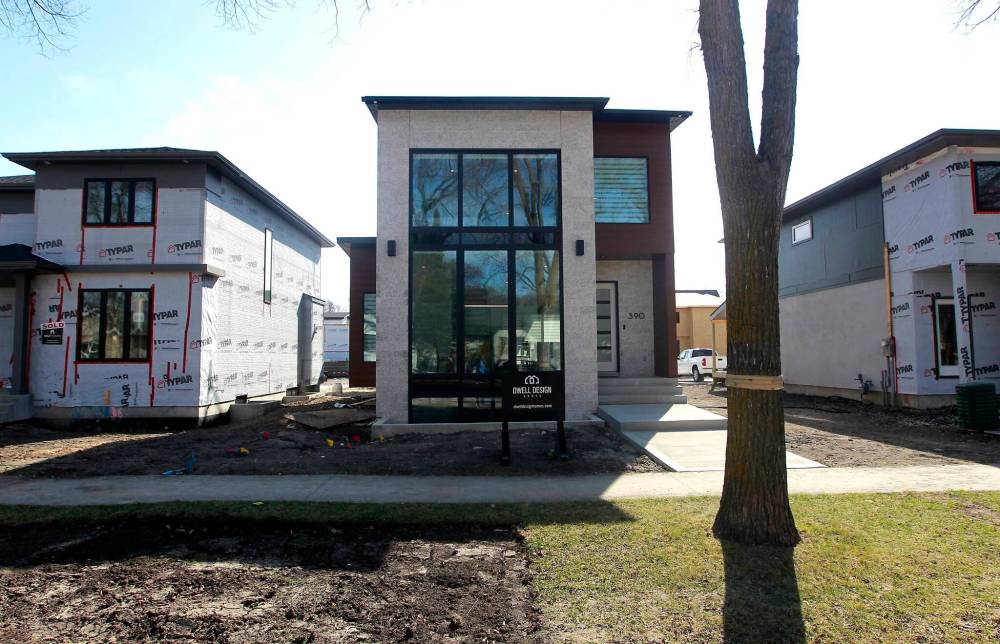
BORIS MINKEVICH / WINNIPEG FREE PRESS FILES
The changes would mean certain types of developments — such as four units on a single lot — would be permitted “as-of-right,” removing the current requirement for potentially time-consuming zoning or variance applications.
“We are at a place in our city where we are in significant need of housing,” Gillingham said. “We see our population continue to grow… To make more housing possible, to get it built faster, (the federal government wants) to remove conditions and exclusionary zoning.”
“To make more housing possible, to get it built faster, (the federal government wants) to remove conditions and exclusionary zoning.”–Mayor Scott Gillingham
Winnipeg has submitted a $192-million application to the federal government’s Housing Accelerator Fund, which aims to add an extra 5,277 local housing units by September 2026, including 1,342 affordable ones.
In a recent letter, federal Housing Minister Sean Fraser asked Gillingham to “bolster” the city’s application by “putting an end to exclusionary zoning practices.”
As a result, Gillingham will ask council to approve the following:
- legalizing the construction of up to four housing units on a single lot “as-of-right” city-wide;
- legalizing buildings of up to four-storeys “as-of-right” at any site within 800 metres of frequent transit corridors;
- ensuring that new mid-rise housing targeted for mall sites and commercial corridors is allowed “as-of-right.”
The “as-of-right” term means such developments would be permitted in the noted areas, removing the current requirement to have a potentially time-consuming zoning or variance application approved by a city committee and complete a public hearing before each one can proceed.
“There’s a very good likelihood that the City of Winnipeg would receive significant funding if we agree to these conditions,” said Gillingham.
However, at least one council member plans to vote against the changes.
“It just completely wipes out all of the public consultation that has been done over at least a couple of years, at least in my ward… on the (city’s) infill guidelines. The height limits are gone, the density limits are gone, all of that. We’ve just wasted the public’s time on two major exercises,” said Coun. Brian Mayes.
After an extended debate, the city imposed broad infill guidelines for mature communities in 2021.
Mayes said removing public hearings will eliminate residents’ chances to weigh in on projects. It will also stop elected officials from imposing conditions that can help mitigate their impact on neighbours, such as adjustments to building size and placement, he added.
“This is just going into every (mature) residential neighbourhood… and (saying), ‘We don’t care what the public thinks, we’re going to justify tear downs,’” said Mayes.
“This is just going into every (mature) residential neighbourhood… and (saying), ‘We don’t care what the public thinks, we’re going to justify tear downs.’”–Coun. Brian Mayes
When asked if he’s concerned the zoning changes could reduce input and oversight, Gillingham said he expects robust debate on the matter.
“For sure, there would be some give and take…,” he said. “(But) to adopt these conditions does not mean that immediately we’re going to have fourplexes going up all across the city in every neighbourhood in the next year to two years.
“What we do know is that we need housing and right now it’s, in some cases, taking too long to get development projects off the ground.”

A developers’ association said the changes would remove steps that can slow down the application process for many projects.
“This will, if implemented, make infill starts easier…,” said Lanny McInnes, president of the Manitoba Home Builders’ Association. “It would definitely streamline the approval process and would make the decision to invest in those types of housing starts far more certain than under the current situation.”
McInnes said the changes would support the city’s goal to ensure 50 per cent of all new homes built by 2030 are infill projects.
If council approves the changes, bylaw changes would be required.
joyanne.pursaga@freepress.mb.ca
Joyanne is city hall reporter for the Winnipeg Free Press. A reporter since 2004, she began covering politics exclusively in 2012, writing on city hall and the Manitoba Legislature for the Winnipeg Sun before joining the Free Press in early 2020. Read more about Joyanne.
Every piece of reporting Joyanne produces is reviewed by an editing team before it is posted online or published in print — part of the Free Press‘s tradition, since 1872, of producing reliable independent journalism. Read more about Free Press’s history and mandate, and learn how our newsroom operates.
Our newsroom depends on a growing audience of readers to power our journalism. If you are not a paid reader, please consider becoming a subscriber.
Our newsroom depends on its audience of readers to power our journalism. Thank you for your support.
Joyanne is city hall reporter for the Winnipeg Free Press. A reporter since 2004, she began covering politics exclusively in 2012, writing on city hall and the Manitoba Legislature for the Winnipeg Sun before joining the Free Press in early 2020. Read more about Joyanne.
Every piece of reporting Joyanne produces is reviewed by an editing team before it is posted online or published in print — part of the Free Press‘s tradition, since 1872, of producing reliable independent journalism. Read more about Free Press’s history and mandate, and learn how our newsroom operates.
Our newsroom depends on a growing audience of readers to power our journalism. If you are not a paid reader, please consider becoming a subscriber.
Our newsroom depends on its audience of readers to power our journalism. Thank you for your support.
Related Articles
Feds unlock more properties to build homes




Advertisement Advertise With Us
Advertisement Advertise With Us