

NATO head says violence in Kosovo unacceptable while calling for constructive dialogue with Serbia
Advertisement
Read this article for free:
or
Already have an account? Log in here »
To continue reading, please subscribe:

Digital Subscription
One year of digital access for only $205*
- Enjoy unlimited reading on winnipegfreepress.com
- Read the E-Edition, our digital replica newspaper
- Access News Break, our award-winning app
- Play interactive puzzles
*First annual payment billed as $205.00 + GST for one year. This annual subscription will automatically renew at $233.00 + GST every 52 weeks (10% off the regular annual price of $259.35). Offer available to new and qualified returning subscribers only. Cancel any time.
To continue reading, please subscribe:
Add Free Press access to your Brandon Sun subscription for only an additional
$1 for the first 4 weeks*
- Enjoy unlimited reading on winnipegfreepress.com
- Read the E-Edition, our digital replica newspaper
- Access News Break, our award-winning app
- Play interactive puzzles
*Your next Brandon Sun subscription payment will increase by $1.00 and you will be charged $17.95 plus GST for four weeks. After four weeks, your payment will increase to $24.95 plus GST every four weeks.
Read unlimited articles for free today:
or
Already have an account? Log in here »
Hey there, time traveller!
This article was published 21/11/2023 (1055 days ago), so information in it may no longer be current.
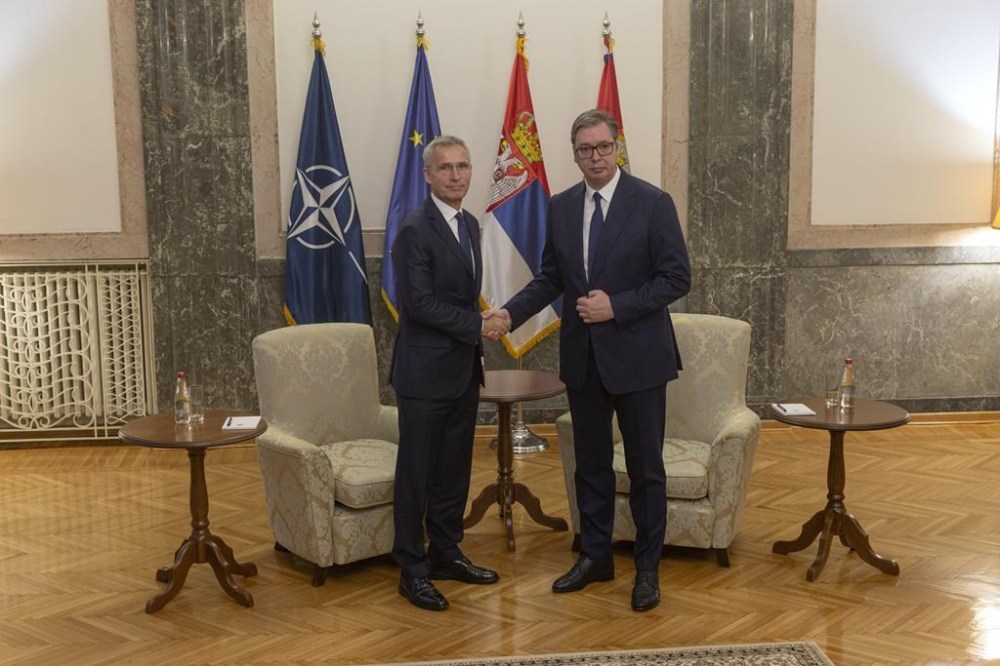
BELGRADE, Serbia (AP) — NATO Secretary General Jens Stoltenberg said Tuesday that the recent violent outbreaks in Kosovo were unacceptable and perpetrators must be brought to justice.
“I count on all sides to reduce tensions and to refrain from escalatory actions,” he said during a visit to Serbia’s capital Belgrade, after his stops in Bosnia and Kosovo, on the second day of his trip in the Western Balkans.
Stoltenberg’s trip reflects Western concerns over the stability of the volatile Balkan region that went through a series of wars in the 1990s.
Serbia and Kosovo witnessed a spike in tension following two violent incidents in May and September as the war raged in Ukraine. Western allies fear Russia could try to spur Balkan trouble to avert attention from its aggression on Ukraine.
In May, Serb demonstrators in northern Kosovo clashed with NATO peacekeeping troops. In September, a Kosovo policeman and three Serb gunmen were killed in a shootout after about 30 masked men opened fire on a police patrol near the Kosovo village of Banjska.
The incidents have prompted NATO to strengthen its peacekeeping presence in Kosovo. Stoltenberg said on Monday that NATO was considering deploying additional peacekeeping troops.
The NATO head said in Belgrade that some of the 93 troops wounded in clashes with Serb demonstrators had “life-changing injuries.”
“This is unacceptable, the facts must be established. The perpetrators must face justice,” said Stoltenberg. “I welcome that Serbia is prepared to cooperate in these efforts.”
Stoltenberg also urged Serbia and Kosovo to engage “constructively” in a European Union-mediated dialogue that is aimed at normalizing relations between the former foes. Serbia does not recognize Kosovo’s 2008 declaration of independence.
Both Serbia and Kosovo have been warned by EU diplomats that refusal to compromise jeopardized their chances of joining the EU.
Serbia’s President Aleksandar Vucic said at a joint press conference with Stoltenberg that tensions in Kosovo were the result of increased pressure by the government there on the ethnic Serb minority.
Only Serbs “are under threat in Kosovo,” Vucic insisted.
Serbia has pledged to prosecute the alleged ringleader of the armed group behind the September shootout in Kosovo. Belgrade has denied allegations it orchestrated the incident.
Stoltenberg also called for increased cooperation with Serbia and the resumption of joint military training exercises, saying that NATO respected Serbia’s decision to remain militarily neutral.
Belgrade has maintained friendly relations with Russia and refused to join Western sanctions against Moscow, which has backed its bid to retain claim on Kosovo.
Later Tuesday, Stoltenberg traveled to North Macedonia, a NATO member since 2020, which he praised as a valued ally.
At a press conference in the capital, Skopje, with North Macedonia’s Prime Minister Dimitar Kovachevski, Stoltenberg said the security of the Western Balkans is vital to NATO. He added that “authoritarian states are seeking to undermine our freedom and way of life, including here in Western Balkans.”
Stoltenberg also addressed North Macedonia’s parliament. On Wednesday, he will host a meeting in Skopje with the leaders of all Western Balkan NATO members.