US agency takes first step toward requiring new vehicles to prevent drunk or impaired driving

Advertisement

Advertise with us

DETROIT (AP) — U.S. auto safety regulators say they have taken the first step toward requiring devices in vehicles that prevent drunk or impaired driving.

Read this article for free:


or

Already have an account? Log in here »

To continue reading, please subscribe:

Subscribe and receive a limited-edition Free Press branded hat or tote.

Digital Subscription

One year of digital access for only $205*

  • Enjoy unlimited reading on winnipegfreepress.com
  • Read the E-Edition, our digital replica newspaper
  • Access News Break, our award-winning app
  • Play interactive puzzles

*First annual payment billed as $205.00 + GST for one year. This annual subscription will automatically renew at $233.00 + GST every 52 weeks (10% off the regular annual price of $259.35). Offer available to new and qualified returning subscribers only. Cancel any time.

To continue reading, please subscribe:

Add Free Press access to your Brandon Sun subscription for only an additional

$1 for the first 4 weeks*

  • Enjoy unlimited reading on winnipegfreepress.com
  • Read the E-Edition, our digital replica newspaper
  • Access News Break, our award-winning app
  • Play interactive puzzles
Start now

*Your next Brandon Sun subscription payment will increase by $1.00 and you will be charged $17.95 plus GST for four weeks. After four weeks, your payment will increase to $24.95 plus GST every four weeks.

Hey there, time traveller!
This article was published 12/12/2023 (1016 days ago), so information in it may no longer be current.

DETROIT (AP) — U.S. auto safety regulators say they have taken the first step toward requiring devices in vehicles that prevent drunk or impaired driving.

The National Highway Traffic Safety Administration announced on Tuesday that it is starting the process to put a new federal safety standard in place requiring the technology in all new passenger vehicles.

Such devices were required in the Bipartisan Infrastructure Law that was passed by Congress in 2021.
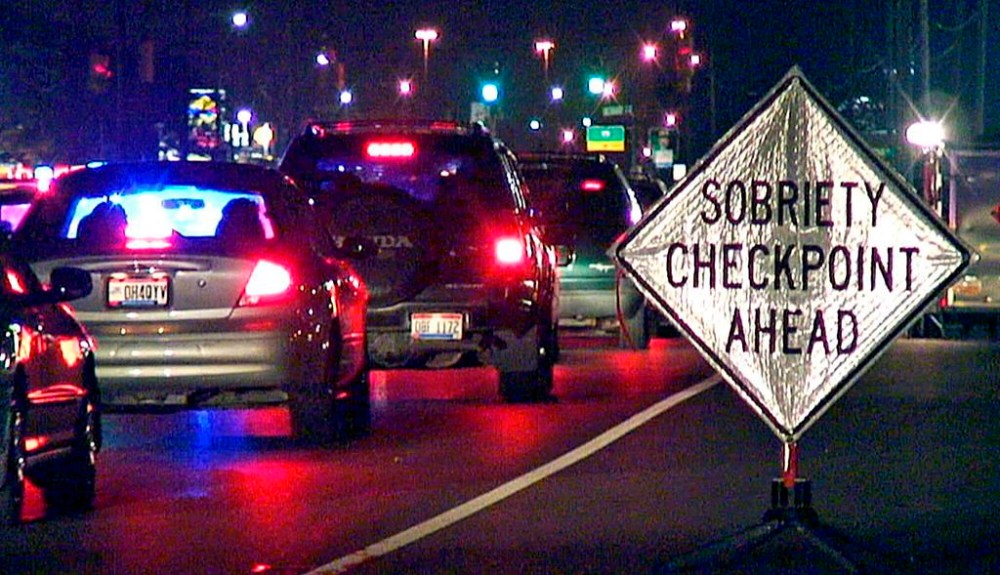
FILE - A sign warns motorists as they approach a sobriety checkpoint on State Route 4 in Fairfield, Ohio June 15, 2007. U.S. auto safety regulators say they have taken the first step toward requiring devices in vehicles that prevent drunk or impaired driving. The National Highway Traffic Safety Administration announced on Tuesday, Dec. 12, 2023, that it is starting the process to put a new federal safety standard in place requiring the technology in all new passenger vehicles. (AP Photo/The Enquirer, Glenn Hartong, File)/The Cincinnati Enquirer via AP, File)

The agency says an advance notice of proposed rule making will help it gather information about the state of technology to detect impaired driving. The regulation would set standards for the devices once technology is mature, NHTSA said in a statement.

It can take years for a regulation to make its way through the process, which includes public comment periods.

In 2021, the latest year for which statistics are available, nearly 13,400 people were killed in drunken driving crashes, costing society $280 billion in medical expenses, lost wages and loss of quality of life, the statement said.

Alcohol-impaired crash deaths hit nearly a 15-year high in December of 2021 with more than 1,000 people dying.

“It’s going to keep drunk drivers off the road and we’re going to keep people from dying because somebody’s drunk,” U.S. Rep. Debbie Dingell, a Michigan Democrat who pushed for the regulation. “This is going to be simple technology.”

The Alliance for Automotive Innovation, an industry trade group, said in a statement that it is reviewing the NHTSA announcement and that automakers are working to make vehicles safer.

In 2022, the National Transportation Safety Board recommended to NHTSA that all new vehicles in the U.S. be equipped with alcohol monitoring systems that can stop an intoxicated person from driving.

NHTSA and a group of 16 automakers have been jointly funding research on alcohol monitoring, forming a group called Driver Alcohol Detection System for Safety.

The group is researching technology that would automatically test a driver’s breath for alcohol and stop a vehicle from moving if the driver is impaired. The driver wouldn’t have to blow into a tube, and a sensor would check the driver’s breath.

Another company is working on light technology that could test for blood alcohol in a person’s finger, the group has said.

NHTSA and law enforcement agencies on Tuesday announced their annual “Drive Sober or Get Pulled Over” enforcement campaign for the holiday season. Increased enforcement will run from Dec. 13 through Jan. 1.
Report Error Submit a Tip

More Stories

Far-right gaining foothold in Germany

Kyle Volpi Hiebert 5 minute read 2:00 AM CDT

“Europe is going through a version of sophisticated state failure,” an analyst told the New York Times after the ultranationalist Alternative für Deutschland (AfD) won state-level elections on Sept. 6. By capturing 39 of 83 parliamentary seats in Saxony-Anhalt, a poorer area of east Germany with two million people, it’s closer to power than any German far-right party since the Nazi era.

It then finished first in the state of Mecklenburg-Western Pomerania on Sept. 20, securing 38 per cent of votes. In both places, the AfD must now coax others to form a coalition government to formally assume office. Opposition groups have vowed to form a firewall against it, though their resolve may fade over time.

Yet no matter what happens next in either region, the AfD’s victories mark a major milestone. Leading in national polls, the party — already the official opposition in the Bundestag — has shattered the notion it’s unelectable given Germany’s dark history.

Politics in Europe’s anchor nation could be transformed in short order. Seven more of Germany’s 16 states head to the polls over the next two years. Federal elections are slated for early 2029.

Post-secondary leaders to discuss cross-campus collaborations

Maggie Macintosh 4 minute read Preview

Post-secondary leaders to discuss cross-campus collaborations

Maggie Macintosh 4 minute read Yesterday at 2:00 AM CDT

The artificial intelligence boom is inducing panic about the makeup of Manitoba’s future workforce and influencing new post-secondary application trends.

What remains a constant, says the economist who oversees the University of Manitoba, is the often-overlooked value of a liberal arts degree.

“I’ve always believed in it being a foundation for lifelong learning,” said Michael Benarroch, president and vice-chancellor of the largest post-secondary institute in the province.

“Even more so, in a world of AI, where AI is going to do certain tasks, I think humanities education and social sciences education is going to become even more important.”

Read
Yesterday at 2:00 AM CDT

Kinew, NDP rise to new heights in Free Press-Abacus Data poll; support for Khan, Tories falls further

Chris Kitching 6 minute read Preview

Kinew, NDP rise to new heights in Free Press-Abacus Data poll; support for Khan, Tories falls further

Chris Kitching 6 minute read Monday, Sep. 21, 2026

Buoyed by a bump outside Winnipeg, support for Premier Wab Kinew’s NDP climbed to its highest level yet, while the Tories lost some ground.

Read
Monday, Sep. 21, 2026

Labour leaders, councillors urge Wyatt to reconsider re-election bid

Malak Abas 5 minute read Preview

Labour leaders, councillors urge Wyatt to reconsider re-election bid

Malak Abas 5 minute read Updated: Yesterday at 7:29 PM CDT

City councillors and labour leaders called on incumbent Transcona councillor Russ Wyatt to reconsider his decision to seek re-election while facing sexual assault charges.

A day after the longtime councillor announced he would be running again, the Canadian Union of Public Employees Local 500 and the Winnipeg Labour Council, joined by Couns. Cindy Gilroy and Evan Duncan, told reporters Wyatt would not be able to serve Transcona while fighting multiple sexual assault charges in court and should step aside.

The community of Transcona, traditionally known for its working-class roots, has “been through enough drama,” the president of the city’s largest union said.

“I am not declaring him guilty of anything, the courts will decide that, and his lawyer says that he is innocent. I’m stating a plain fact about capacity. Every hour spent on legal defence is an hour not spent on Transcona,” CUPE 500 president Patrick Troughton said at city hall Tuesday afternoon.

Read
Updated: Yesterday at 7:29 PM CDT

Councillor facing sex charges running for re-election

Morgan Modjeski 2 minute read Preview

Councillor facing sex charges running for re-election

Morgan Modjeski 2 minute read Monday, Sep. 21, 2026

A Winnipeg city councillor who faces sexual assault charges says he is running for re-election.

A day before Tuesday’s deadline, Russ Wyatt registered to run in the Transcona ward where he has served five terms and to which he was first elected in 2002.

“After much reflection, I have decided to stand for re-election in the Winnipeg municipal election,” Wyatt said in a statement Monday.

“Time and time again, I have stood up to the powers that be, and they would love to get rid of me. But I see the mess this city is in today, with the disastrous new bus routes, ever rising water bills, developer largesse, and poverty in our streets,” he said.

Read
Monday, Sep. 21, 2026

Accept the fact you’re a sensitive soul

Maureen Scurfield 6 minute read Yesterday at 2:00 AM CDT

DEAR MISS LONELYHEARTS: I’m 30, and recently met a girl eight years younger than I am. While we had a great time the first weeks going out for dinners, to the bar and back to my place to make love, she’s now thrown up a big wall!

She left very early in the morning yesterday. I yelled that I wanted to see her again real soon, as she went out the door. But she hasn’t replied to my texts or phone calls since! I’ve reached out, four or five times. I feel like I’m doing something wrong, but I can’t help feeling a lot for her! What should I do?

— Longing for More, River Heights

Dear Longing: Stop trying to reconnect now. By not replying, she’s telling you she’s not interested. You don’t need more of this rejection pain in your life, and you don’t need all this uncertainty and obsessing.