

Japan and ASEAN bolster ties at a summit focused on security and economy amid tensions with China
Advertisement
Read this article for free:
or
Already have an account? Log in here »
To continue reading, please subscribe:

Digital Subscription
One year of digital access for only $205*
- Enjoy unlimited reading on winnipegfreepress.com
- Read the E-Edition, our digital replica newspaper
- Access News Break, our award-winning app
- Play interactive puzzles
*First annual payment billed as $205.00 + GST for one year. This annual subscription will automatically renew at $233.00 + GST every 52 weeks (10% off the regular annual price of $259.35). Offer available to new and qualified returning subscribers only. Cancel any time.
To continue reading, please subscribe:
Add Free Press access to your Brandon Sun subscription for only an additional
$1 for the first 4 weeks*
- Enjoy unlimited reading on winnipegfreepress.com
- Read the E-Edition, our digital replica newspaper
- Access News Break, our award-winning app
- Play interactive puzzles
*Your next Brandon Sun subscription payment will increase by $1.00 and you will be charged $17.95 plus GST for four weeks. After four weeks, your payment will increase to $24.95 plus GST every four weeks.
Read unlimited articles for free today:
or
Already have an account? Log in here »
Hey there, time traveller!
This article was published 16/12/2023 (1015 days ago), so information in it may no longer be current.
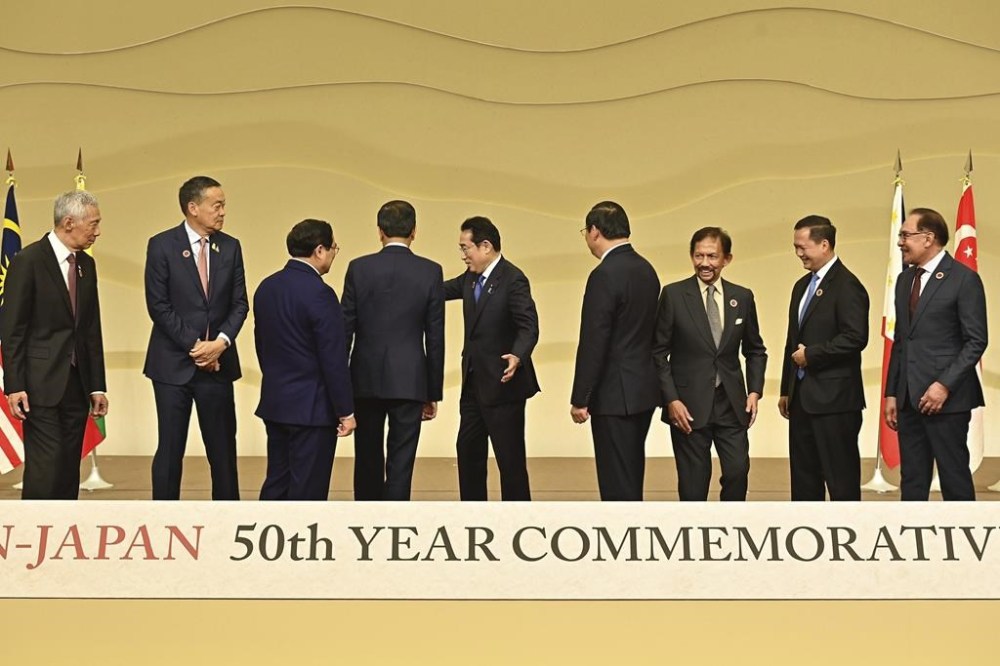
TOKYO (AP) — Leaders from Japan and the Association of Southeast Asian Nations, at a special summit in Tokyo on Sunday, adopted a joint vision that emphasizes security and economic cooperation while respecting the rule of law, amid growing tensions with China in regional seas.
Ties between Japan and the 10-member ASEAN bloc used to be largely based on Japanese assistance to the developing economies, in part due to lingering bitterness over Japan’s wartime actions. But in recent years the relationship has focused more on security amid China’s growing assertiveness in the South China Sea, while Japan’s postwar pacifist stance and trust-building efforts have fostered friendlier relations.
The summit marks the 50th anniversary of official Japan-ASEAN ties, which started in 1973 with trade talks over Japanese synthetic rubber exports
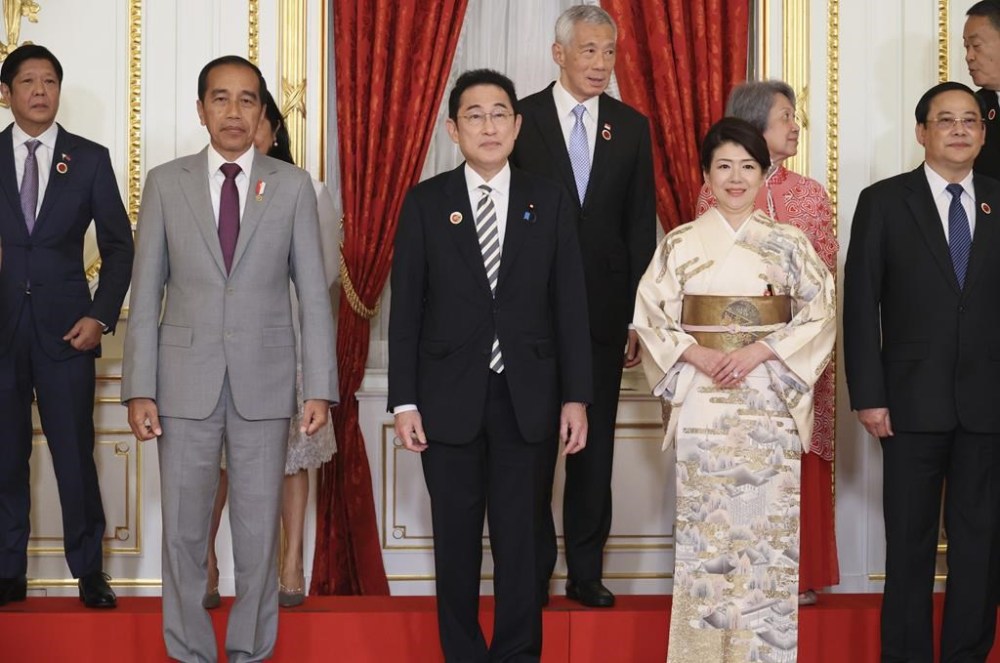
The leaders, in a joint statement, called for strengthening their “mutually beneficial” partnership and working together for peace and stability in the Indo-Pacific, especially in maritime security. They also called for economic security and greater supply chain resilience for the region and to promote the movement of one another’s nationals.
“We affirm the shared view to promote a rules-based Indo-Pacific region that is free and open (and) embraces key principles such as ASEAN’s unity and centrality, inclusiveness (and) transparency,” according to the joint statement.
The leaders stressed “respect for sovereignty and territorial integrity, settlement of differences or disputes by peaceful means and renunciation of the threat or use of force.”
They did not specifically mention China. During the summit meeting, they raised concerns over the “situation in East and South China Sea” and noted the importance of upholding international law, the Japanese Foreign Ministry said in a statement.
The leaders adopted an implementation plan for 130 projects. Japan called for stepping up security and defense cooperation, such as arms technology and equipment transfers, cybersecurity and tackling disinformation. Tokyo also pledged to reinforce support for efforts against climate change, green technology and digital transformation, as well as investment, including in the region’s automotive industry.
“As divisions and confrontations deepen and the world faces compounded crises, Japan will tackle the issues together with ASEAN, which is the linchpin of a ‘free and open Indo-Pacific,” Japanese Prime Minister Fumio Kishida told a joint news conference with Indonesian President Joko Widodo, this year’s ASEAN chair.
“Based on our mutual trust, we will tackle new issues, and contribute to peace and prosperity of the region in order to create a world where people can benefit while their dignity is respected.”
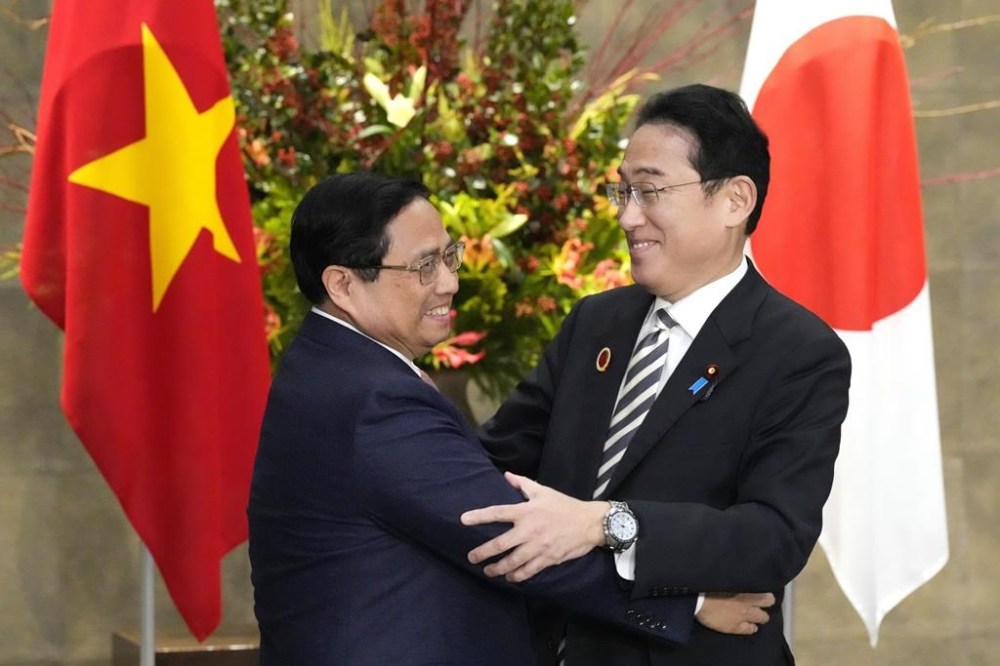
Japan adopted a new security strategy last year and has been rapidly building up its military and expanding its military partnerships to better counter China’s growing assertiveness in the region.
On Saturday, on the sidelines of the summit, Kishida held a series of bilateral talks as Japan seeks to step up bilateral security ties with ASEAN countries.
Kishida and his Malaysian counterpart, Anwar Ibrahim, signed a 400 million yen ($2.8 million) deal to bolster Malaysia’s maritime security capability as part of a Japanese official security assistance program specifically for militaries of friendly nations to help strengthen their law enforcement and security capabilities.
The assistance includes provisions of rescue boats and other equipment to help improve the military capability of Malaysia, which sits at a crucial location on sea lanes connecting the Indian Ocean and East Asia and serves a vital role in warning and surveillance operations for the entire region.
Separately on Saturday, Kishida signed a deal with Widodo, offering a grant of up to 9.05 billion yen ($63.7 million) to fund Indonesia’s maritime security capability advancement plan, including a Japanese-built large-scale maritime patrol boat.
In November, Japan announced a provision of coastal surveillance radars to the Philippine navy, and the two sides also agreed to start talks for a key defense pact called the Reciprocal Access Agreement designed to smooth their troops’ entry into each other’s territory for joint military exercises. On Sunday, Japan and the Philippines signed an agreement to strengthen cooperation between their coast guards.
Also last month, Japan and Vietnam agreed to elevate the status of their relationship to a top-level comprehensive strategic partnership, under which they will discuss details of a possible deal to broaden their defense cooperation.
But ASEAN countries are not in lockstep in their stance toward China, with which many have strong ties and are reluctant to choose sides. Japanese officials say they are mindful of the situation.
On Monday, Japan also hopes to push forward energy cooperation with ASEAN leaders at a summit for the Asian Zero Emission Community initiative. Australian Prime Minister Anthony Albanese is expected to join online.