

A volcano erupts in southwestern Iceland and spews magma in a spectacular show of Earth’s power
Advertisement
Read this article for free:
or
Already have an account? Log in here »
To continue reading, please subscribe:

Digital Subscription
One year of digital access for only $205*
- Enjoy unlimited reading on winnipegfreepress.com
- Read the E-Edition, our digital replica newspaper
- Access News Break, our award-winning app
- Play interactive puzzles
*First annual payment billed as $205.00 + GST for one year. This annual subscription will automatically renew at $233.00 + GST every 52 weeks (10% off the regular annual price of $259.35). Offer available to new and qualified returning subscribers only. Cancel any time.
To continue reading, please subscribe:
Add Free Press access to your Brandon Sun subscription for only an additional
$1 for the first 4 weeks*
- Enjoy unlimited reading on winnipegfreepress.com
- Read the E-Edition, our digital replica newspaper
- Access News Break, our award-winning app
- Play interactive puzzles
*Your next Brandon Sun subscription payment will increase by $1.00 and you will be charged $17.95 plus GST for four weeks. After four weeks, your payment will increase to $24.95 plus GST every four weeks.
Read unlimited articles for free today:
or
Already have an account? Log in here »
Hey there, time traveller!
This article was published 18/12/2023 (1000 days ago), so information in it may no longer be current.
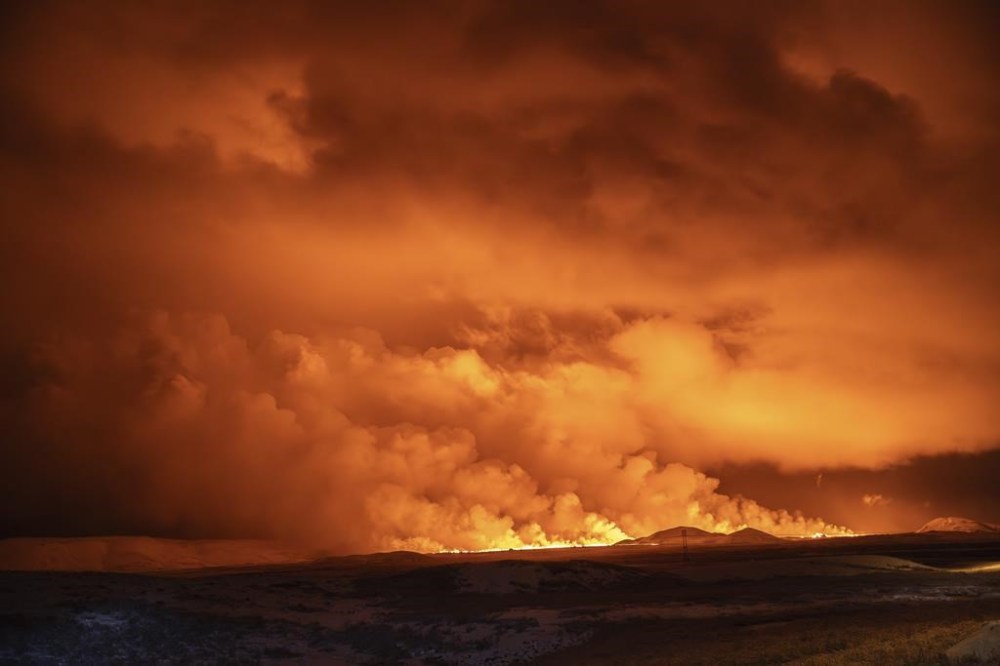
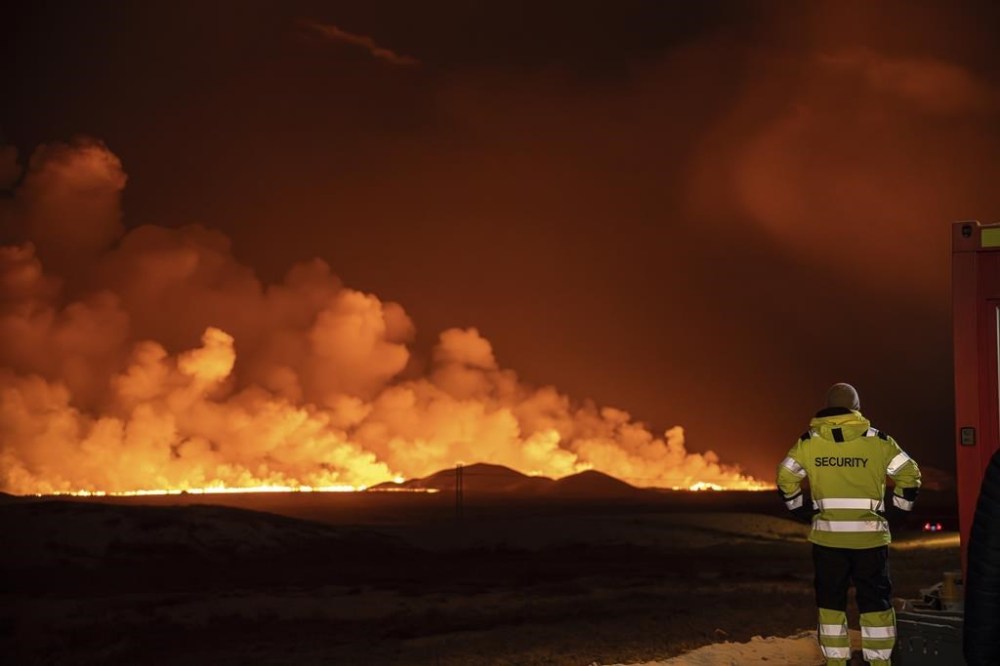
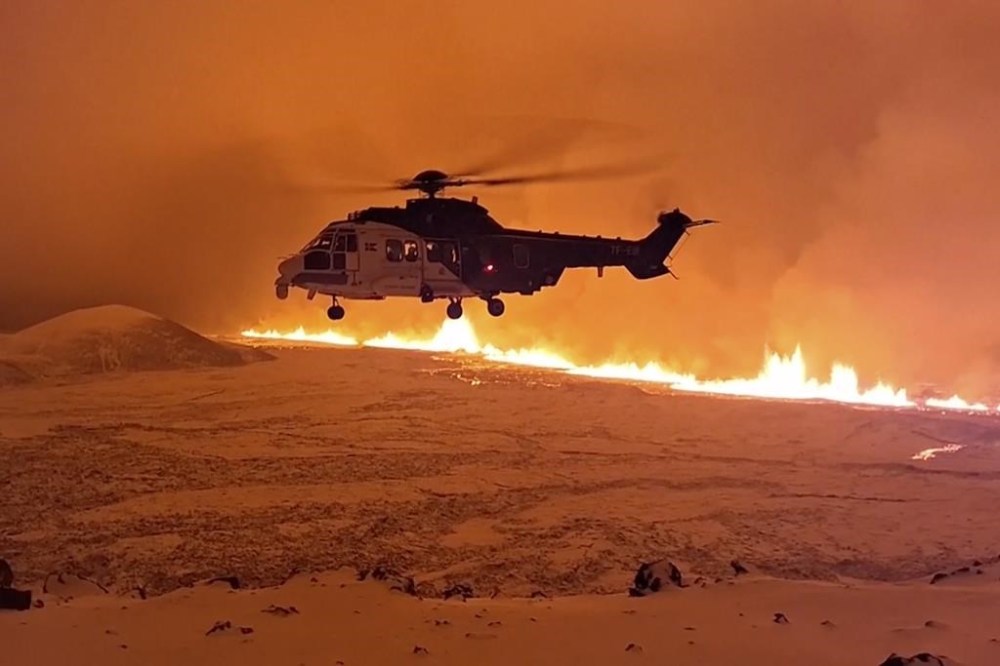
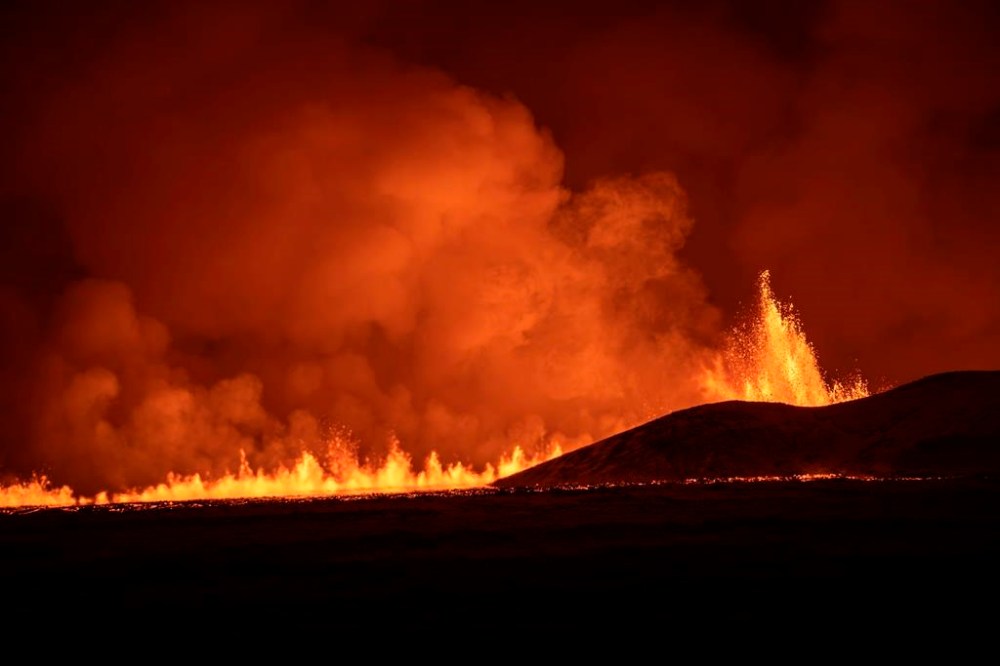
GRINDAVIK, Iceland (AP) — A volcano has erupted in southwestern Iceland, sending a flash of light into the evening sky and spewing semi-molten rock into the air in a spectacular show of the Earth’s power in the land known for fire and ice.
The eruption Monday night appears to have occurred about four kilometers (2 1/2 miles) from the town of Grindavik, the Icelandic Meteorological Office said. The town near Iceland’s main airport was evacuated in November after strong seismic activity damaged homes and raised fears of an imminent eruption.
Iceland, which sits above a volcanic hot spot in the North Atlantic, averages an eruption every four to five years. The most disruptive in recent times was the 2010 eruption of the Eyjafjallajokull volcano, which spewed huge clouds of ash into the atmosphere and led to widespread airspace closures over Europe.
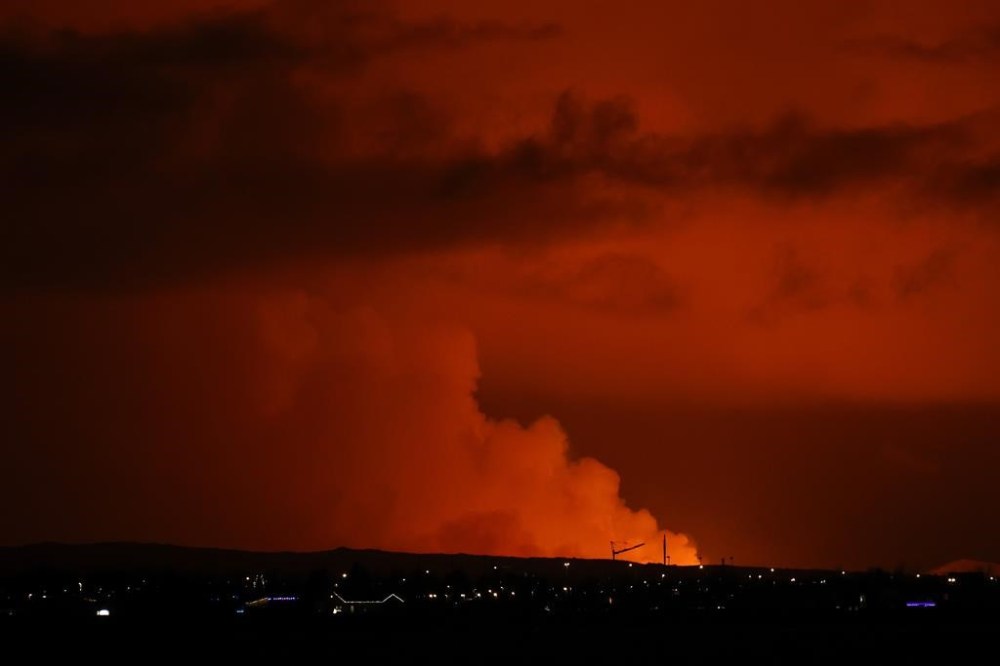
But the eruption on the Reykjanes Peninsula, about 50 kilometers (31 miles) southwest of the capital, Reykjavik, wasn’t expected to release large amounts of ash into the air. Iceland’s foreign minister, Bjarne Benediktsson, tweeted that there were no disruptions of flights to and from the country, and international flight corridors remained open.
Icelandic broadcaster RUV showed a live feed of the eruption on its website. Christmas carols played in the background.
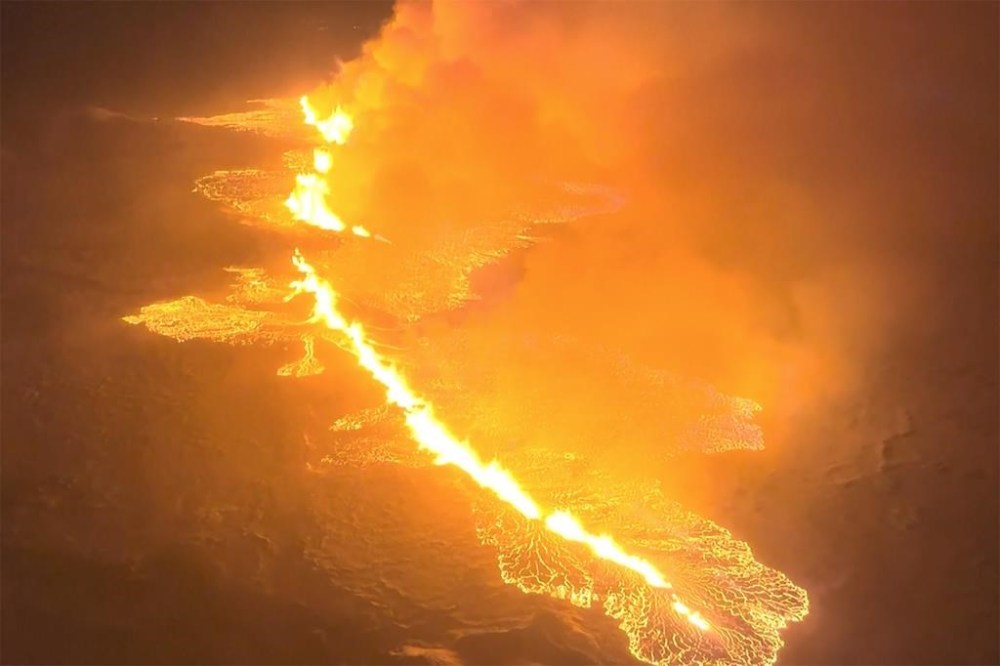
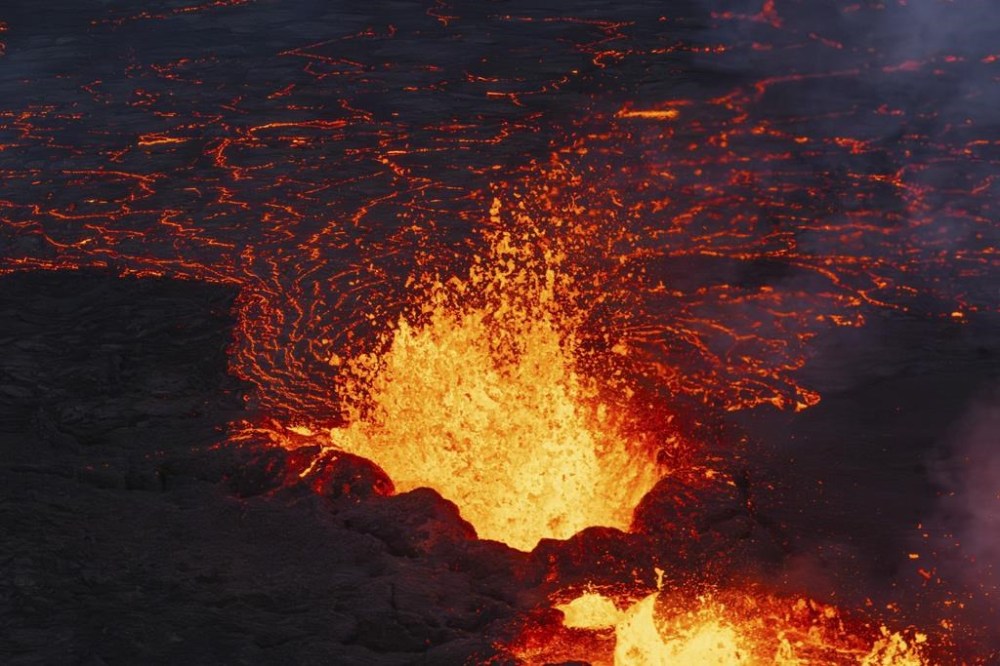
By early Tuesday afternoon, the Icelandic Meteorological Office reported that the size of the volcanic eruption at Sundhnuksgígar “continues to diminish.” It said the lava flow was estimated to be a quarter of what it was at the time of the eruption. Lava ”fountains,” which reached as high as 30 meters (yards) have also been falling.
Prime Minister Katrin Jakobsdottir told RUV that for now, the lava was not endangering critical infrastructure near the volcano. Although the lava flow was moving in a promising direction, precautions were nevertheless being taken near the Svartsengi power plant.
“We also know that the flow of lava can change the surrounding landscape, so this can change with short notice,” Jakobsdottir said.
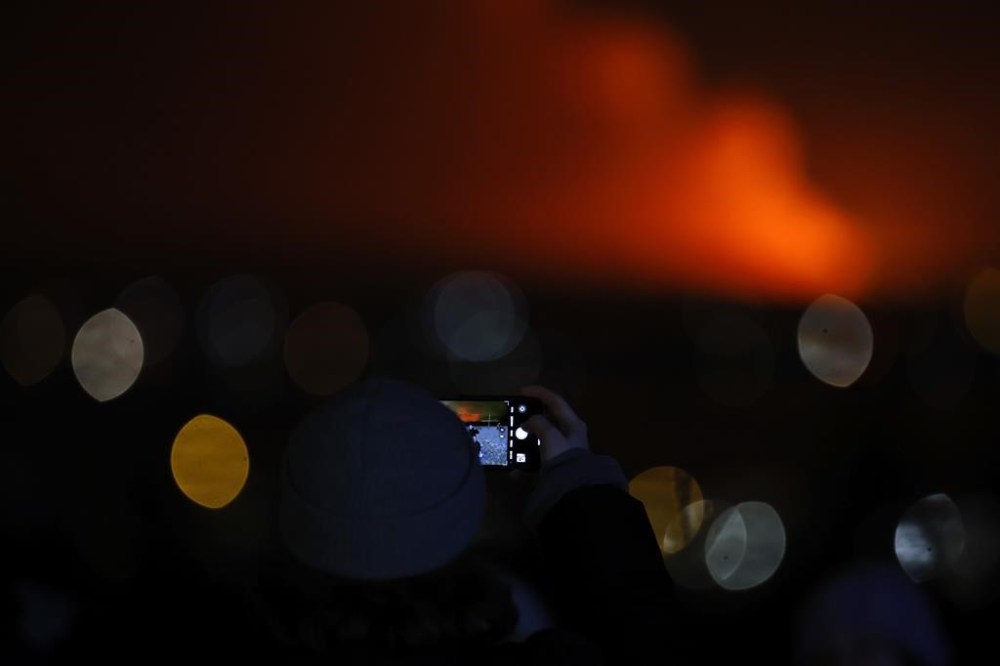
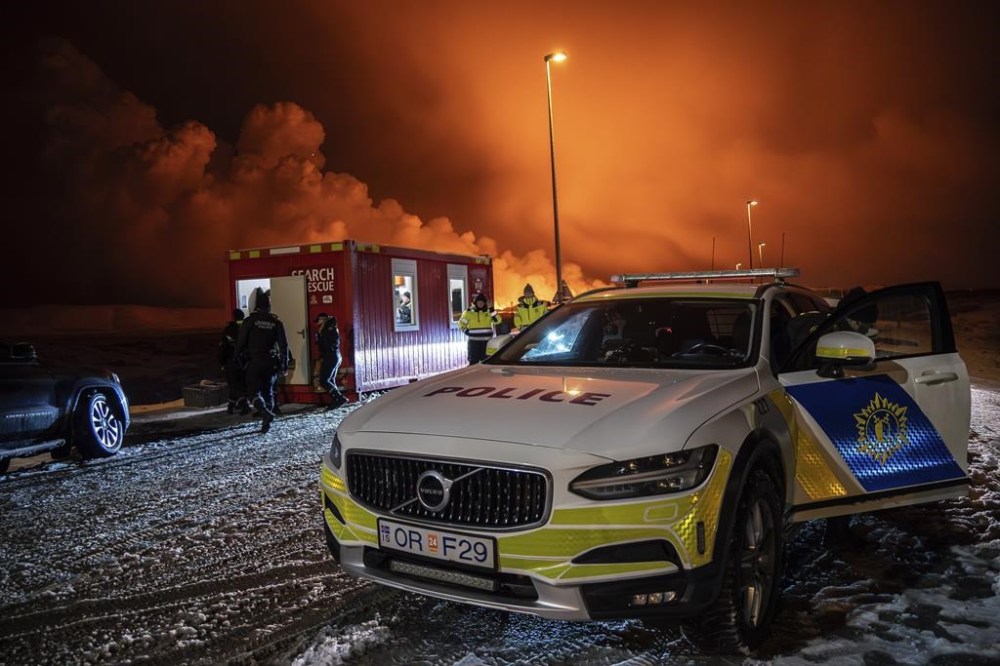
The November evacuation of Grindavik meant few people were near the site of eruption when it occurred, and authorities have warned others to stay away. The nearby Blue Lagoon geothermal spa — one of Iceland’s biggest tourist attractions — also closed temporarily last month as a swarm of earthquakes put the island nation on alert for a possible volcanic eruption.
Nonetheless, the residents of the evacuated fishing community of 3,400 had mixed emotions as they watched orange flames touch the dark sky. One month after the evacuation, many are still living in temporary accommodations and don’t expect to ever be able to return to live in their homes.
“The town involved might end up under the lava,” said Ael Kermarec, a French tour guide living in Iceland. “It’s amazing to see but, there’s kind of a bittersweet feeling at the moment.”
Magnus Tumi Gudmundsson, a scientist who flew over the site on Tuesday morning on a coast guard research flight, told RUV that he estimates twice as much lava had already spewed than did during the entire monthlong eruption on the peninsula over the summer.
Gudmundsson said the eruption was expected to continue decreasing in intensity, but that scientists have no idea how long it could last.
“It can be over in a week, or it could take quite a bit longer,” he said.
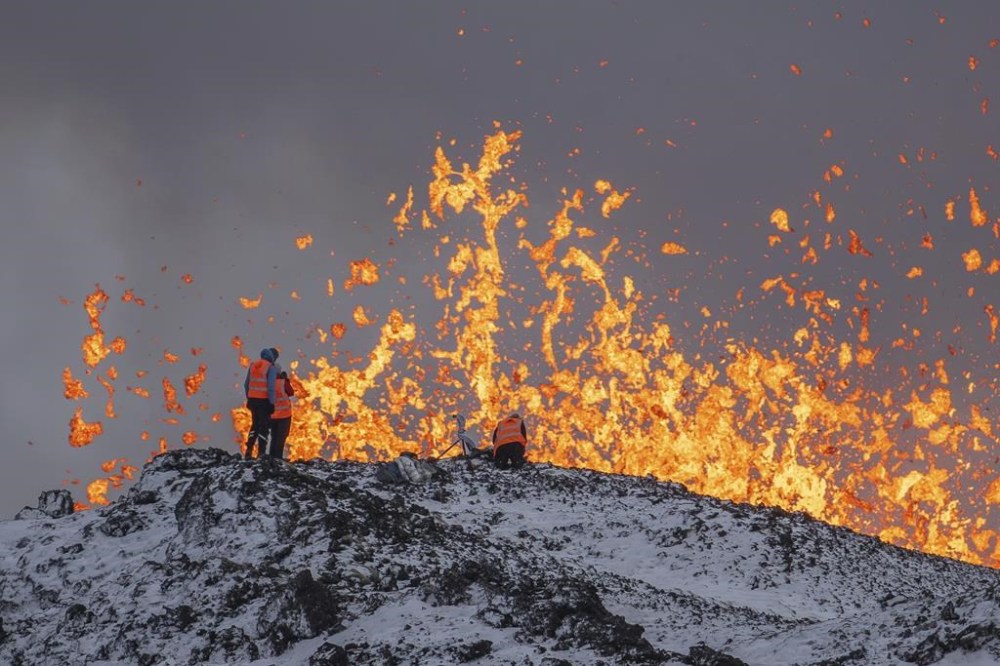
Matthew Watson, a professor of volcanoes and climate at the University of Bristol, said that tourists should strictly follow travel advice because hazards such as new eruptions can quickly put people in harm’s way.
“As is common with this eruptive style, it began with a sustained eruption of ballistics that, over time, has lengthened to form a fire curtain — a long fissure out of which lava is being violently ejected,” he said. “This style of eruption is amongst the most spectacular ever seen, and there will be a strong pull for tourists, even though the Blue Lagoon complex has again shut.”
The spectacular natural phenomenon is already proving hard for people to resist.
“It’s just something from a movie!” said Robert Donald Forrester III, a tourist from the United States.
___
David Keyton reported from Stockholm.
Related Articles
What we know so far about the volcanic eruption in Iceland
Advertisement Advertise With Us
Advertisement Advertise With Us