

Australia and New Zealand leaders seek closer defense ties
Advertisement
Read this article for free:
or
Already have an account? Log in here »
To continue reading, please subscribe:

Digital Subscription
One year of digital access for only $205*
- Enjoy unlimited reading on winnipegfreepress.com
- Read the E-Edition, our digital replica newspaper
- Access News Break, our award-winning app
- Play interactive puzzles
*First annual payment billed as $205.00 + GST for one year. This annual subscription will automatically renew at $233.00 + GST every 52 weeks (10% off the regular annual price of $259.35). Offer available to new and qualified returning subscribers only. Cancel any time.
To continue reading, please subscribe:
Add Free Press access to your Brandon Sun subscription for only an additional
$1 for the first 4 weeks*
- Enjoy unlimited reading on winnipegfreepress.com
- Read the E-Edition, our digital replica newspaper
- Access News Break, our award-winning app
- Play interactive puzzles
*Your next Brandon Sun subscription payment will increase by $1.00 and you will be charged $17.95 plus GST for four weeks. After four weeks, your payment will increase to $24.95 plus GST every four weeks.
Read unlimited articles for free today:
or
Already have an account? Log in here »
Hey there, time traveller!
This article was published 19/12/2023 (1024 days ago), so information in it may no longer be current.
CANBERRA, Australia (AP) — Australia and New Zealand leaders agreed Wednesday to seek closer defense ties as the latter considers sharing advanced military technologies with the United States and Britain through the so-called AUKUS partnership.
New Zealand Prime Minister Christopher Luxon made Australia the destination of his first overseas visit since forming a coalition government following his election in October. Luxon said he and his Australian counterpart, Anthony Albanese, agreed at their meeting in Sydney the two countries’ defense and foreign ministers would meet in early 2024 to ensure their plans were “aligned and coordinated.”
“We know we’re facing a more challenging and complex world. Close security and defense relationships we have with our only ally, Australia, is very foundational for New Zealand,” Luxon told reporters.
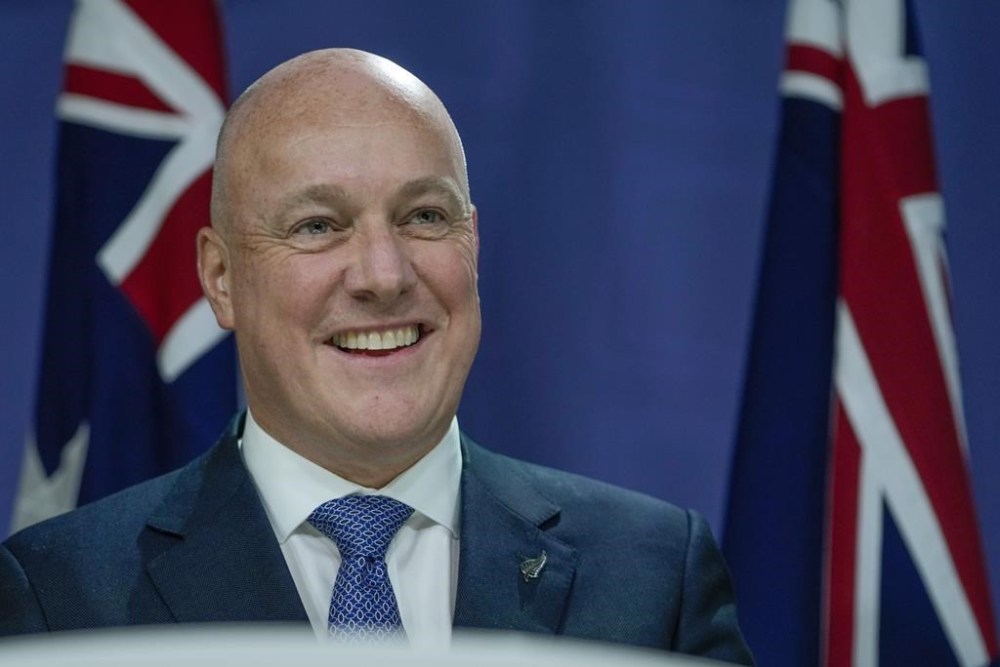
“New Zealand is committed to doing our share of the heavy lifting in the alliance and I’m determined that New Zealand will continue to be alongside Australia as we seek to advance our shared interests and our common values,” Luxon added.
The United States and Britain have agreed to provide Australia with a fleet of submarines powered by U.S. nuclear technology under the AUKUS agreement to counter a growing military threat to the region posed by China. AUKUS is an acronym for Australia, the United Kingdom and the United States.
Luxon said New Zealand was interested in becoming involved in AUKUS Pillar 2: a commitment between the three partners to develop and share advanced military capabilities, including artificial intelligence, electronic warfare and hypersonics.
“We’ll work our way through that over the course of next year as we understand it more and think about what the opportunities may be for us,” Luxon said. “AUKUS is a very important element in ensuring we’ve got stability and peace in the region.”
Albanese said there were opportunities for greater cooperation between the two countries’ militaries, particularly in interoperability.
“The more that we cooperate, the better the benefit for both of our countries,” Albanese said.
New Zealand has banned nuclear-powered ships from using its ports since 1984. Luxon said his country’s nuclear-free status was “not negotiable.”