Not lost in translation
17th-century Christian poet provides fresh spiritual insights to contemporary readers

Advertisement
Read this article for free:
or
Already have an account? Log in here »
To continue reading, please subscribe:

Digital Subscription
One year of digital access for only $205*
- Enjoy unlimited reading on winnipegfreepress.com
- Read the E-Edition, our digital replica newspaper
- Access News Break, our award-winning app
- Play interactive puzzles
*First annual payment billed as $205.00 + GST for one year. This annual subscription will automatically renew at $233.00 + GST every 52 weeks (10% off the regular annual price of $259.35). Offer available to new and qualified returning subscribers only. Cancel any time.
To continue reading, please subscribe:
Add Free Press access to your Brandon Sun subscription for only an additional
$1 for the first 4 weeks*
- Enjoy unlimited reading on winnipegfreepress.com
- Read the E-Edition, our digital replica newspaper
- Access News Break, our award-winning app
- Play interactive puzzles
*Your next Brandon Sun subscription payment will increase by $1.00 and you will be charged $17.95 plus GST for four weeks. After four weeks, your payment will increase to $24.95 plus GST every four weeks.
Read unlimited articles for free today:
or
Already have an account? Log in here »
Hey there, time traveller!
This article was published 23/12/2023 (1000 days ago), so information in it may no longer be current.
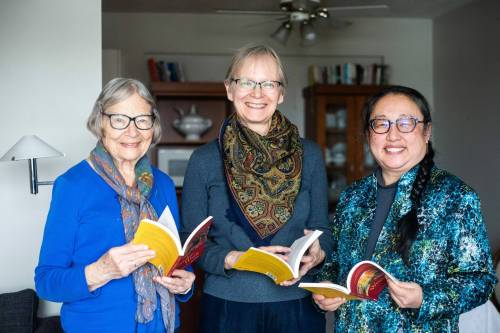
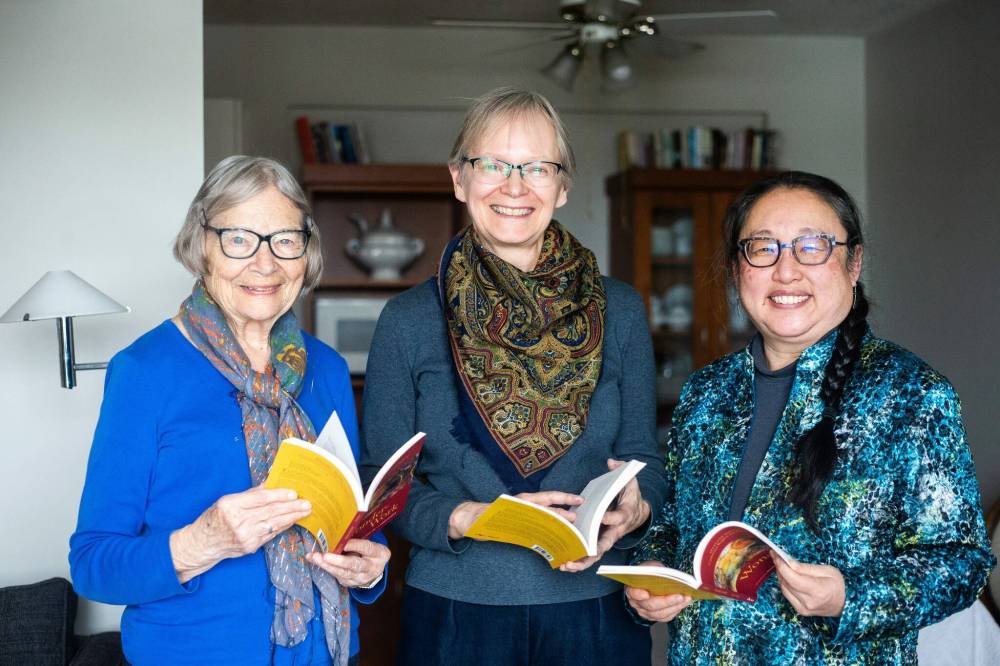
Already well versed in presenting concepts and thoughts with carefully chosen words and imagery, a group of Winnipeg poets were surprised by the unique and unexpected ways a 17th century German writer worked out her spirituality and theology.
Instead of using the word wonder, or even wonderful or wondrous to describe the birth of Jesus Christ, Austrian poet Catharina Regina von Greiffenberg employs the phase “wonder-work.”
“There’s the wonder-work of incarnation, which is the work of God, and there is her doing the wonder-work,” says poet Sally Ito, one of three poets to translate some of the poet’s work from German into contemporary English.
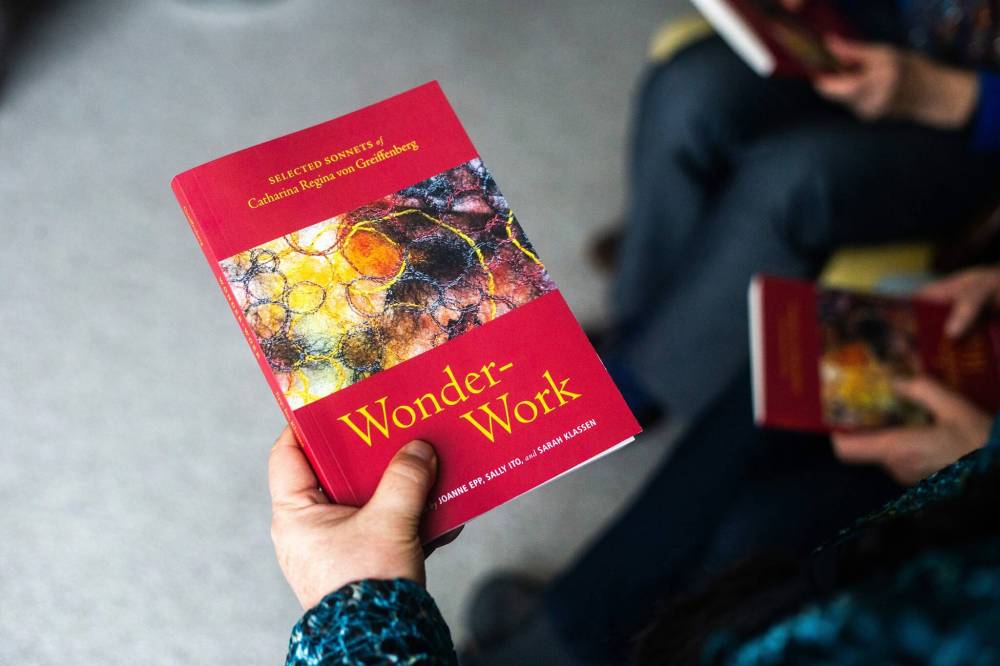
The resulting book of 69 translated sonnets, which appear opposite the original German versions, is appropriately titled Wonder-Work, based on Greiffenberg’s description of the nativity in several sonnets.
A devout Lutheran living in a predominantly Roman Catholic region of Austria, Greiffenberg’s inspirational poetry largely fell out of fashion after her death in 1694 and later went out of print. The non-German speaking Ito stumbled across a few of her translated poems in a paperback she purchased from the sale table at Cornish Library.
Intrigued by Greiffenberg’s often mystical treatment of faith and belief, and her unique use of compound nouns, Ito dug further, discovering most of her work had not been translated into English. So she invited fellow Winnipeg poets Joanne Epp and Sarah Klassen, who both have a command of German, to help her with the project.
“For Catharina, the sonnet itself was a spiritual process. She was working out her own theology,” says Ito, 59, who attends St. Margaret’s Anglican Church.
“She was working things out in this tight, disciplined form.”
Using dictionaries and a facsimile of Greiffenberg’s work from an online source, the trio set out to translate some of the hundreds of sonnets the poet published in her lifetime. They kept the rhythm and form of the 14-line sonnets but did not preserve the original rhyme scheme.
When COVID-19 shut down the world in March 2020, they set up a blog (later a website https://greiffenbergsonnets.ca/) and regular Zoom chats to continue their work.
“This was a good thing to do during the pandemic and one poem at a time was added,” Ito says of the virtual collaboration during the long months of lockdowns and gathering restrictions.
Fast forward to 2022, when the poetic partners compiled their translations, wrote an introduction and afterword, and submitted the manuscript to CMU Press for publication.
“We followed the church calendar and it seemed natural we should order the book that way,” says Ito, of the resulting 144-page volume, which begins with the birth of Christ and Christmas and moves through Lent, Easter, Ascension and Pentecost. The translators also included several sonnets on the seasons, including Greiffenberg’s take on her least favourite: “The Long Winter of Affliction.”
Throughout her poetry, Greiffenberg employs extravagant metaphors, vivid images and strange but interesting compounded words, presenting her theology and spirituality in an unusual but captivating way, explain her English translators, all published poets and writers.
“I had to be impressed by the faith, the woman, and the energy,” says Klassen, 91, whose novel The Russian Daughter was released earlier this year and was the November selection of the Free Press Book Club.
“With each reading, you get a little more spirit of the words, the spirit of the work and the spirit of the poet.”
“It encouraged me to be less reticent about expressing my faith in poetry,” adds Epp, 60, the author of two poetry collections.
Although Greiffenberg was born into nobility, well educated, published and a member of the literary salons of her day, she is virtually unknown in North America, says Sue Sorensen, editor of CMU Press, the academic publisher of Canadian Mennonite University. As well as introducing her to an English-speaking audience, this volume also opens the work of a 17th century female poet and theologian for further study.

“I think they are stunning and startling poems that make me as a Christian think about what Christmas means, what the Eucharist means and what Ascension means,” Sorensen says.
After a decade of working through Greiffenberg’s poetry, Ito says the translation process became a spiritual and theological metaphor for the three poets. Just as faith and belief are expressed in community, so was the process of arriving at a translation everyone could agree on.
“I’m working in community with others to arrive at meaning,” Ito says of translating poetry from one language to another.
“It is kind of a devotional collective practice.”
brenda.suderman@freepress.mb.ca
The Free Press is committed to covering faith in Manitoba through our Religion in the News project. This reporting continues because readers like you step forward to fund it.
Donate now to support our reporting on religion.
Your donation is eligible for a charitable tax receipt.
BECOME A FAITH JOURNALISM SUPPORTER
Brenda Suderman has been a columnist in the Saturday paper since 2000, first writing about family entertainment, and about faith and religion since 2006.
Our newsroom depends on a growing audience of readers to power our journalism. If you are not a paid reader, please consider becoming a subscriber.
Our newsroom depends on its audience of readers to power our journalism. Thank you for your support.
The Free Press is committed to covering faith in Manitoba through our Religion in the News project. This reporting continues because readers like you step forward to fund it.
Donate now to support our reporting on religion.
Your donation is eligible for a charitable tax receipt.
BECOME A FAITH JOURNALISM SUPPORTER
Brenda Suderman has been a columnist in the Saturday paper since 2000, first writing about family entertainment, and about faith and religion since 2006.
Our newsroom depends on a growing audience of readers to power our journalism. If you are not a paid reader, please consider becoming a subscriber.
Our newsroom depends on its audience of readers to power our journalism. Thank you for your support.
Advertisement Advertise With Us
Advertisement Advertise With Us
The Free Press acknowledges the financial support it receives from members of the city’s faith community, which makes our coverage of religion possible.