

A pro-peace Russian presidential hopeful is blocked by the election commission
Advertisement
Read this article for free:
or
Already have an account? Log in here »
To continue reading, please subscribe:

Digital Subscription
One year of digital access for only $205*
- Enjoy unlimited reading on winnipegfreepress.com
- Read the E-Edition, our digital replica newspaper
- Access News Break, our award-winning app
- Play interactive puzzles
*First annual payment billed as $205.00 + GST for one year. This annual subscription will automatically renew at $233.00 + GST every 52 weeks (10% off the regular annual price of $259.35). Offer available to new and qualified returning subscribers only. Cancel any time.
To continue reading, please subscribe:
Add Free Press access to your Brandon Sun subscription for only an additional
$1 for the first 4 weeks*
- Enjoy unlimited reading on winnipegfreepress.com
- Read the E-Edition, our digital replica newspaper
- Access News Break, our award-winning app
- Play interactive puzzles
*Your next Brandon Sun subscription payment will increase by $1.00 and you will be charged $17.95 plus GST for four weeks. After four weeks, your payment will increase to $24.95 plus GST every four weeks.
Read unlimited articles for free today:
or
Already have an account? Log in here »
Hey there, time traveller!
This article was published 23/12/2023 (1000 days ago), so information in it may no longer be current.
MOSCOW (AP) — A Russian politician calling for peace in Ukraine hit a roadblock in her campaign Saturday, when Russia’s Central Election Commission refused to accept her initial nomination by a group of supporters, citing errors in the documents submitted.
Former legislator Yekaterina Duntsova is calling for peace in Ukraine and hopes to challenge President Vladimir Putin, promoting her vision of a “humane” Russia “that’s peaceful, friendly and ready to cooperate with everyone on the principle of respect.”
“On Dec. 23, the Central Election Commission refused to register my initiative group,” Duntsova wrote on the Telegram messaging app.
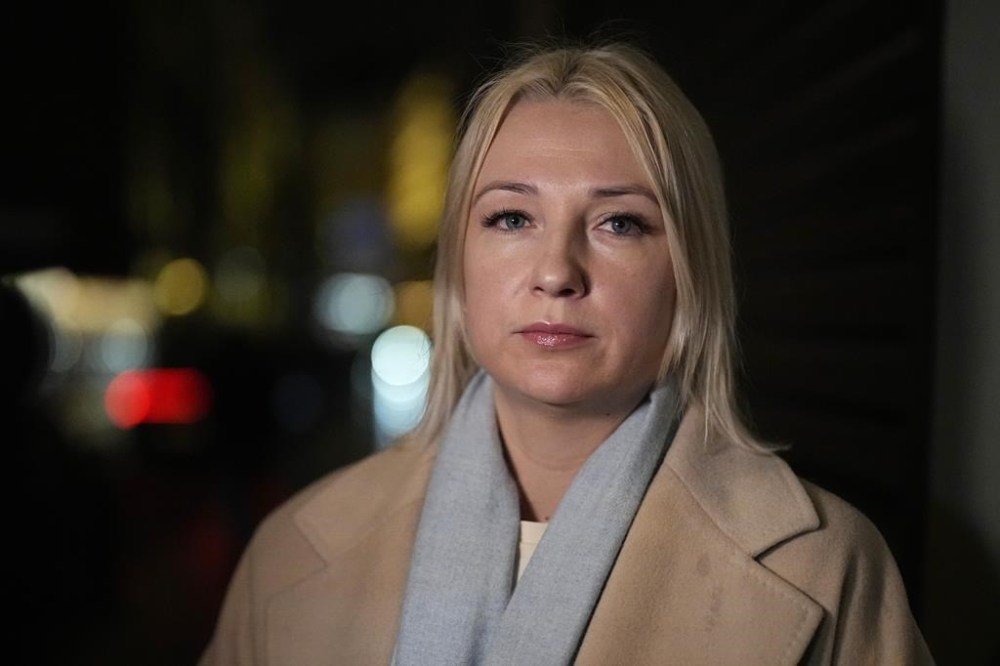
According to a Telegram channel close to Duntsova’s campaign, the commission found 100 errors in her nomination papers, including mistakes in the spelling of names.
“You are a young woman, you still have everything ahead of you. Any minus can always be turned into a plus,” the head of Russia’s Central Election Commission, Ella Pamfilova, said at the commission meeting, addressing Duntsova.
Duntsova said that she would appeal the decision in Russia’s Supreme Court, and appealed to the leaders of the Yabloko (Apple) political party to nominate her as a candidate, as she said she would be unable to convene a second meeting of supporters.
Also on Saturday, Russian state media said that Yabloko party founder and leader Grigory Yavlinsky would not run for the presidency, citing the party’s press service. Speaking in a live interview on YouTube, once Duntsova’s appeal to Yabloko became known, Yavlinsky said that he “didn’t know” whether the party would consider her application.
Duntsova took her first steps toward candidate status Sunday, when her run was endorsed by 500 supporters as required by Russian election law, and presented documents Wednesday to Russia’s Central Election Commission to register her nomination.
A number of Russian parties also announced which candidates they would be backing in the presidential election next March – which incumbent President Vladimir Putin is all but certain to win.
The Russian Communist Party, the second largest party in the lower house of Parliament, the State Duma, announced after a secret ballot that it would support the nomination of Duma deputy Nikolai Kharitonov. As party leader Sergei Mironov previously said it would do, the Just Russia – For Truth party formally announced that it was supporting Putin’s nomination for the presidency.
Parties represented in the Duma do put forward candidates to run against Putin, but they represent only token opposition and are generally sympathetic to his agenda.
The Civic Initiative party – which is not represented in the Duma – backed the nomination of independent candidate Boris Nadezhdin, who is known for campaigning against Russia’s actions in Ukraine. He has the support of a contingent of soldiers’ wives, unhappy with their husbands’ long deployments.
Meanwhile, Russian state media reported that volunteers from Putin’s campaign headquarters, together with branches of the United Russia party and a political coalition called the People’s Front, began collecting signatures in support of his candidacy as an independent.
Putin submitted his nomination papers to the Central Election Commission on Monday. Under Russian law, independent candidates must be nominated by at least 500 supporters, and must also gather at least 300,000 signatures of support from 40 regions or more.
Pamfilova said Saturday that there were 29 applicants for candidacy in the election.
Though it is normal for an opposition candidate to run against Putin – broadcaster Ksenia Sobchak, for example, was a liberal challenger in the 2018 presidential election – the tight control that he has established during 24 years in power makes his reelection in March all but assured. Prominent critics who could challenge him are either in prison or living abroad, and most independent media have been banned.
Earlier this month, the Duma set March 15-17 as the dates for the 2024 presidential election, moving Putin a step closer to a fifth term in office.