

AP PHOTOS: Dancing with the bears lives on as a unique custom in Romania
Advertisement
Read this article for free:
or
Already have an account? Log in here »
To continue reading, please subscribe:

Digital Subscription
One year of digital access for only $205*
- Enjoy unlimited reading on winnipegfreepress.com
- Read the E-Edition, our digital replica newspaper
- Access News Break, our award-winning app
- Play interactive puzzles
*First annual payment billed as $205.00 + GST for one year. This annual subscription will automatically renew at $233.00 + GST every 52 weeks (10% off the regular annual price of $259.35). Offer available to new and qualified returning subscribers only. Cancel any time.
To continue reading, please subscribe:
Add Free Press access to your Brandon Sun subscription for only an additional
$1 for the first 4 weeks*
- Enjoy unlimited reading on winnipegfreepress.com
- Read the E-Edition, our digital replica newspaper
- Access News Break, our award-winning app
- Play interactive puzzles
*Your next Brandon Sun subscription payment will increase by $1.00 and you will be charged $17.95 plus GST for four weeks. After four weeks, your payment will increase to $24.95 plus GST every four weeks.
Read unlimited articles for free today:
or
Already have an account? Log in here »
Hey there, time traveller!
This article was published 31/12/2023 (1000 days ago), so information in it may no longer be current.
COMANESTI, Romania (AP) — A small industrial town in northeast Romania may seem like an unlikely tourist destination, but Comanesti is where huge numbers of visitors from as far away as Japan choose to spend part of the winter holiday season.
They converge here to see an annual event that grew out of a millennia-old tradition in the Moldavia region: Bearskin-clad people of all ages, organized in packs, marching and dancing to the deafening sound of drums in several rows of gaping jaws and claws.
The Dancing Bears Festival, as the custom has become known, starts in the days before Christmas and ends with a spectacular finale in Comanesti on Dec. 30. Some of the “bears” jokingly growl or mock an attack on spectators.
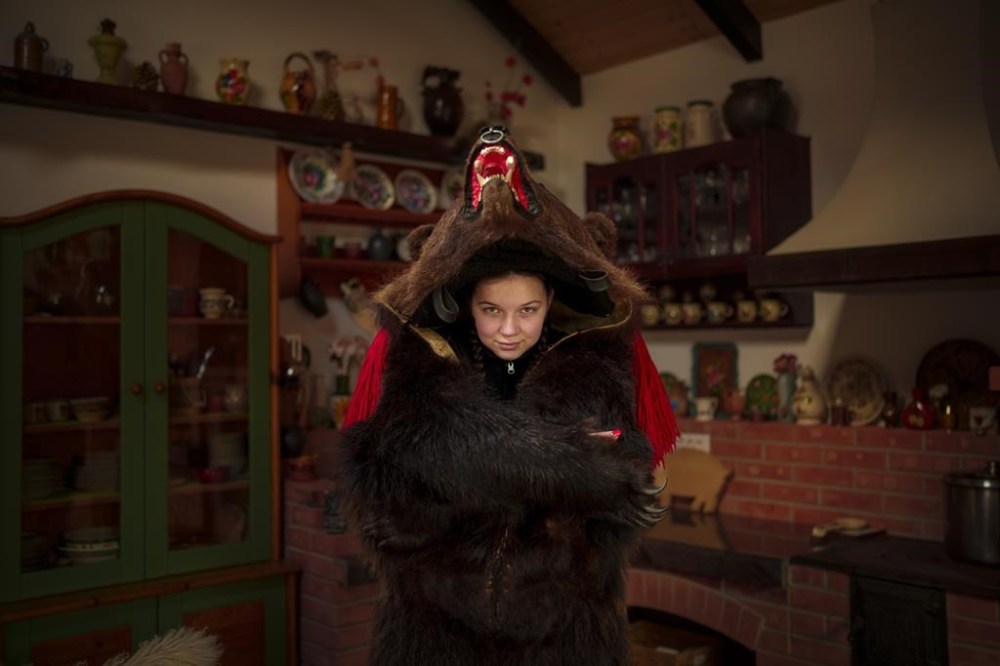
The bearskins the dancers wear, which can weigh as much as 50 kilograms (110 pounds), are passed on from generation to generation. The packs carefully guard the methods they use to keep the furs in good condition and ready to wear the next year.
One of the more established groups is the Sipoteni Bear Pack, named after a neighborhood of Comanesti, where its founder, Costel Dascalu, was born. It has up to 120 members, some who started participating at age 3.
“My children, Amalia and David, are already in the pack,” said Dascalu, who was 8 years old when he first danced dressed as a bear when Romania was still a communist dictatorship. Back then, he recalled, it was a much more low-key spectacle, with the “bears” only visiting private homes around Christmas.
Locals say the custom dates to before Christianity, when it was believed that wild animals guarded people from misfortune and danger. Dancing bears, therefore, went to people’s homes and knocked on their doors for luck and a happy new year.
While having their portraits taken, members of the Sipoteni Bear Pack shared with the The Associated Press some of their reasons for making sure the ritual continues.
Preserving tradition was a recurring theme. But some pack members said they get an adrenaline rush from wearing an animal’s fur, dancing to tribal drum rhythms and socializing with other young people in real life instead of online. Many said they feel they are briefly embodying a bear’s spirit.
“I feel liberated, The bear frees our souls,” said one participant, Maria, who joined the Sipoteni Bear Pack as a 5-year-old and is now 22. “I also connect to my departed father who introduced me to the tradition 17 years ago.”
Residents are happy that the tradition lived on as the region lost much of its population starting in the 1990s, when many people left to look for jobs in Western Europe after the fall of communism.
A 35-year-old, Marian, returns every year from abroad to dance with the pack she has belonged to since age 6.
“I hope our children will make this unique custom last forever,” she said. “I can imagine quitting anything, but I’ll never quit doing this”