

A missing person with no memory: How investigators solved the cold case of Seven Doe
Advertisement
Read this article for free:
or
Already have an account? Log in here »
To continue reading, please subscribe:

Digital Subscription
One year of digital access for only $205*
- Enjoy unlimited reading on winnipegfreepress.com
- Read the E-Edition, our digital replica newspaper
- Access News Break, our award-winning app
- Play interactive puzzles
*First annual payment billed as $205.00 + GST for one year. This annual subscription will automatically renew at $233.00 + GST every 52 weeks (10% off the regular annual price of $259.35). Offer available to new and qualified returning subscribers only. Cancel any time.
To continue reading, please subscribe:
Add Free Press access to your Brandon Sun subscription for only an additional
$1 for the first 4 weeks*
- Enjoy unlimited reading on winnipegfreepress.com
- Read the E-Edition, our digital replica newspaper
- Access News Break, our award-winning app
- Play interactive puzzles
*Your next Brandon Sun subscription payment will increase by $1.00 and you will be charged $17.95 plus GST for four weeks. After four weeks, your payment will increase to $24.95 plus GST every four weeks.
Read unlimited articles for free today:
or
Already have an account? Log in here »
Hey there, time traveller!
This article was published 01/01/2024 (992 days ago), so information in it may no longer be current.
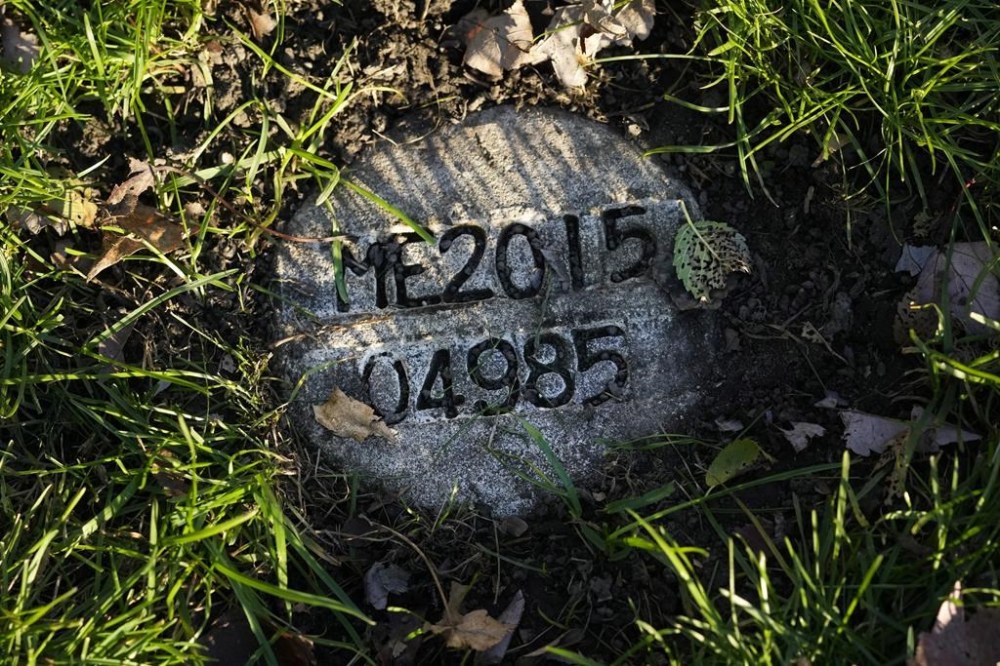
CHICAGO (AP) — Buried at the edge of a Chicago Catholic cemetery are an elderly person’s remains marked only by a cement cylinder deep in the ground labeled with the numbers 04985. The person died in 2015 at a nursing home not remembering much, including their own name.
They went by Seven.
Now police specializing in missing people and cold cases have discovered Seven’s identity in one of the most unusual investigations the Cook County sheriff’s office has pursued and one that could change state law. Using post-mortem fingerprints, investigators identified Seven as 75-year-old Reba C. Bailey, an Illinois veteran missing since the 1970s.

The breakthrough is bringing closure to generations of relatives and friends. But whether they knew the name or the numeral, the investigation has unearthed more mysteries about how Reba, a Women’s Army Corps veteran raised in a large family, became homeless with no recollection, aside from wanting to be identified as a man called Seven.
Public records, interviews, newspapers and police work have offered some insight about the person with two lives, even with so much still unknown. Investigators say the next step is to honor them with a new gravestone and military honors.
“That’s a horrible circumstance that someone could die and no one knows who they are. That’s why we pursue these cases so strongly, out of dignity,” said Commander Jason Moran, who oversees the sheriff’s missing persons unit. “A person deserves a name.”
Sheriff Tom Dart’s office took on the case of Seven Doe — the name in some official records — last year. The office has gained notoriety for cold case work, including identifying victims of serial killer John Wayne Gacy.
But Seven’s case, involving a person who was unidentified both in life and death, is rare.
“We never had anything like that before,” Dart said. “This one is different and it just kept getting more different.”
Seven died from heart disease with dementia and diabetes as contributing factors, according to the Cook County medical examiner in 2015. Fingerprints taken at the time were run against police databases but there was no match. Seven was buried at Mount Olivet Catholic Cemetery in the section for unidentified people.
Eight years later, Cook County investigators took the case. Since foul play was ruled out, they started with the postmortem fingerprints, running them across multiple databases, including military records.
A match came up for Reba, who enlisted in the Army in 1961.
While all of Reba’s five siblings are dead, she has more than half a dozen nieces and nephews. Most never met her, but they had heard of her.
Rick Bailey, the son of Reba’s late brother Richard, was “totally in shock” when he got a call from investigators about his long-lost aunt.
“My dad had searched for years to try and find his sister,” said Bailey, who is 65 and believes Reba’s siblings would celebrate the news. “They would all be thrilled if they were here.”
Investigators were able to piece together parts of Reba’s life.
She was born in 1940, the daughter of a carpenter who often moved for work. Tragedy hit Reba’s life at age 10 when she lost her mother in a car wreck that also left her, her father and her brother injured.
About a decade after the accident, she joined the military, serving in Alabama, Texas and California. Investigators found she was briefly married to a fellow veteran, John H. Bilberry, who passed in 1989.
Military records show she was honorably discharged in 1962 “due to marriage.”
What happened to Reba between returning from the military and showing up at a Chicago worker house with no memory remains a mystery.
Relatives heard stories about a fight between Reba and her father, but there are different versions on what it was about. Some say it was about the decision to join the military. Others heard it was about sexual orientation.
They also don’t know what prompted the memory loss, the change in gender identity or the name Seven.
Many people who might have had insight have died or knew Reba as Seven, a person with no past memories.
Denise Plunkett found Seven on a cold day in the late 1970s on the porch of St. Francis Catholic Worker House. It is a hospitality house for people who are homeless and others who want to live in a community.
Plunkett said the person she found spoke of themselves in the third person, called themselves a man and didn’t answer personal questions.
When asked their name, they would often say “Mr. Seven.”
Before too long, Seven became the house cook. When word of Seven’s hearty casseroles and rice and bean dishes spread, crowds started lining up for meals.
“Nobody could have done more to help the homeless,” Plunkett said of Seven.
Seven spent decades at the house before leaving in 2003 after a health scare. Seven passed out in the hallway, which doctors later said was diabetic shock, and was then moved to a nursing home for medical care.
Since Seven didn’t have a legal name or known family, Chicago police launched an investigation, but were unsuccessful. Seven became a ward of the state and died in 2015.
Relatives who’ve learned more about Reba’s later years have found comfort.
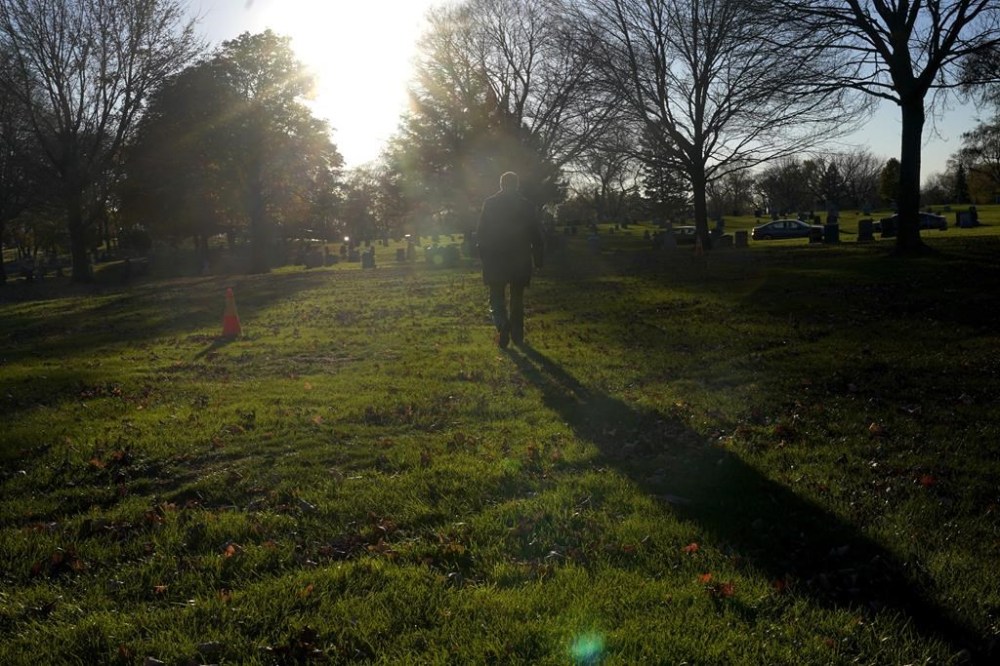
“We know she was cared for,” said Amanda Ingram, who would have been Reba’s great niece. “That is the best that my grandfather could have ever asked for.”
Cook County investigators have updated the entry for Seven Doe in a federal database of missing people, adding Reba Bailey’s name and photo. Their next step is a new gravestone and military honors in the spring.
The case could also change Illinois law.
The sheriff’s office wants to amend the state’s Missing Persons Identification Act to require postmortem fingerprints be checked against all available state and federal databases. The idea is a fuller search at the time of death could help identify people sooner.
In Reba’s case, family could have had the chance to plan funeral services. Dart’s office is drafting legislation.
Family members did consider moving Reba’s body closer to family. But moving the body would be expensive and complicated.
“We decided as a family not to disturb her,” Rick Bailey said. “At least we know where she is now.”
___
AP researcher Jennifer Farrar in New York contributed to this report.
__
The Cook County sheriff’s missing person project: https://www.cookcountysheriffil.gov/person