
The Vatican’s top expert on AI ethics is a friar from a medieval Franciscan order

Advertisement

Advertise with us

ROME (AP) — Friar Paolo Benanti wears the plain brown robes of his medieval Franciscan order as he pursues one of the most pressing issues in contemporary times: how to govern artificial intelligence so that it enriches — and doesn’t exploit — people’s lives.

Read this article for free:


or

Already have an account? Log in here »

To continue reading, please subscribe:

Subscribe and receive a limited-edition Free Press branded hat or tote.

Digital Subscription

One year of digital access for only $205*

  • Enjoy unlimited reading on winnipegfreepress.com
  • Read the E-Edition, our digital replica newspaper
  • Access News Break, our award-winning app
  • Play interactive puzzles

*First annual payment billed as $205.00 + GST for one year. This annual subscription will automatically renew at $233.00 + GST every 52 weeks (10% off the regular annual price of $259.35). Offer available to new and qualified returning subscribers only. Cancel any time.

To continue reading, please subscribe:

Add Free Press access to your Brandon Sun subscription for only an additional

$1 for the first 4 weeks*

  • Enjoy unlimited reading on winnipegfreepress.com
  • Read the E-Edition, our digital replica newspaper
  • Access News Break, our award-winning app
  • Play interactive puzzles
Start now

*Your next Brandon Sun subscription payment will increase by $1.00 and you will be charged $17.95 plus GST for four weeks. After four weeks, your payment will increase to $24.95 plus GST every four weeks.

Hey there, time traveller!
This article was published 17/01/2024 (1000 days ago), so information in it may no longer be current.

ROME (AP) — Friar Paolo Benanti wears the plain brown robes of his medieval Franciscan order as he pursues one of the most pressing issues in contemporary times: how to govern artificial intelligence so that it enriches — and doesn’t exploit — people’s lives.

Benanti is the Vatican’s go-to person on the technology and he has the ear of Pope Francis as well as some of Silicon Valley’s top engineers and executives.

With a background in engineering, a doctorate in moral theology and a passion for what he calls the “ethics of technology,” the 50-year-old Italian priest is on an urgent mission that he shares with Francis, who, in his annual peace message for 2024, pushed for an international treaty to ensure the ethical use of AI technology.
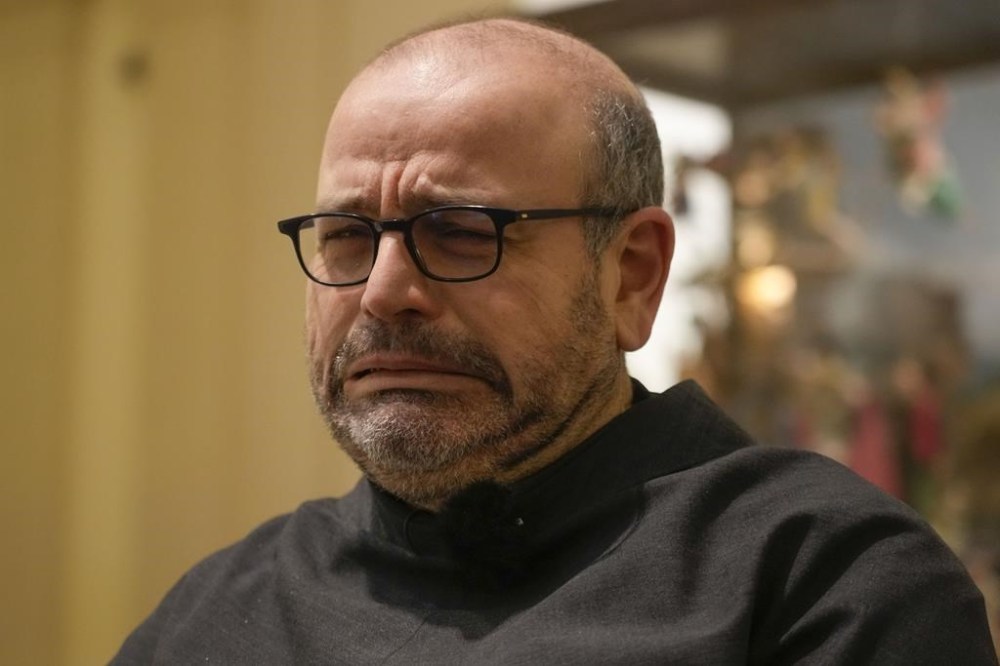
Head of the Italian committee on Artificial Intelligence (AI), Franciscan Friar Paolo Benanti who is also a consultant for The Vatican and discusses AI with Pope Francis is interviewed by the Associated Press in Rome, Monday, Jan. 15, 2024. (AP Photo/Gregorio Borgia)

“What is the difference between a man who exists and a machine that functions?” said Benanti in an interview this week with The Associated Press during a break at the Pontifical Gregorian University, where he teaches courses such as moral theology and bioethics to students preparing for the priesthood. “This is perhaps the greatest question of these times, because we are witnessing a challenge that every day grows more profound with a machine that is humanizing.”

Benanti is a member of the United Nations’ Advisory Body on Artificial Intelligence as well as head of an Italian government commission tasked with providing recommendations on how to safeguard journalism from fake news and other disinformation. He is also a consultant to the Vatican’s Pontifical Academy for Life.

Benanti says he helps “better clarify the more technical terms for the Holy Father” during their encounters. His knowledge came in handy for a 2023 meeting at the Vatican between Francis and Microsoft President Brad Smith that focused on how AI could help or hurt humanity.

Francis and Smith had also discussed artificial intelligence “at the service of the common good” during a meeting a few years earlier, according to the Vatican. With a papacy heavily attentive to those who live on society’s margins, Francis has made clear his concern that AI technology could limit human rights by, say, negatively impacting a homebuyer’s mortgage application, a migrant’s asylum bid or an evaluation of an offender’s likelihood to repeat a crime.

“It’s clear that if we choose some data that aren’t sufficiently inclusive, we will have some choices that aren’t inclusive,″ said Benanti, whose religious order was founded in the early 13th century by St. Francis of Assisi, who renounced earthly riches and promoted charitable works.

Microsoft first reached out to Benanti several years ago for his thoughts on technology, the friar said. In 2023, Smith did a podcast with Benanti in Rome, describing the friar as bringing “one of the most fascinating combinations in the world” in terms of his background in engineering, ethics and technology, to the AI debate.

Benanti, who was one year shy of obtaining his engineering degree at Rome’s Sapienza University when he forsook the degree — and also his girlfriend — to join the Franciscans in his 20s, described how AI could be a “really powerful tool” in bringing down the cost of medicine and empowering doctors to help more people.

But he also described the ethical implications of a technology that could have the same capabilities as a human — or perhaps even more.

“It is a problem not of using (AI) but it is a problem of governance,” the friar said. ”And here is where ethics come in — finding the right level of use inside a social context.”
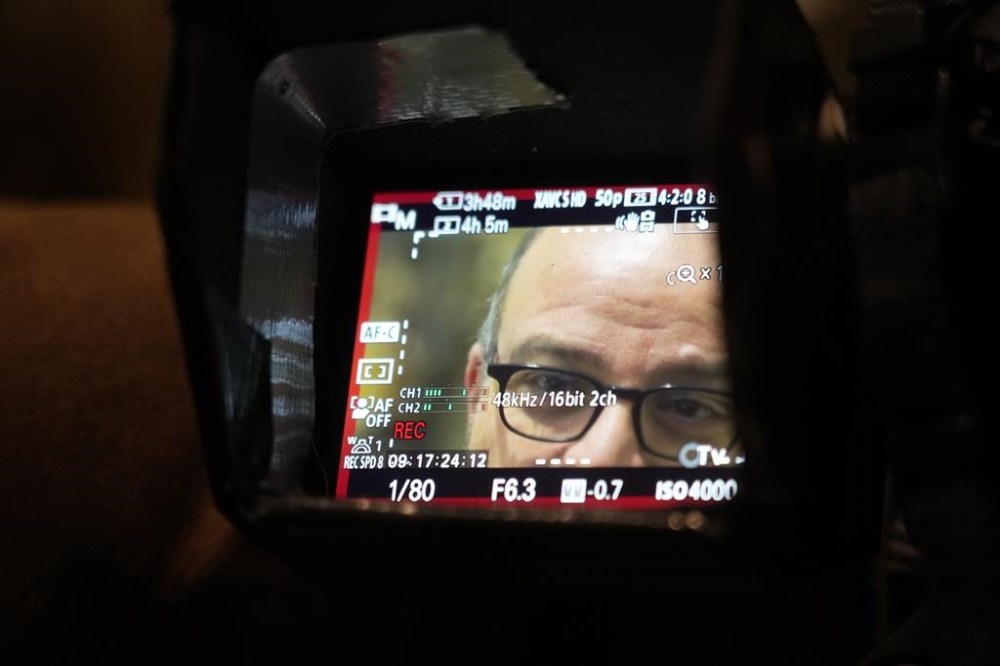
Head of the Italian committee on Artificial Intelligence (AI), Franciscan Friar Paolo Benanti who is also a consultant for The Vatican and discusses AI with Pope Francis is seen through a camera monitor during an interview with the Associated Press in Rome, Monday, Jan. 15, 2024. (AP Photo/Gregorio Borgia)

Benanti noted that much of the data that informs AI is fed by low-wage workers, many in developing countries entrenched in a history of colonialism and an exploited workforce.

“I don’t want this to be remembered as the season in which we extract from the global South cognitive resources,” he said. If one examines “the best tools that we are producing in AI” in the West, one sees that AI is “trained with underpaid workers from English-speaking former colonies.″

How to govern AI is an issue that countries all over the globe are trying to resolve. The European Union became a trailblazer late last year when negotiators secured a deal that paves the way for legal oversight of AI technology.

In Italy, Premier Giorgia Meloni, who worries that AI could lead to job losses, will make the technology a focus of this year’s G-7 summit being hosted by Italy. As part of those efforts, Meloni on Thursday met with visiting Microsoft founder Bill Gates in Rome, an encounter that was attended by Benanti.

For his part, the friar told AP that regulating artificial intelligence shouldn’t mean limiting its development.

“It means keeping them compatible with that fragile system that is democracy, that today seems to be the best system,” Benanti said.

Report Error Submit a Tip

The Free Press acknowledges the financial support it receives from members of the city’s faith community, which makes our coverage of religion possible.

More Stories

Woman accused of pulling handgun on taxi driver

1 minute read Yesterday at 10:39 AM CDT

A 45-year-old woman accused of pulling a handgun on a Winnipeg taxi driver is facing multiple firearms-related charges.

It happened Sunday afternoon, at about 2:30 p.m., near the intersection of Concordia Avenue and Louelda Street. Officers learned a woman got into a cab in the Munroe East neighbourhood and pulled out a handgun, asking the driver to take her to a specific location, the Winnipeg Police Service stated in a news release.

The taxi driver activated the taxi's emergency beacon, exited the vehicle, and contacted police.

The woman got into the driver's seat of the taxi, but the keys had been removed, and she fled on foot. A suspect was arrested shortly afterward in the 1000 block of Concordia Avenue. Police seized a .22-calibre handgun during the arrest.

Manitoba e-scooter legislation changes set to impose speed limit, age restrictions, sidewalk ban

Matthew Frank 5 minute read Preview

Manitoba e-scooter legislation changes set to impose speed limit, age restrictions, sidewalk ban

Matthew Frank 5 minute read Updated: 11:26 AM CDT

People riding e-scooters and other personal electric vehicles in Manitoba will have to strap on a helmet, stay off sidewalks and follow new age limits once new provincial rules for the devices take effect next year.

The vehicles, which also include electric skateboards, hoverboards and unicycles, will fall under The Highway Traffic Act starting in 2027, according to the province’s website. E-bikes are excluded from the new rules, according to the province’s frequently-asked-questions page.

All riders must be at least 16 years old and wear properly fitting helmets — that goes for passengers, too, the province said.

The proposed new legislation sets a speed limit of 25 km/h and would prohibit personal electric vehicles from sidewalks unless signs specifically allow sidewalk use. Riders would be using shared paths or roads with speed limits of 50 km/hr or less. They won’t be allowed to operate the vehicles under the influence of alcohol or drugs and they must use hand signals and obey traffic signs.

Read
Updated: 11:26 AM CDT

The Vatican’s top expert on AI ethics is a friar from a medieval Franciscan order

Frances D'emilio, The Associated Press 5 minute read Preview

The Vatican’s top expert on AI ethics is a friar from a medieval Franciscan order

Frances D'emilio, The Associated Press 5 minute read Thursday, Jan. 18, 2024

ROME (AP) — Friar Paolo Benanti wears the plain brown robes of his medieval Franciscan order as he pursues one of the most pressing issues in contemporary times: how to govern artificial intelligence so that it enriches — and doesn’t exploit — people’s lives.

Benanti is the Vatican's go-to person on the technology and he has the ear of Pope Francis as well as some of Silicon Valley's top engineers and executives.

With a background in engineering, a doctorate in moral theology and a passion for what he calls the "ethics of technology,'' the 50-year-old Italian priest is on an urgent mission that he shares with Francis, who, in his annual peace message for 2024, pushed for an international treaty to ensure the ethical use of AI technology.

“What is the difference between a man who exists and a machine that functions?” said Benanti in an interview this week with The Associated Press during a break at the Pontifical Gregorian University, where he teaches courses such as moral theology and bioethics to students preparing for the priesthood. "This is perhaps the greatest question of these times, because we are witnessing a challenge that every day grows more profound with a machine that is humanizing.”

Read
Thursday, Jan. 18, 2024

Comparing the Iran and Vietnam Wars

Peter McKenna 5 minute read Preview

Comparing the Iran and Vietnam Wars

Peter McKenna 5 minute read 2:00 AM CDT

The other day I asked my students in U.S. foreign policy to think about the relevance of the Vietnam War in relation to the ongoing war in Iran. More specifically, I wanted them to identify the similarities and differences between the two wars.

Read
2:00 AM CDT

‘Unique’ crackdown leads to dozens of arrests, hundreds of referrals to outreach groups

Free Press staff 3 minute read Preview

‘Unique’ crackdown leads to dozens of arrests, hundreds of referrals to outreach groups

Free Press staff 3 minute read Updated: 12:44 PM CDT

More than 200 people were referred to support organizations and police made 55 arrests during a two-month crackdown on drug use and disorder on city streets.

The Winnipeg Police Service and community group leaders released the latest details Tuesday of a sweep focused on open drug use and trafficking that began in August. An earlier blitz, in June, drew rebuke from some community groups that led police to take an outreach-first approach when it was relaunched.

“I feel it’s something that’s very unique, we’ve looked across the country and from what I’m hearing, what we’re hearing, I think we’re definitely going in the right direction, if not leading the way in some of our initiatives,” said police Chief Gene Bowers of the service’s partnered approach to cracking down on open air drug use.

Between Aug. 7 and Oct. 6, community organizations participated in 14 joint outreach and enforcement efforts, police said on Tuesday. Ten people were helped into Main Street Project detox programs, 48 people were given access to support services and 553 naloxone opioid antidote kits were handed out. Outreach organizations engaged with a total of 3,758 people.

Read
Updated: 12:44 PM CDT

‘People count on this place’: Pembina Hwy. Giant Tiger latest location slated to close

By Matthew Frank 3 minute read Preview

‘People count on this place’: Pembina Hwy. Giant Tiger latest location slated to close

By Matthew Frank 3 minute read Yesterday at 4:34 PM CDT

Another Giant Tiger store in Winnipeg will shutter next year, leaving some area residents concerned about a lack of affordable groceries in the neighbourhood.

Red papers taped to the front doors of the Canadian retail chain’s location at Pembina Highway and Southpark Drive indicate it will close Feb. 27.

Doreen Yanchuk, a self-described bargain hunter, shook her head when she saw the signs Monday. The 67-year-old said she’s a regular customer at the location because it’s a five-minute drive from her home.

“They have very good sales here, which draws people to the shop because everything is expensive,” Yanchuk said.

Read
Yesterday at 4:34 PM CDT

