Rise and shine: Japanese moon probe back to work after sun reaches its solar panels
Advertisement
Read this article for free:
or
Already have an account? Log in here »
To continue reading, please subscribe:

Digital Subscription
One year of digital access for only $205*
- Enjoy unlimited reading on winnipegfreepress.com
- Read the E-Edition, our digital replica newspaper
- Access News Break, our award-winning app
- Play interactive puzzles
*First annual payment billed as $205.00 + GST for one year. This annual subscription will automatically renew at $233.00 + GST every 52 weeks (10% off the regular annual price of $259.35). Offer available to new and qualified returning subscribers only. Cancel any time.
To continue reading, please subscribe:
Add Free Press access to your Brandon Sun subscription for only an additional
$1 for the first 4 weeks*
- Enjoy unlimited reading on winnipegfreepress.com
- Read the E-Edition, our digital replica newspaper
- Access News Break, our award-winning app
- Play interactive puzzles
*Your next Brandon Sun subscription payment will increase by $1.00 and you will be charged $17.95 plus GST for four weeks. After four weeks, your payment will increase to $24.95 plus GST every four weeks.
Read unlimited articles for free today:
or
Already have an account? Log in here »
Hey there, time traveller!
This article was published 29/01/2024 (963 days ago), so information in it may no longer be current.
TOKYO (AP) — A Japanese moon explorer is up and running Monday after several tense days without the sunlight it needs to generate power.
Japan’s first lunar mission hit its target in a precision touchdow n on Jan. 20, but landed the wrong way up, leaving its solar panels unable to see the sun.
But with the dawn of the lunar day, it appears that the probe has power.
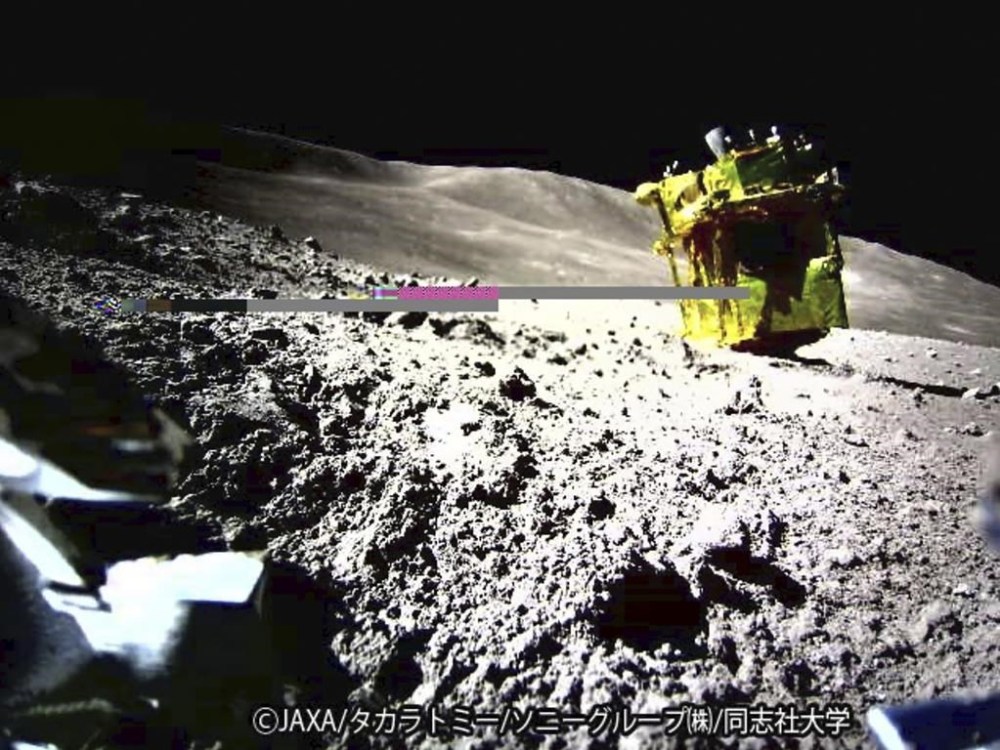
The Japan Aerospace Exploration Agency, or JAXA, said Monday that it successfully established communication with the probe Sunday night, and the craft has resumed its mission, taking pictures of the Moon’s surface and transmitting them to the Earth.
After a last-minute engine failure caused the Smart Lander for Investigating Moon, or SLIM, to make a rougher-than-planned landing, JAXA used battery power to gather as much data as possible about the touchdown and the probe’s surroundings. The craft was then turned off to wait the sun to rise higher in the lunar sky in late January.
With power, SLIM has continued work to analyze the composition of olivine rocks on the lunar surface with its multi-band spectral camera, seeking clues about the Moon’s origin and evolution, the agency said. Earlier observations suggest that the moon may have formed when the Earth hit another planet.

A black-and-white photo posted by JAXA on social media showed the rocky lunar surface, including a rock the agency said it had named “Toy Poodle” after seeing it in initial images. The probe is analyzing six rocks, all of which have been given the names of dog breeds.
SLIM is expected to have enough sun to continue operations for several earth days, possibly until Thursday. JAXA said it’s not clear if the craft will work again after another severely cold lunar night.
The SLIM landed about 55 meters (60 yards) away from its target, in between two craters near the Shioli crater, a region covered in volcanic rock. Previous moon missions have typically aimed for flat areas at least 10 kilometers (6 miles) wide.

SLIM carried two autonomous probes, which were released just before touchdown, recording the landing, surroundings and other lunar data.
The landing made Japan the world’s fifth country to reach the moon surface, after the United States, the Soviet Union, China and India.