First cases of fatal chronic wasting disease found in B.C. deer
Advertisement
Read this article for free:
or
Already have an account? Log in here »
To continue reading, please subscribe:
Digital Subscription
One year of digital access for only $1.44 a week*
- Enjoy unlimited reading on winnipegfreepress.com
- Read the E-Edition, our digital replica newspaper
- Access News Break, our award-winning app
- Play interactive puzzles
*Billed as $5.77 plus GST every four weeks. After 52 weeks, price increases to the regular rate of $19.95 plus GST every four weeks. Offer available to new and qualified returning subscribers only. Cancel any time.
To continue reading, please subscribe:
Add Free Press access to your Brandon Sun subscription for only an additional
$1 for the first 4 weeks*
- Enjoy unlimited reading on winnipegfreepress.com
- Read the E-Edition, our digital replica newspaper
- Access News Break, our award-winning app
- Play interactive puzzles
*Your next Brandon Sun subscription payment will increase by $1.00 and you will be charged $17.95 plus GST for four weeks. After four weeks, your payment will increase to $24.95 plus GST every four weeks.
Read unlimited articles for free today:
or
Already have an account? Log in here »
Hey there, time traveller!
This article was published 02/02/2024 (992 days ago), so information in it may no longer be current.
VICTORIA – Researchers say a deadly disease starts out slow but has the potential to devastate British Columbia’s deer population over time, after the discovery of the first cases in the province.
The concerns come after the B.C. government confirmed two cases of chronic wasting disease found in animals south of Cranbrook in the Kootenay region.
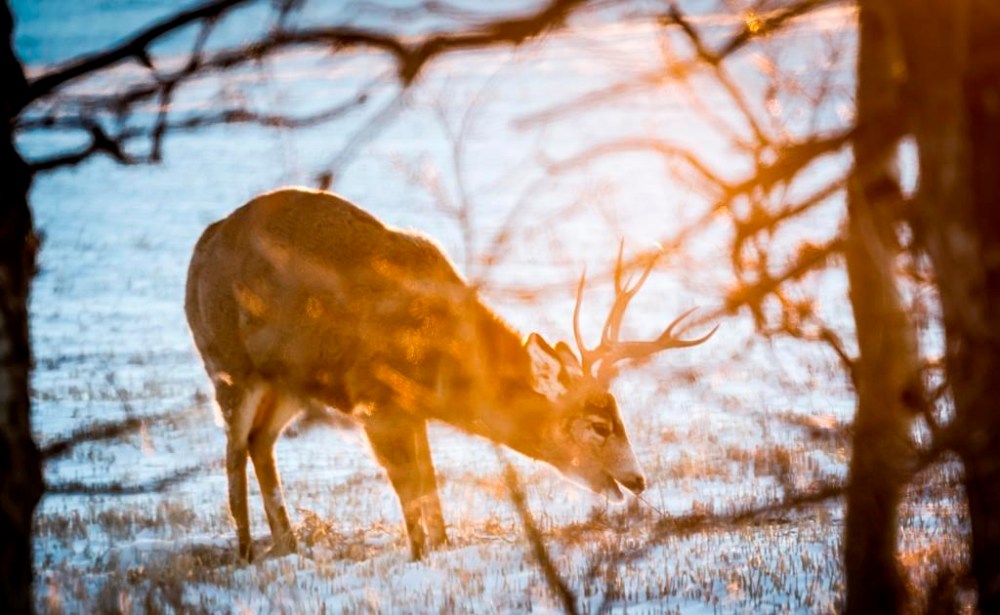
A statement from the B.C. Ministry of Water, Land and Resource Stewardship says the cases were found in a mule deer harvested by a hunter and a white-tailed deer that was hit by a vehicle on the road.
It says testing by a Canadian Food Inspection Agency lab confirmed the chronic wasting disease diagnosis on Wednesday.
University of Alberta biological sciences professor Debbie McKenzie says the disease has the potential to decimate deer populations because infected animals are initially hard to identify and don’t survive more than two years once infected.
She says experimental data shows the disease also has the theoretical potential to infect other species, such as humans, but there have been no known cases of spillover beyond the deer family, which also includes elk, caribou and moose.
“The elephant in the room is always whether (the disease) could spill over into humans,” she says.
“We have not seen a case … leading to disease in humans so far, but it’s one of those things that we have experimental data that says it could happen.”
The B.C. government says that while there is no direct evidence of chronic wasting disease being transmitted to humans, Health Canada and the World Health Organization say people should not eat infected animals.
It says anyone who sees an elk, deer, moose or caribou exhibiting symptoms such as weight loss, poor co-ordination, stumbling or general sickness for no obvious reason, should report the sighting to the B.C. Wildlife Health Program.
A statement from the B.C. Wildlife Federation says the disease is spread from region to region through the transport of carcasses or contaminated hay.
The disease affects an animal’s central nervous system and causes cell death in the brain, with a fatality rate of “100 per cent” and no known treatment, it says.
McKenzie says the disease has been in Alberta for decades and can now be found in at least five provinces as well as more than 30 states south of the border.
She says the spread of the disease into B.C. isn’t surprising given the land borders with Alberta and Montana, and it’s almost a guarantee that more cases will pop up.
It’s typical for the disease to start slow, like it is in B.C., McKenzie says.
“It (starts) very low, but we have areas in southern, southwestern Saskatchewan now where more than 80 per cent of the mule deer bucks are positive for (the disease). So this is ultimately going to have a huge impact on the deer population.”
Alberta Fish and Wildlife provincial disease specialist Margo Pybus similarly says the B.C. cases aren’t a surprise, but they’re disappointing given efforts to fight the spread.
“This is a slow-moving, insidious disease, and it takes quite a long time to build up in a population,” Pybus says. “So initially we don’t see any effects whatsoever, but after it’s been there for one or two or three decades, you start to see the changes in the deer populations.”
She says B.C. can look at Alberta and other jurisdictions to see how officials have tried to control the spread, which has involved culling populations with positive cases.
“There is considerable ongoing research to try to provide better tools for game managers to use to try to control (the disease),” Pybus says.
“We’ve made a lot of progress and we know so much more about this disease now than we did, say, 20 years ago when we had our first finding.”
This report by The Canadian Press was first published Feb. 2, 2024.