Boom in southern Quebec mining claims, including under people’s homes, causes anxiety
Advertisement
Read this article for free:
or
Already have an account? Log in here »
To continue reading, please subscribe:

Digital Subscription
One year of digital access for only $205*
- Enjoy unlimited reading on winnipegfreepress.com
- Read the E-Edition, our digital replica newspaper
- Access News Break, our award-winning app
- Play interactive puzzles
*First annual payment billed as $205.00 + GST for one year. This annual subscription will automatically renew at $233.00 + GST every 52 weeks (10% off the regular annual price of $259.35). Offer available to new and qualified returning subscribers only. Cancel any time.
To continue reading, please subscribe:
Add Free Press access to your Brandon Sun subscription for only an additional
$1 for the first 4 weeks*
- Enjoy unlimited reading on winnipegfreepress.com
- Read the E-Edition, our digital replica newspaper
- Access News Break, our award-winning app
- Play interactive puzzles
*Your next Brandon Sun subscription payment will increase by $1.00 and you will be charged $17.95 plus GST for four weeks. After four weeks, your payment will increase to $24.95 plus GST every four weeks.
Read unlimited articles for free today:
or
Already have an account? Log in here »
Hey there, time traveller!
This article was published 05/02/2024 (979 days ago), so information in it may no longer be current.
MONTREAL – When Ellen Rice-Hogan discovered that someone had bought a mining claim under her farm, she was shocked.
There’s no mining around the Township of Low, Que., about 40 kilometres northwest of Ottawa, where she raises sheep and cattle.
“It was shocking, surprising, all of the above,” she said in a recent interview. “We’re a small community, the potential of this is huge and it’s going to have a huge negative impact, I feel, on our territory.”
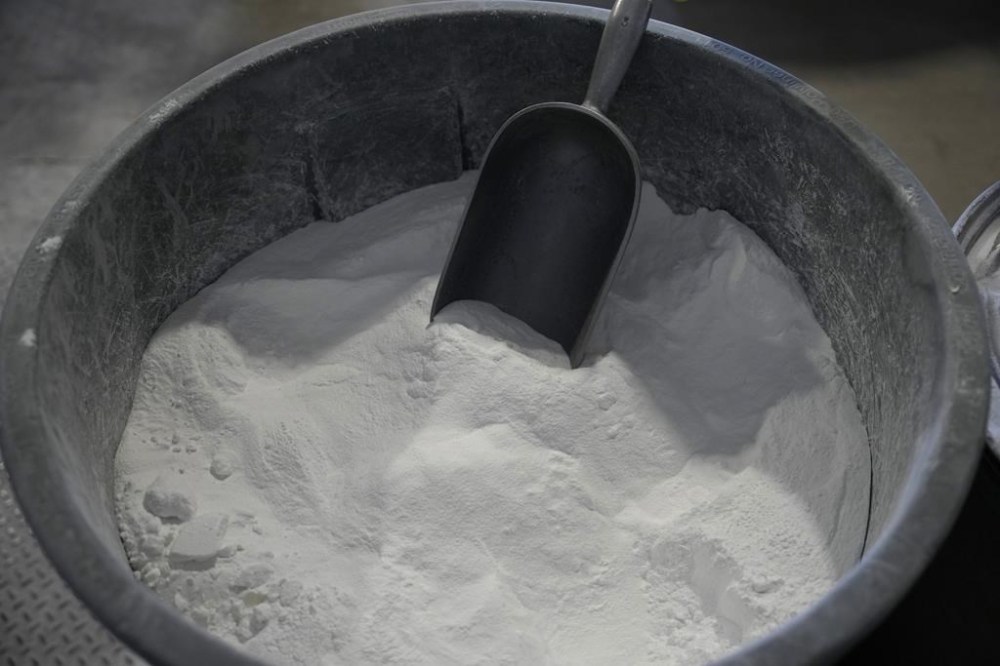
A boom in mining claims is on in Quebec as prospectors anticipate explosive demand for minerals used in electric batteries. The rush has people laying claim all over — even under people’s homes. In response, residents and municipalities are calling for the rules to be tightened.
While most mining in Quebec still takes place in the province’s north, the demand for graphite and lithium — crucial components in electric vehicle batteries — has miners expanding their search to southern regions, where the industry is unfamiliar to residents and local governments.
Rice-Hogan’s town council wants much of its territory to be designated by the province as incompatible with mining. And she’s considering following the lead of some of her neighbours who are buying the mining rights to their land.
There were 112,477 mining claims approved in 2023, according to Quebec’s Natural Resources Department, up from 72,631 the year before. In the Outaouais region, where Low is located, the number of active mining claims has more than doubled since 2019, when there were 20,006 claims approved.
“In areas where, historically, there hasn’t been mining, we’ve seen an explosion in claim requests,” said Manon Cyr, the mayor of Chibougamau, Que., and a member of an organization called the UMQ, which represents the province’s municipalities.
In the past 60 days, more than 200 mining claims have been made in the Outaouais, and another 166 in the Laurentians region, which includes some of Montreal’s northern suburbs and ski destinations like Mont-Tremblant; that region is also home to the only active graphite mine in North America.
Cyr said the current system is too easy: staking a claim online costs about $77 and gives the buyer exclusive rights to mine the minerals under a specific piece of land for three years. Mineral rights in Canada are separate from land ownership, and a claim can be purchased on public or private land. While exploration work is supposed to be done before a claim can be renewed, Cyr said that in reality, claim owners are often able to renew without doing any.
The easy access to claims allows people who aren’t serious about mining to gain mineral rights, many of whom don’t actually have the experience or means to launch a mining operation. But their actions strike fear in residents who think they may have to live above an active mine.
Cyr said the UMQ is calling for the cost of claims to be increased and for the requirement that people making claims show “a certain expertise.”
Ironically, she said, people buying claims on their own land is making it more difficult to protect the territory because only land without active claims can be declared off-limits to mining.
Since 2016, 27 communities have asked the provincial government to declare parts of their territory “incompatible” with mining; 18 have been successful. Mining is also forbidden within the “urban perimeter” of cities.
“What’s difficult for some municipalities to accept is that they need to justify why they want this territory to be incompatible with mining,” Julie Reid Forget, who has advised Quebec communities on mining development, said in a recent interview.
There’s an imbalance in the law, which assumes that mining is the best way to use land, said Reid Forget, who conducted an information session for residents of Gatineau, Que., the province’s fourth-largest city, earlier this year after mining claims were made in a residential area that hadn’t officially been declared off-limits.
Alain Poirier, of Quebec’s mineral exploration association — L’Association de l’Exploration Minière du Québec — said much of the concern about mining claims in southern Quebec comes from a lack of knowledge.
“The sector isn’t misunderstood, it’s unknown,” he said in a recent interview.
Land owners, Poirier said, have to give written consent before mining-related work can begin on their property, even if they don’t hold the mining rights. If a land owner doesn’t want any exploration on their territory, “there’s no problem, it’s the law and the law is respected,” he said.

Only around half a per cent of claims are explored with machinery, he said, and only around one mine a year opens in the province, a process that can take decades and requires consultation with the community at multiple steps.
Poirier said that while communication could be improved, he doesn’t think it’s a good idea for the province to give municipalities more power to regulate mining, a decision he worries would create hundreds of different regulatory frameworks.
“We find the current system of uniform regulation across Quebec works very well,” he said, adding that more than one-third of Quebec’s land is already off-limits due to the presence of national parks, wildlife reserves and other forms of protection.
The vast majority of mining claims and mineral exploration are still in traditional mining regions, he said. In southern Quebec, the competition for land is not coming from the mining sector, he added. “It’s agricultural land, it’s real estate development, it’s roads, it’s a package of different things that don’t necessarily have anything to do with mining exploration.”
This report by The Canadian Press was first published Feb. 5, 2024.