Delayed Alberta report shows little caribou progress despite federal deal
Advertisement
Read this article for free:
or
Already have an account? Log in here »
To continue reading, please subscribe:

Digital Subscription
One year of digital access for only $205*
- Enjoy unlimited reading on winnipegfreepress.com
- Read the E-Edition, our digital replica newspaper
- Access News Break, our award-winning app
- Play interactive puzzles
*First annual payment billed as $205.00 + GST for one year. This annual subscription will automatically renew at $233.00 + GST every 52 weeks (10% off the regular annual price of $259.35). Offer available to new and qualified returning subscribers only. Cancel any time.
To continue reading, please subscribe:
Add Free Press access to your Brandon Sun subscription for only an additional
$1 for the first 4 weeks*
- Enjoy unlimited reading on winnipegfreepress.com
- Read the E-Edition, our digital replica newspaper
- Access News Break, our award-winning app
- Play interactive puzzles
*Your next Brandon Sun subscription payment will increase by $1.00 and you will be charged $17.95 plus GST for four weeks. After four weeks, your payment will increase to $24.95 plus GST every four weeks.
Read unlimited articles for free today:
or
Already have an account? Log in here »
Hey there, time traveller!
This article was published 08/02/2024 (956 days ago), so information in it may no longer be current.
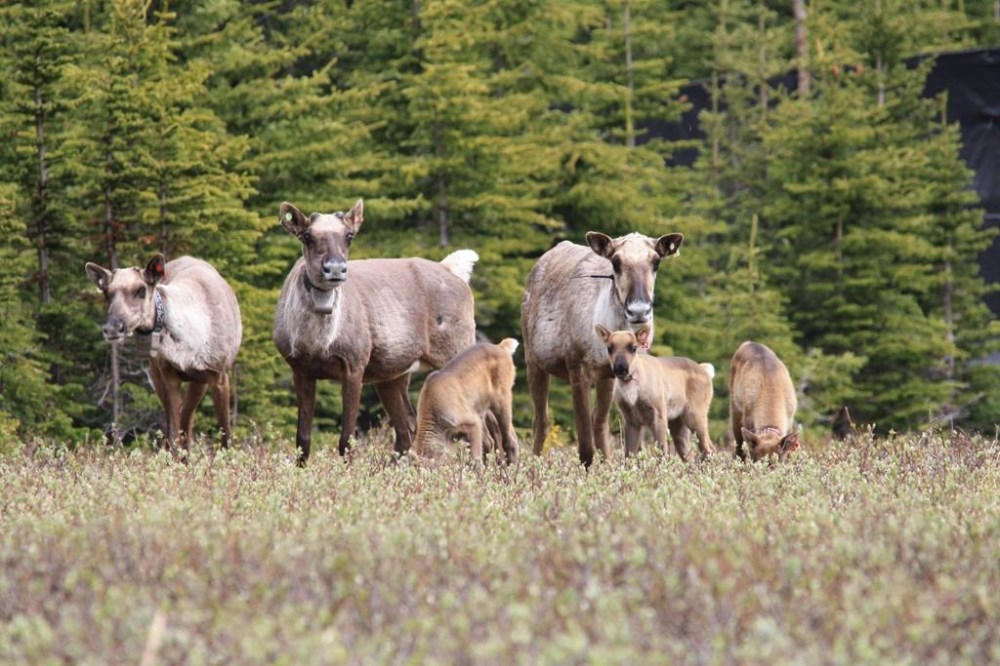
EDMONTON – An Alberta government document suggests the province has made little progress in protecting its 15 threatened caribou herds, despite having signed an agreement with Ottawa that promised it would.
That document, released three years late on Jan. 19, is the first report into the so-called Section 11 agreement between the province and Environment Canada. The 2020 agreement was made under threat of the federal government stepping in to protect critical habitat for the herds, which are in many cases almost entirely disturbed by resource development.
The report considers the deal’s first two years. But even that limited time frame suggests a long list of problems, from the slow cleanup of seismic lines to the ongoing growth of industrial footprint to the lack of range planning that would let the species survive in some of Canada’s busiest landscapes.
“There’s not much here that is encouraging in the data,” said Phillip Meintzer of the Alberta Wilderness Association.
Despite the agreement’s focus on habitat protection, human disturbance increased in 23 out of 28 caribou subranges between 2018 and 2021. The average amount of critical habitat undisturbed by industry or wildfire in an Alberta caribou subrange is 19 per cent, when federal guidelines say caribou need 65 per cent to be self-sustaining.
Of those 28 subranges, seven have more than 10 per cent of their area under some form of protection. Nine have no protection at all and the rest average about three per cent.
Forestry, energy, agriculture, recreation and homes all chip away at caribou habitat, but they also provide jobs that thousands of Albertans depend on. Range plans laying out how those uses can coexist with caribou are a major objective of the agreement.
Fifteen range plans were to have been finished by the end of 2025. Two have been completed, said Meintzer, and those have not yet been implemented by legislation.
Guidelines for activity on caribou habitat that do exist may be adjusted at industry request. Between October 2020 and December 2021, Alberta Environment processed 101 such applications.
One of the biggest causes of disturbance is seismic lines, which chop up forests and allow predators access into groves that would otherwise be hard to get to.
The report says Alberta has 250,000 kilometres of seismic lines on caribou range. By the end of 2021, 138 kilometres had been restored and work started on another 763.
Meanwhile, activity on caribou range proceeds. In 2020 and 2021, new approvals for forestry, energy and other industrial activities covered more than 700 square kilometres.
Despite the pressure, recent government estimates say caribou numbers seem to be steady at about 2,000.
Of Alberta’s 15 herds, the report is confident that eight are at least holding their own. One is almost certainly shrinking. For the rest, things could be going either way.
The report attributes that to the province’s annual wolf cull, conducted by helicopter gunning and strychnine poisoning. In 2020 and 2021, 824 wolves were killed.
“In all cases, the trends are poorer,” said Meintzer.
Meintzer points out the report is two years overdue. Attempts to find out why have failed, he said.
“We’ve talked to folks at both Alberta Environment and Protected Areas and Environment Canada. Both are pointing at each other.”
Environment and Climate Change Canada spokesman Samuel Lafontaine said Ottawa had expressed concern about the report’s delay.
“As Alberta now has a process in place for publishing annual reports, we anticipate there will be timely publication of future reports,” he said.
Alberta Environment and Protected Areas did not respond to a request for comment.
University of Alberta ecology professor Mark Boyce said the report throws doubt on Alberta’s caribou conservation efforts.
“I was in the Little Smoky range this fall and was disturbed to see extensive expansion of oil/gas and continued logging of the remaining habitat patches,” he wrote in an email.
“Some herds are persisting because of wolf poisoning … a despicable practice that kills vast numbers of non-target wildlife. (Alberta’s) own data in this document show how they have totally trashed habitats for most herds.”

Because of the sensitivity of caribou to disturbance and their need for the same landscapes that humans depend on for resources, biologists have described preserving the species as one of the toughest problems in conservation.
Meintzer said that’s what makes the delay and the conclusions of the report so disappointing. Section 11 agreements, in effect on animals from killer whales in British Columbia to lake sturgeon in Quebec, are supposed to be an important tool to bring governments together for conservation.
“Just having the 2021 numbers doesn’t really give us the ability to assess whether the agreement works,” he said. “Without these annual reports, we just can’t say whether these Section 11 agreements help at all.”
This report by The Canadian Press was first published Feb. 8, 2024.
Note to readers: This is a corrected story. A previous version said Phillip Meintzer works for Canadian Parks and Wilderness Society.