

Palestinian prime minister submits government’s resignation, a move that could open door to reforms
Advertisement
Read this article for free:
or
Already have an account? Log in here »
To continue reading, please subscribe:

Digital Subscription
One year of digital access for only $205*
- Enjoy unlimited reading on winnipegfreepress.com
- Read the E-Edition, our digital replica newspaper
- Access News Break, our award-winning app
- Play interactive puzzles
*First annual payment billed as $205.00 + GST for one year. This annual subscription will automatically renew at $233.00 + GST every 52 weeks (10% off the regular annual price of $259.35). Offer available to new and qualified returning subscribers only. Cancel any time.
To continue reading, please subscribe:
Add Free Press access to your Brandon Sun subscription for only an additional
$1 for the first 4 weeks*
- Enjoy unlimited reading on winnipegfreepress.com
- Read the E-Edition, our digital replica newspaper
- Access News Break, our award-winning app
- Play interactive puzzles
*Your next Brandon Sun subscription payment will increase by $1.00 and you will be charged $17.95 plus GST for four weeks. After four weeks, your payment will increase to $24.95 plus GST every four weeks.
Read unlimited articles for free today:
or
Already have an account? Log in here »
Hey there, time traveller!
This article was published 26/02/2024 (938 days ago), so information in it may no longer be current.
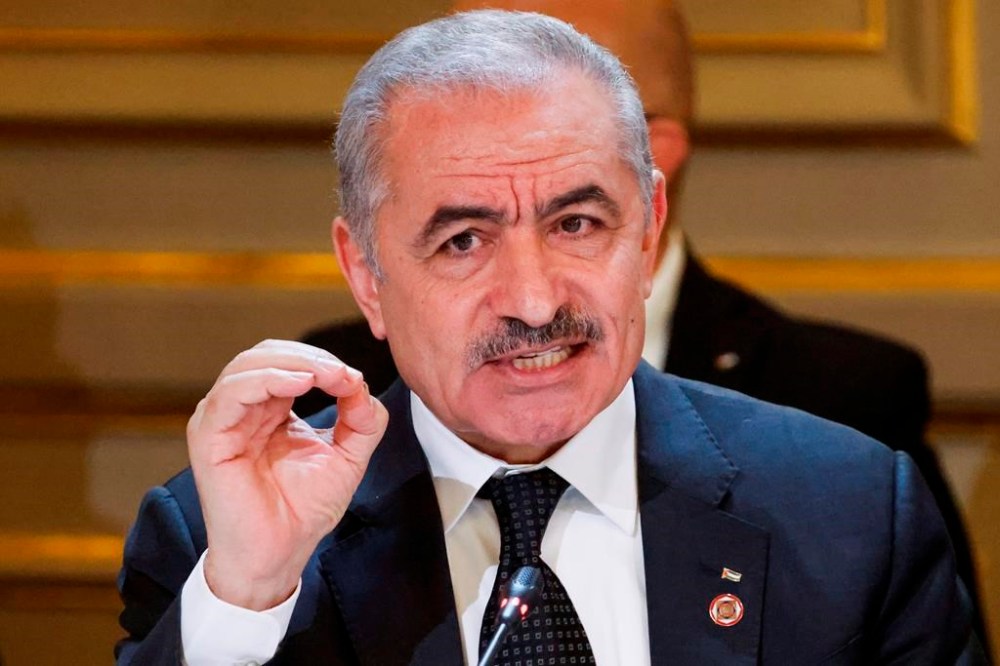
JERUSALEM (AP) — The Palestinian prime minister announced the resignation of his government on Monday, paving the way for a shake-up in the Palestinian Authority, which the U.S. hopes will eventually take on a role in postwar Gaza.
Many obstacles remain to making a revamped Palestinian Authority a reality. Palestinian President Mahmoud Abbas, whose forces were driven from Gaza by Hamas in 2007, has made clear that he would like the PA to govern the enclave after the war. But it is deeply unpopular among Palestinians, and Israeli Prime Minister Benjamin Netanyahu has roundly rejected the idea of putting the authority in charge of the territory.
Abbas accepted the resignation late Monday, the official Wafa news agency announced, but left Prime Minister Mohammad Shtayyeh in place at the head of a caretaker government until a successor is named. There was no word on how long that might take.
The move appears to be the first step in a process toward ushering in reforms sought by the United States, as international negotiations ramp up to bring about a cease-fire. The authority, created under interim Israeli-Palestinian peace deals in the early 1990s, administers parts of the West Bank but is beset by corruption.
“The next stage and its challenges require new governmental and political arrangements that take into account the new reality in the Gaza Strip,” Shtayyeh said at a Cabinet meeting.
Netanyahu has vowed to destroy the military and governing capabilities of Hamas — which has ruled Gaza since 2007 and staged the Oct. 7 attack on Israel that set off the current war. He has called for Israel to maintain open-ended security control in the territory after the conflict, with Palestinian officials in charge of civilian affairs.
The Palestinians have rejected such a limited role and seek an independent state in the West Bank, east Jerusalem and Gaza — areas captured by Israel in the 1967 Mideast war.
Abbas is expected to choose Mohammad Mustafa, chairman of the Palestine Investment Fund, as the next prime minister. Mustafa is a U.S.-educated economist who has held senior positions in the World Bank and served in senior posts in the Palestinian Authority. Palestinian officials say he has a good, longstanding working relationship with American officials.