

China’s embattled former foreign minister steps down as member of the legislature
Advertisement
Read this article for free:
or
Already have an account? Log in here »
To continue reading, please subscribe:

Digital Subscription
One year of digital access for only $205*
- Enjoy unlimited reading on winnipegfreepress.com
- Read the E-Edition, our digital replica newspaper
- Access News Break, our award-winning app
- Play interactive puzzles
*First annual payment billed as $205.00 + GST for one year. This annual subscription will automatically renew at $233.00 + GST every 52 weeks (10% off the regular annual price of $259.35). Offer available to new and qualified returning subscribers only. Cancel any time.
To continue reading, please subscribe:
Add Free Press access to your Brandon Sun subscription for only an additional
$1 for the first 4 weeks*
- Enjoy unlimited reading on winnipegfreepress.com
- Read the E-Edition, our digital replica newspaper
- Access News Break, our award-winning app
- Play interactive puzzles
*Your next Brandon Sun subscription payment will increase by $1.00 and you will be charged $17.95 plus GST for four weeks. After four weeks, your payment will increase to $24.95 plus GST every four weeks.
Read unlimited articles for free today:
or
Already have an account? Log in here »
Hey there, time traveller!
This article was published 27/02/2024 (922 days ago), so information in it may no longer be current.
TAIPEI, Taiwan (AP) — China’s former foreign minister, Qin Gang, who has been missing from public view since last June, resigned his seat in the national legislature, state media reported Tuesday.
Qin was dismissed from office in July, in one of China’s biggest political surprises in years.
The 57-year-old served as foreign minister for only seven months before he disappeared from public view last June. The government announced a month later that he had been dismissed from his post. He has yet to resurface publicly.
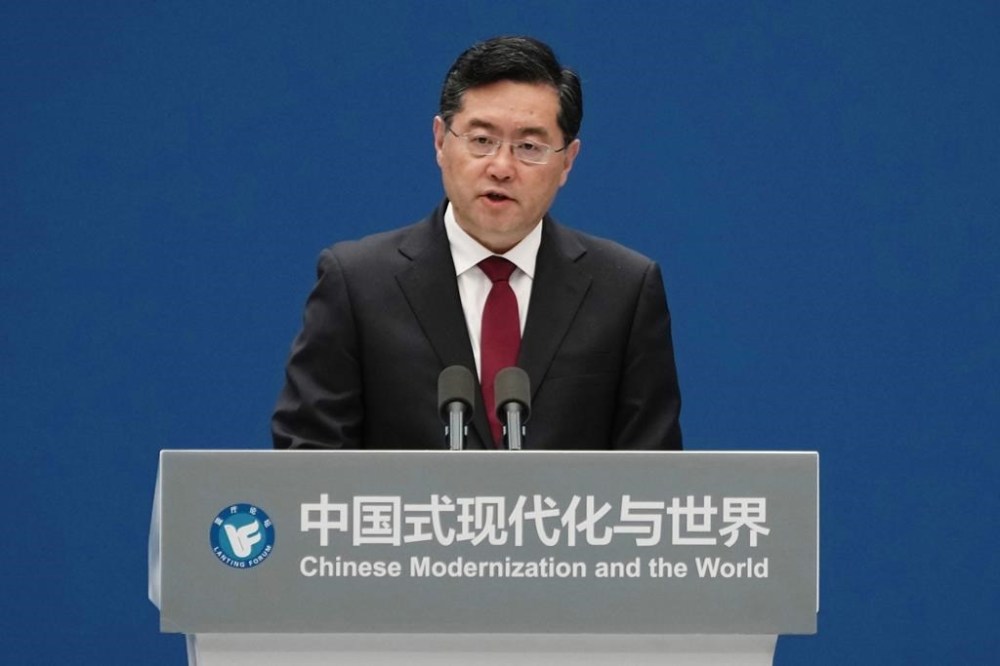
Qin was replaced as foreign minister by his predecessor, Wang Yi.
According to a notice by the National People’s Congress Standing Committee, the Tianjin Municipal People’s Congress accepted Qin’s resignation as a delegate to the upcoming annual parliamentary session.
Official websites no longer list Qin as a member of the State Council, China’s cabinet.
His disappearance came amid a series of dismissals at the top echelons of the party that included former defense minister Li Shangfu and other top military officials.
Signs of overt political friction are extremely rare in China, especially since President Xi Jinping tightened his control over the country’s politics, partly through an anti-corruption drive that purged scores of his presumed rivals.
Qin’s and Li’s ousters are believed to be part of a broader effort to reduce security vulnerabilities amid China’s increasing competition with the United States and its allies.
The National People’s Congress, China’s rubber-stamp parliament, is set to convene for its annual session in early March in Beijing, expected to be dominated by the country’s ailing economy.
China’s economy expanded by 5.2% last year but is forecast to slow sharply this year, bogged down by a property crisis, high youth unemployment and massive local government debt.
The Wall Street Journal reported in September, citing people familiar with a briefing, that Qin was ousted over an extramarital affair he had during a previous posting as ambassador to the U.S. An investigation was focused on whether his conduct had compromised China’s national security, according to the Journal.